
Why Do Solid-State Batteries Offer Higher EV Energy Density?
Solid state battery energy density vs lithium ion EV options differ in range, safety, cost, and timing.
Lithium-ion batteries are still the practical choice for EV buyers today, while solid-state EV batteries offer greater long-term energy-density potential. The difference matters because a battery must perform reliably in a complete vehicle, not only in a laboratory cell. Range, charging speed, safety, cost, durability, and production availability all shape the ownership experience, making lithium-ion technology the more realistic option until solid-state systems become commercially mature.
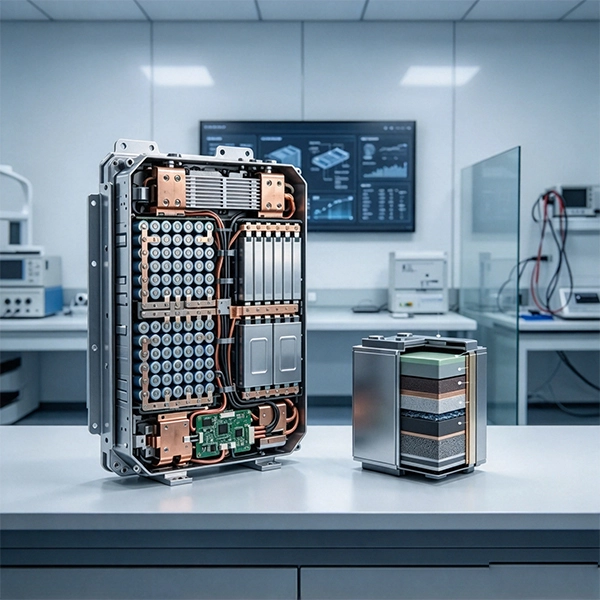
What is the difference between solid-state and lithium-ion EV batteries?
The core difference is the electrolyte, but the real-world difference shows up in manufacturing maturity, pack design, safety behavior, and cost. A battery chemistry can look impressive on paper and still be hard to build into a durable EV pack at scale.
Solid-state batteries use solid electrolytes instead of liquid ones
A solid-state battery replaces the liquid or gel electrolyte found in conventional lithium-ion cells with a solid electrolyte. That can make room for different electrode designs, including lithium-metal anodes in some approaches, which is one reason energy-density claims can be much higher.
The safety argument is promising but should not be oversold. A solid electrolyte may reduce some risks linked to flammable liquid electrolytes, but battery safety still depends on cell quality, pack protection, cooling, software, and crash behavior.
Lithium-ion batteries use proven technology in current EVs
Lithium-ion is the battery technology already doing the daily work in today's EVs. Automakers know how to build it, cool it, monitor it, warranty it, and package it into everything from affordable commuters to long-range SUVs.
- NMC and NCA packs often focus on range and performance.
- LFP packs usually trade some energy density for lower cost and strong durability.
- Improved pack design keeps raising usable range without needing a completely new battery type.
Battery materials and pack design affect real-world performance
Cell chemistry is only the starting point. Drivers experience pack-level performance, which includes casing, cooling, wiring, crash structure, battery-management electronics, and usable energy limits set by software.
That distinction matters when comparing announcements. A prototype cell with excellent energy density does not automatically become an EV with the same percentage gain. If the pack needs extra protection, special temperature control, or conservative charging limits, some of the cell advantage can shrink before it reaches the road.
How does solid-state battery energy density compare with lithium-ion?
Solid-state batteries have the stronger future potential, while lithium-ion batteries have the stronger proof today. For a shopper, the first thing to check is whether a claim refers to a lab cell, a production-ready cell, or a complete EV battery pack.
Solid-state batteries offer higher energy density potential
Energy density describes how much energy a battery can store for its weight or size. Higher energy density can mean more range from the same pack size, similar range from a lighter pack, or a smaller pack that frees up space.
- Gravimetric energy density measures energy by weight, usually Wh/kg.
- Volumetric energy density measures energy by space, usually Wh/L.
Many solid-state targets suggest meaningful gains over current lithium-ion technology, sometimes discussed in the rough range of 20% to 50%. Treat those numbers as potential, not a buying guarantee, until they appear in production EVs with range, charging, durability, and cost data attached.
Lithium-ion batteries provide proven energy density today
Lithium-ion may not have the same theoretical ceiling, but it already delivers usable range in mass-market EVs. If you commute 40 miles a day, charge at home, and take only a few longer trips each year, a current lithium-ion EV may solve the problem without waiting for a new chemistry.
This is where "available energy density" beats "future energy density." A lithium-ion pack that can be bought, serviced, charged, and warrantied today is more useful than a solid-state pack that still has to prove manufacturing scale.
Real EV range depends on more than battery density
Battery density is important, but it is not the only range lever. A sleek sedan with a moderate-size pack can beat a heavier SUV with a denser battery if aerodynamics, tires, weight, and efficiency are better.
For real-world range, look at the whole vehicle:
- Highway speed can cut range faster than city driving.
- Cold weather can reduce efficiency and charging speed.
- Towing or roof cargo can overwhelm battery-density gains.
- Charging curve matters more on road trips than peak charging claims.
A higher-density battery is most valuable when it solves a specific pain point, such as fewer road-trip stops, less vehicle weight, or more usable cabin space.
How will solid-state batteries change future EVs?
Solid-state batteries could change EVs less through one dramatic headline and more through combined improvements: longer range, lower weight, better packaging, and possibly faster charging if the final designs can handle heat and long-term cycling well.
Higher density can extend driving range
If an automaker keeps the battery pack about the same size but stores more energy inside it, driving range can increase. That is the simple version of the solid-state promise.
The biggest benefit would likely be for drivers who regularly stretch the range of today's EVs: long highway commuters, cold-climate drivers, road-trippers, and people considering electric trucks or large SUVs. A city driver who charges every night may notice the improvement less than someone who often plans trips around charging stops.
Lighter packs can improve vehicle efficiency
A lighter battery pack can make an EV more efficient because the vehicle has less mass to move. That can help range, handling, braking feel, tire wear, and ride tuning, especially in larger vehicles where battery weight adds up quickly.
There is a practical trade-off, though. Automakers may choose to use the density gain for extra range instead of lower weight. A future solid-state EV will still need to be judged by its finished specs, not just by the chemistry inside the cells.
Smaller batteries can create more design options
Smaller packs could give designers more freedom with floor height, seating position, cargo space, and vehicle shape. That may matter as much as range in cars where packaging is tight, such as compact EVs, sports cars, and three-row family vehicles.
- Compact EVs could gain cabin space without growing outside dimensions.
- Performance EVs could reduce weight while keeping strong output.
- Family SUVs could balance range with better passenger and cargo packaging.
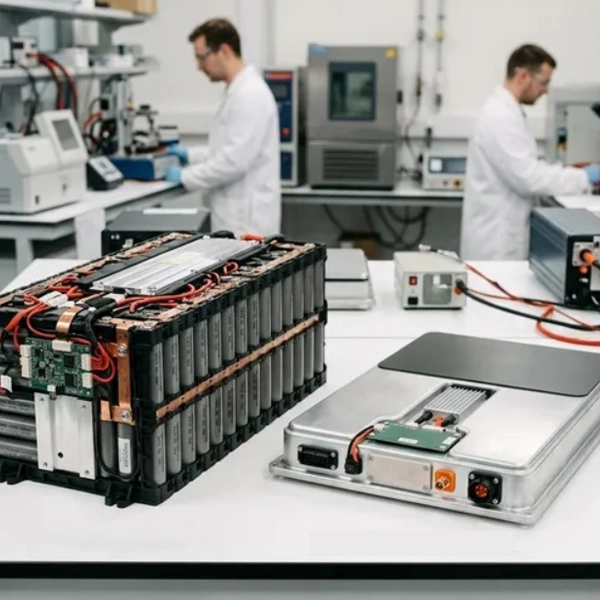
Solid-state vs lithium-ion EV batteries by use case
The better battery depends on the job. Lithium-ion fits buyers who need a dependable, available EV at a known price. Solid-state is more likely to matter first for buyers willing to pay for range, weight savings, or early access to new battery technology.
Lithium-ion batteries fit affordable everyday EVs
For most everyday buyers, lithium-ion is still the sensible option. It is already widely available, pricing is more competitive, and there is far more real-world data on battery life, charging behavior, and warranty support.
A household replacing a gas car for commuting, school runs, errands, and occasional weekend travel should compare current EV range, home-charging access, incentives, insurance, and monthly payment before worrying too much about solid-state timelines.
Solid-state batteries fit premium long-range EVs
Early solid-state EVs are more likely to appear in premium models because the first production versions will probably be expensive. Luxury sedans, performance crossovers, and flagship long-range vehicles are easier places to absorb that cost.
This use case makes sense if the buyer values fewer road-trip charging stops, lower weight, and new technology more than the lowest purchase price. It is less compelling for someone who mainly drives locally and already has access to overnight charging.
Both technologies may serve different EV markets
A mixed market is more realistic than a sudden replacement. Battery choices usually follow vehicle purpose, price target, supply chain, and durability needs.
| EV buyer or vehicle type | Battery that may fit best | Why it makes sense |
|---|---|---|
| Budget commuter | Lithium-ion, often LFP | Lower cost and enough range for daily use |
| Long-range premium EV | Solid-state, if proven | Higher density could justify the price |
| Work truck or fleet vehicle | Depends on durability and cost | Uptime and total cost may matter more than maximum density |
| Urban small EV | Lithium-ion | A smaller affordable pack may be the better trade-off |
Should you wait for a solid-state EV?
Most buyers should not wait only because solid-state batteries sound better. Wait if your current vehicle still works, you like early technology, and you are comfortable with uncertain timing and likely higher early prices. Buy a lithium-ion EV now if the available models already cover your driving and charging needs.
Buying a lithium-ion EV makes sense today
A lithium-ion EV makes sense today when the range fits your normal week, you can charge conveniently, and the price works after incentives and ownership costs. That is the first decision filter, not the battery headline.
- Good fit: daily commuting, home charging, predictable routes, occasional trips.
- Think harder: no reliable charging, frequent long rural drives, heavy towing, tight budget.
- Common mistake: waiting for a future battery while ignoring EVs that already meet your actual use.
Waiting may bring future battery improvements
Waiting can be reasonable if you do not need a car soon and your current choices feel genuinely limiting. Someone who frequently drives long interstate routes or wants an electric truck with less range penalty may get more from next-generation batteries than a short-distance commuter would.
The risk is timing. "Available" can mean a prototype, a pilot fleet, a limited premium launch, or a mainstream model at normal dealer availability. Those milestones may be years apart.
Conclusion
Solid-state batteries look better on future energy density, but lithium-ion batteries are still the stronger real-world choice for most EV shoppers today. The practical decision is simple: buy the EV that fits your range, charging, and budget now, and treat solid-state promises as a reason to watch future models rather than a reason to pause every purchase.