
Which Automaker Leads Solid State Battery Advances?
See why Toyota leads the best automaker for solid state battery advancements and how Nissan and Honda compare.
Toyota is still the strongest answer for the best automaker for solid state battery advancements in 2026, mainly because it has the clearest mix of long-term research, manufacturing intent, and vehicle-scale ambition. Nissan and Honda are the closest challengers, but the real test is not who has the most exciting battery claim; it is who can move from promising cells to reliable, affordable production.
What are solid-state batteries and why do they matter?
Solid-state batteries matter because they could remove some of the biggest limits in today’s EVs: range anxiety, long charging stops, battery weight, and safety concerns. The important word is could. The technology is promising, but it still has to prove itself in factories and real vehicles.
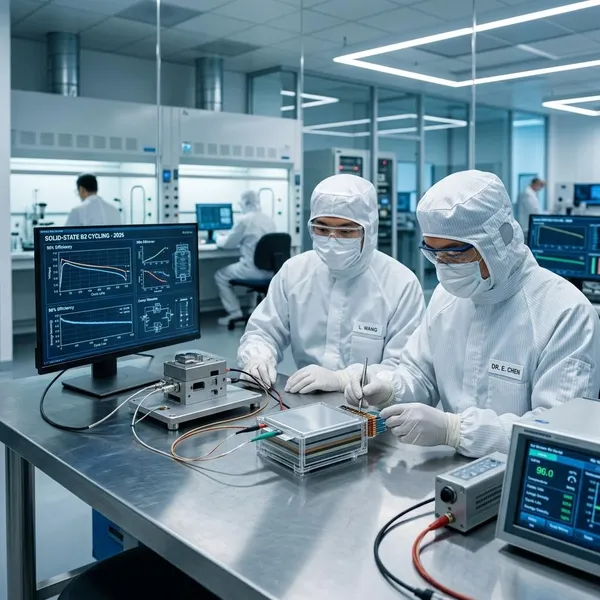
Solid-state batteries replace liquid electrolytes with solid materials
A solid-state battery uses a solid electrolyte instead of the liquid or gel electrolyte found in most lithium-ion EV batteries. That change may sound small, but it can affect the whole cell design, including how ions move, how heat is managed, and what materials can be used inside the battery.
For a driver, the practical point is simple: if the chemistry works at automotive scale, automakers may be able to build packs that store more energy in less space. That could help a compact EV travel farther without needing a much larger battery.
Solid-state batteries improve range and charging potential
The appeal is higher energy density and potentially faster charging. A family that often takes highway trips would care about range and charging speed; a city driver may care more about a smaller, lighter battery that keeps the car efficient and affordable.
- Longer range: more usable energy in a similar pack size.
- Faster charging potential: less heat stress if the final design supports it.
- Better packaging: more flexibility for vehicle layout and weight.
- Possible safety gains: less reliance on flammable liquid electrolyte, depending on the design.
Solid-state batteries still face production challenges
The hard part is not proving that a solid-state cell can work in a lab. The hard part is making thousands, then millions, of consistent cells that last for years, tolerate fast charging, survive temperature swings, and do not create unacceptable warranty risk.
That is why pilot lines, yield rates, supplier readiness, and model-specific launch plans matter more than dramatic prototype announcements.
Which automakers are developing solid-state batteries?
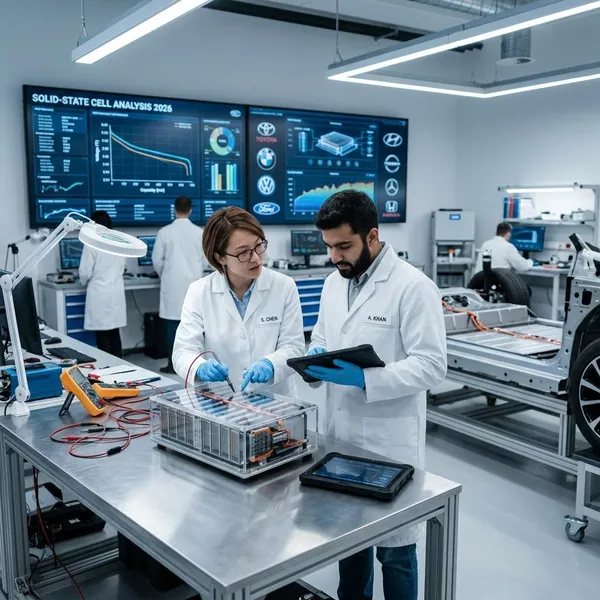
Toyota, Nissan, Honda, BMW, Mercedes-Benz, and Volkswagen are among the most important automakers to watch. They are not all following the same route: some are building deeper in-house programs, while others lean more heavily on battery partners and suppliers.
A useful first check is whether the automaker has moved beyond research language into manufacturing preparation. Battery leadership is not just a science contest; it is an industrial execution problem.
| Automaker | Current strength | Main question to watch |
|---|---|---|
| Toyota | Long-term research and broad battery roadmap | Can it turn its lead into scalable production? |
| Nissan | Commercialization focus and EV experience | Can pilot production stay on schedule? |
| Honda | Manufacturing-focused development | Can quiet process work become a launch advantage? |
| BMW and Mercedes | Premium positioning and specialist partnerships | How much control do they have over timing? |
| Volkswagen | Scale and supplier network | Can a large group align platforms quickly enough? |
Toyota builds a long-term battery strategy
Toyota remains the front-runner because its solid-state work appears to be part of a long battery roadmap rather than a one-off technology headline. The company has spent years building research depth, and it has the scale to matter if it reaches dependable production.
The reason Toyota is the safest pick is not that it has already solved every problem. It is that its path looks more complete: chemistry research, manufacturing planning, supplier thinking, and future vehicle integration are all part of the same story.
Nissan targets future solid-state EV deployment
Nissan is the strongest challenger because it has connected solid-state batteries to future EV cost, performance, and deployment goals. Its long EV history also helps; a company that has already dealt with battery warranties, real charging behavior, and customer expectations has a better sense of what must be proven before launch.
Honda develops production-focused battery technology
Honda deserves attention because it appears focused on manufacturability, not just performance claims. That can look less exciting from the outside, but it targets the stage where many battery technologies slow down.
If the race becomes less about who announces first and more about who can build repeatable cells with stable quality, Honda could become a more serious contender than its current publicity suggests.
BMW and Mercedes invest through partnerships
BMW and Mercedes-Benz are more likely to use solid-state technology through partnerships with specialist battery companies. That can be a smart route, especially for premium models where higher early costs are easier to absorb.
The trade-off is control. If the partner’s chemistry, yield, or durability testing slips, the automaker’s vehicle timeline can slip too. For an early luxury model, that may be acceptable; for broad market leadership, it is a weaker position.
Volkswagen advances battery technology through suppliers
Volkswagen’s advantage is scale. If a viable solid-state solution becomes ready through its supplier network, the group has the brand reach and manufacturing footprint to spread it widely.
The risk is complexity. A large multi-brand group has more platforms, suppliers, and product decisions to align before a new battery type can move across the lineup.

Which automakers are the strongest challengers?
Nissan and Honda are the most credible challengers to Toyota right now. European brands are still important, but their progress is harder to judge because more of it depends on external battery partners.
For a reader trying to separate real progress from noise, the best signals are practical ones: pilot production, durability testing, cost targets, and battery plans tied to actual vehicles.
Nissan advances toward commercialization
Nissan’s case is built around commercialization. It is not enough for a company to say that solid-state batteries will be better; it needs to show how the cells will fit into future EVs, how costs may fall, and how production can be repeated.
- Good signal: pilot-line updates with clear production goals.
- Better signal: solid-state plans connected to named vehicle programs.
- Weak signal: broad battery claims with no manufacturing detail.
Honda focuses on manufacturing development
Honda’s strongest argument is that it is paying attention to the boring but decisive part of the race: production. A battery that works beautifully in a small batch is not enough if it cannot be made with consistent quality.
That makes Honda especially interesting for people watching the industry rather than shopping immediately. Quiet process development can suddenly look much more important once launch dates get closer.
European brands rely on strategic partnerships
BMW, Mercedes, and Volkswagen can still be early movers in selected models, especially where premium pricing supports expensive new technology. A limited luxury launch is more realistic than an instant mainstream rollout.
The caution is that partnership-led progress is only as strong as the partner’s manufacturing readiness. If you are judging leadership, look for shared factory plans and vehicle integration details, not just investment announcements.
When will solid-state battery EVs become available?
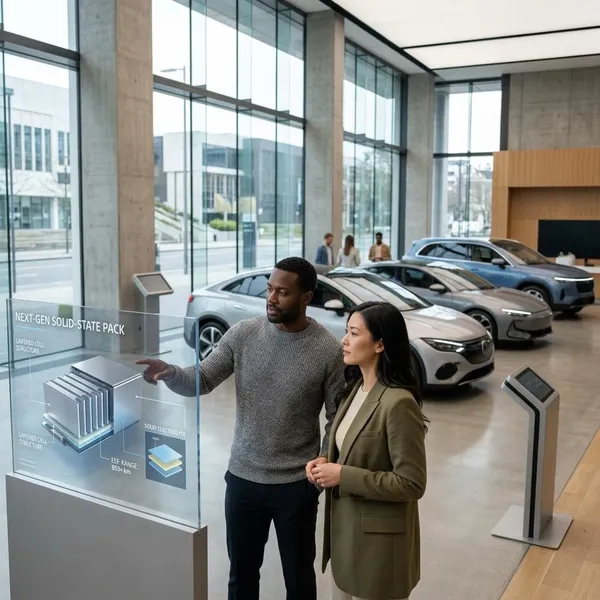
Early solid-state EVs are more likely to appear as limited launches than widely available showroom models. The first phase may involve controlled markets, higher prices, and carefully monitored customer use.
That means a launch announcement does not automatically mean you can walk into a local dealer and buy one at a normal EV price.
Early models will likely launch in limited markets
A limited rollout lets an automaker control risk. It can monitor real-world charging behavior, service needs, battery management software, and durability before expanding availability.
One realistic scenario is a premium or domestic-market model arriving first, while global buyers wait. That would still be meaningful progress, but it would not equal mass adoption.
Mass adoption depends on production scale
Mass-market availability requires enough cells at a price and quality level that automakers can support warranties across large vehicle volumes. Until then, solid-state batteries may remain a high-end or low-volume feature.
The automaker that matters most may not be the first to show a working battery. It may be the one that learns how to build it cheaply and consistently.
Current lithium-ion EVs remain practical today
Current lithium-ion EVs are still the better choice for many buyers because they are proven, available, and supported by real-world ownership data. If you need a car for commuting, school runs, or predictable daily use, waiting for solid-state technology could simply delay a useful purchase.
A different scenario is someone with a reliable current car, flexible timing, and a strong interest in next-generation battery tech. That buyer may reasonably wait and watch the first solid-state launches before deciding.
Conclusion
Toyota is the strongest pick today because its solid-state work looks the most connected to long-term production, not just research momentum. Nissan is the challenger to watch for commercialization, Honda for manufacturing discipline, and European brands for premium or partner-led moves. For buyers, the practical judgment is simple: follow factory progress more closely than launch hype, and do not let future battery promises make a good current EV decision harder than it needs to be.