
Is Solar or a Generator Better for Home Backup?
Compare solar power vs generator for home backup by cost, runtime, noise, maintenance, and safety. Find the right fit and learn more.
The practical answer in the solar power vs generator choice is simple: use solar battery backup when you want quiet, indoor-friendly power for essentials, and choose a fuel generator when you need longer runtime or heavier loads. Start with your must-run devices, your usual outage length, and whether you are willing to store fuel and maintain an engine.
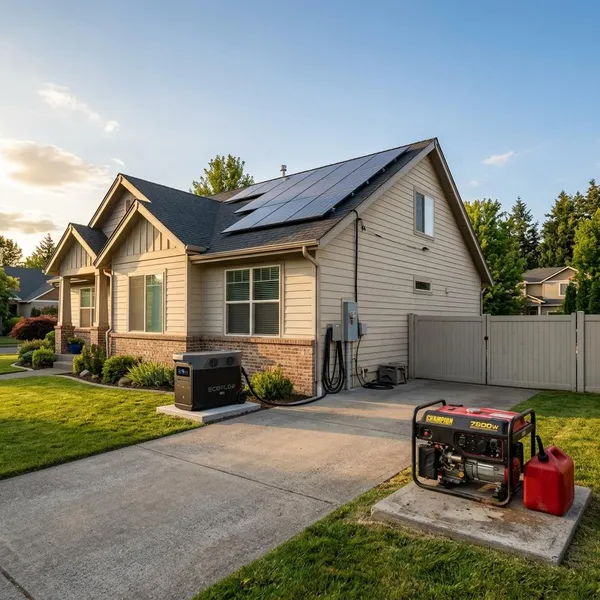
Solar Backup Pick EcoFlow DELTA Pro 3
| Product | EcoFlow DELTA Pro 3 Portable Power Station |
|---|---|
| Capacity | 4,096Wh LFP battery, expandable for greater backup power. |
| AC Output | Up to 4,000W continuous output for home appliances, tools, and essential devices. |
| Charging Methods | Supports AC, solar, car, and generator charging. |
| Solar Ready | Compatible with solar panels for off-grid and outdoor use. |
| Ports | Multiple AC, USB, and DC outputs for charging various devices. |
| Smart Control | Monitor and control via the EcoFlow app. |
| Best For | Home backup, RVs, camping, emergencies, off-grid living, and outdoor work. |
Battery power and usable storage
- Good battery loads: refrigerator, modem, router, LED lights, phones, laptops, TV, small fans, and many medical devices.
- Fast-draining loads: space heaters, electric kettles, toaster ovens, hair dryers, large pumps, and central HVAC equipment.
- Best planning habit: write down what must stay on overnight, then compare that list with the battery’s usable watt-hours.
Solar charging and expansion
Solar charging gives the DELTA Pro 3 more flexibility, especially during outages that last beyond one night. In good sun, panels can recover part of the battery during the day so you are not relying only on the charge you had when the power went out.
Best uses and limitations
Solar battery backup is strongest for short outages, overnight essentials, quiet indoor use, and homes where fuel storage is awkward or unsafe. It also fits people who want backup power they can actually use without dragging equipment outside during rain or darkness.
Fuel Generator Pick Honda EU7000iS
| Type | Inverter Generator |
|---|---|
| Output | 7,000W max / 5,500W rated |
| Voltage | 120/240V |
| Engine | Honda GX390 EFI |
| Fuel | Gasoline, 5.1 gal |
| Runtime | Up to 16 hrs at 1/4 load |
| Noise | 52–58 dB(A) |
| Start | Electric |
| Weight | Approx. 261 lbs |
| Features | Quiet, EFI, inverter power |
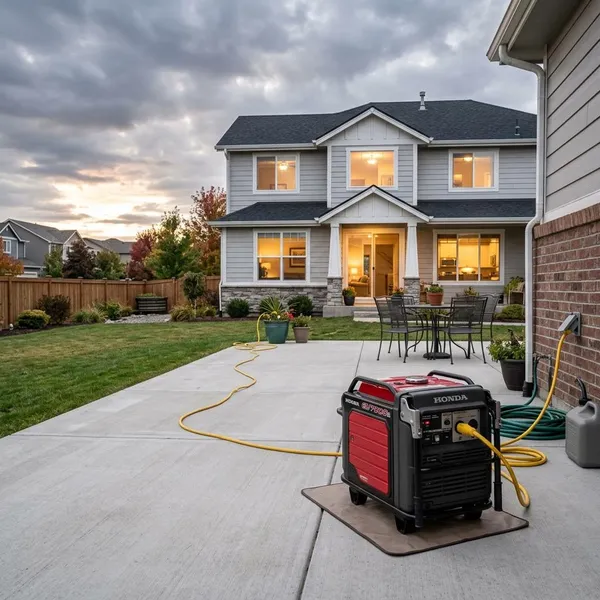
Running power and fuel runtime
The Honda EU7000iS is a 7,000-watt class inverter generator, but the number to plan around is the rated running output and the startup surge of your appliances. Refrigerators, pumps, and air conditioners can need more power at startup than they use once running, so turning everything on at once is a common way to overload a generator.
The advantage is endurance. If the tank runs low and you have safe fuel available, you can refuel and keep going. That is a real benefit during a two- or three-day outage, especially when cloudy weather would make solar recovery uncertain.
Refueling and maintenance
Refueling is fast, but it is not effortless. You need fresh fuel, approved containers, safe storage, and a plan for what happens if nearby gas stations are closed or out of power.
- Run it outside only: keep the generator away from doors, windows, vents, and garages because carbon monoxide is dangerous.
- Test before storm season: a generator that has sat for months may not start easily when you need it.
- Budget for upkeep: oil, filters, fuel treatment, spark plugs, and occasional service are part of ownership.
Best uses and limitations
A fuel generator is usually the better fit for long outages, larger startup loads, and homes where losing a pump, freezer, or cooling system would create a serious problem. It also gives more confidence when the weather that caused the outage is the same weather that would limit solar charging.
Which Backup Option Fits Your Needs
| Home situation | Better starting point | Why it fits |
|---|---|---|
| Short outages, fridge, Wi-Fi, lights, charging | Solar battery | Quiet, quick to use, and low maintenance |
| Multi-day storm outages or heavy pump loads | Fuel generator | Can keep running if fuel is available |
| Frequent short outages plus rare severe events | Hybrid setup | Battery handles daily comfort; generator adds endurance |
Solar batteries for quiet low-maintenance backup
Choose a solar battery first if your priority is convenience. It is the better everyday backup for modest loads, night outages, remote work interruptions, medical-device support, and homes where noise or exhaust would be a major problem.
Fuel generators for long outages and high loads
Choose a fuel generator first if your essential list includes equipment that either draws a lot of power or must keep cycling for safety: sump pumps, well pumps, multiple freezers, window AC during heat waves, or tools needed after a storm.
Hybrid systems for flexible emergency power
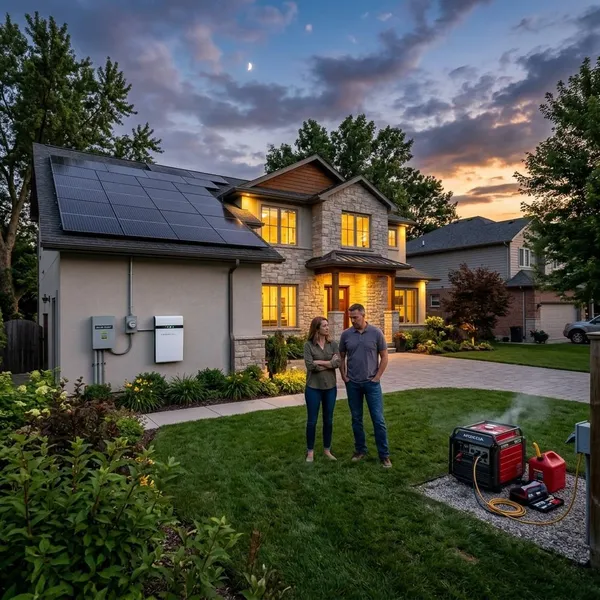
A hybrid system is often the most practical middle ground. The battery covers quiet indoor essentials overnight, while the generator handles heavy loads or recharges the battery during longer outages.
- List essentials first: include running watts and startup watts where possible.
- Separate comfort from necessity: a router may matter more than a microwave during the first night.
- Match the outage pattern: short and frequent favors battery; long and harsh favors generator support.
- Plan the connection: use safe transfer equipment or properly rated cords instead of improvising during an outage.
- Compare total cost: include panels, fuel, maintenance, cables, transfer switches, and future expansion.
Conclusion
If you want the least hassle for essential indoor backup, start with a solar battery; if you need days of runtime or have pumps and heavy appliances, start with a fuel generator. The smartest choice is the one that matches your real outage pattern, not the one with the most impressive headline rating, and many homes will get the best balance by using battery power for quiet essentials and generator power only when endurance matters.