
Is Solar or Gas Better for Home Backup Power?
Learn how solar power vs gas generator options differ in upfront cost, long-term expenses, recharge, and refueling.
For most homes, the solar power vs gas generator choice comes down to one question: do you need quiet essential backup, or do you need high-output power for a long outage? A solar battery is usually easier to live with for lights, internet, refrigeration, and small devices. A gas generator usually makes more sense when pumps, large appliances, or multi-day runtime matter more than noise and maintenance.
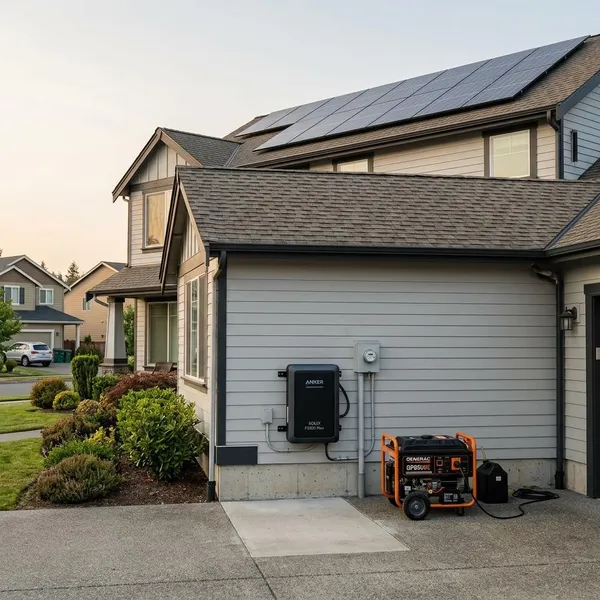
Anker SOLIX F3800 Plus vs Generac GP6500E
The Anker SOLIX F3800 Plus and the Generac GP6500E show the real split between modern battery backup and a gasoline generator. The Anker is built around stored electricity, quiet operation, and flexible charging. The Generac is built around an engine, stronger continuous output, and the ability to keep running as long as fuel is available.
| Category | Anker SOLIX F3800 Plus | Generac GP6500E |
|---|---|---|
| Best for | Quiet home backup and essential devices | High-load emergency or jobsite power |
| Power source | Battery, wall or solar rechargeable | Gasoline engine |
| Output | Up to 6,000W, 120V/240V | 6,500W running / 8,125W starting |
| Capacity | 3,840Wh, expandable | 6.9-gallon fuel tank |
| Runtime | Varies by load | Up to 10 hours at 50% load |
| Use experience | Quiet, no exhaust, low maintenance | Loud, fuel required, outdoor use only |
| Maintenance | Minimal | Oil, fuel, and engine upkeep |
| Main limit | Heavy loads drain battery faster | Needs fuel and safe outdoor placement |
Power output and starting loads
Do not compare these two only by headline wattage. The more useful check is whether your backup system can handle both the normal running watts and the brief startup surge from motor-driven appliances.
Battery runtime and fuel runtime
- Light backup: refrigerator, router, lights, phone charging, and a few small devices are battery-friendly.
- Medium backup: add a microwave, coffee maker, or several fans, and battery runtime drops noticeably.
- Heavy backup: electric heat, large AC loads, and pumps can push many battery setups out of their comfort zone.
Solar recharging and refueling
Solar recharging gives the Anker a useful escape route during longer outages: you are not limited only to the energy stored before the blackout. If the panels get enough sun and your loads stay modest, you can recover some capacity during the day and use it again at night.
Noise, maintenance, and safety
This is where the day-to-day difference becomes obvious. A battery system is quiet enough for overnight use and does not produce exhaust during operation. A gas generator must run outdoors, away from openings and enclosed spaces, because carbon monoxide can be deadly.
The Generac also needs owner attention before the emergency: oil, fuel stabilizer, spark plug checks, test runs, and clean storage. If you enjoy maintaining equipment, that may not be a problem. If you know the generator will sit untouched for two years, a battery system may be the more reliable choice for you in practice.
Upfront and long-term costs
A gas generator usually wins on purchase price. That is why it is attractive when you need serious backup power quickly without buying a large battery system, solar panels, and possible home integration equipment.
- Generator costs: fuel, oil, stabilizer, parts, maintenance time, cords, inlet equipment, and safe storage.
- Battery costs: higher initial setup, possible solar panels or expansion batteries, and eventual battery aging.
- Frequent outages: solar battery ownership becomes more appealing because daily use is quieter and less hands-on.
- Rare severe outages: a gas generator may still be the more economical standby tool.
How Solar Backup and Gas Generators Work
Solar backup and gas generators solve the same problem in opposite ways. A battery stores electricity before you need it. A gas generator makes electricity during the outage by running an engine.
Stored electricity in a solar battery
A solar battery stores energy from the grid, solar panels, or both, then sends usable AC power through an inverter when the grid is down. That makes it a good fit for essentials that benefit from instant, clean, quiet power: a refrigerator, modem, router, lights, laptop, medical device approved for that setup, or phone charging.
Fuel-powered electricity from a gas engine
A gas generator burns gasoline to turn an engine, which drives an alternator and produces electricity. That is why it can support heavier loads without needing a large bank of stored energy first.
Recharging compared with refueling
- Solar battery: best when you can reduce loads during the day and let panels recover useful energy.
- Gas generator: best when fast recovery and higher output matter more than noise or fuel handling.
- Weak spot for solar: poor sun exposure or bad weather can make charging too slow.
- Weak spot for gas: stored fuel runs out, and local fuel access may not be reliable during storms.
Runtime limits for each system
No backup option is unlimited. A battery is limited by stored capacity, recharge speed, and load discipline. A generator is limited by fuel, safe operating conditions, and maintenance.
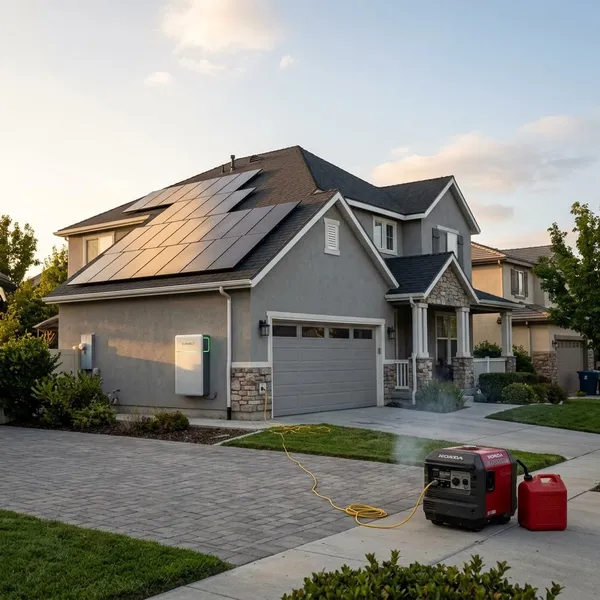
Which Option Is Better for Home Backup
The better home backup option depends less on the technology and more on your outage profile. If your main worry is keeping food cold, staying online, and having lights at night, a solar battery is often the more comfortable choice. If you need pumps, larger appliances, or several days of backup, a gas generator or hybrid setup deserves a closer look.
Solar batteries for quiet essential-load backup
Solar batteries are strongest when the backup plan is focused. Think of a townhouse or suburban home where outages usually last a few hours: the refrigerator stays on, phones charge, the router works, and no one has to listen to an engine outside the bedroom window.
Gas generators for long outages and high loads
Gas generators make more sense when the outage plan includes heavy or urgent loads. A home with a well pump, sump pump, several freezers, or a window AC unit during hot weather may need the stronger output and repeatable runtime that a generator can provide.
Hybrid systems for extended emergency power
A hybrid system is often the most resilient option if the budget and setup allow it. The battery handles quiet overnight essentials, while the generator is used selectively for heavy loads or to recharge when solar production is poor.
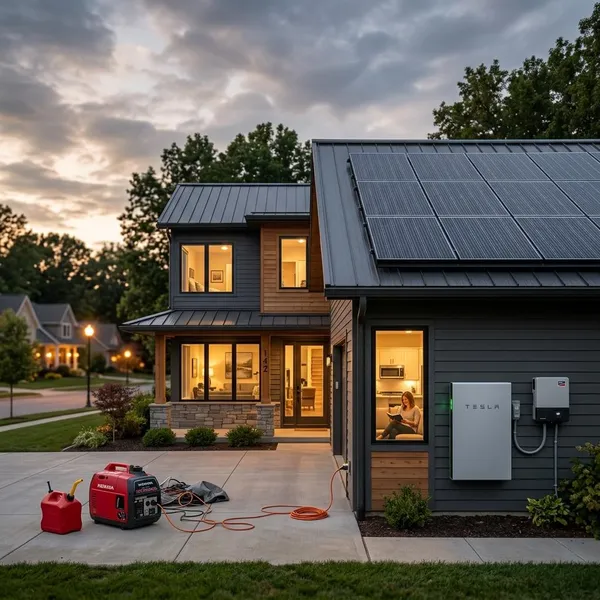
How to Choose the Right Backup System
Start with your loads, not with the product category. The right system is the one that can start your essential appliances, last through your likely outage, and stay ready without creating safety or maintenance problems you will ignore.
Calculate running and startup watts
Make a short list of what must run: refrigerator, freezer, lights, router, medical equipment if applicable, sump pump, well pump, fan, laptop, and phone charging. Then check the label, manual, or manufacturer information for running watts and startup surge.
Estimate the expected outage duration
Use the outages you actually get most years as your baseline. A battery is often a good fit for short blackouts where comfort, quiet, and easy startup matter most. A generator becomes more practical when outages regularly stretch into days.
Compare upfront and ongoing expenses
- Choose lower upfront cost: gas often has the advantage.
- Choose lower owner effort: battery backup usually feels easier.
- Choose repeated quiet use: solar battery costs may be easier to justify.
- Choose occasional high-output backup: a generator may be enough.
Consider noise and maintenance tolerance
Noise is not a small detail either. If you live close to neighbors, have young children, work from home during outages, or need overnight backup, a battery system may be worth more than its spec sheet suggests. Comfort can matter as much as capacity when the power is out for hours.
Check sunlight and gasoline availability
Look at the energy source you can realistically count on. Solar backup needs usable sun exposure, enough panel capacity, and a place to set up or mount panels without heavy shade. Gas backup needs safely stored fuel or reliable access to gasoline when roads, stations, and power systems may be stressed.
Conclusion
Choose a solar battery if your real goal is quiet, low-maintenance backup for essentials, and choose a gas generator if your priority is stronger output for long outages or heavy loads. If both problems matter in your home, a hybrid setup is often the most practical answer. The smartest purchase starts with your appliance list, your usual outage length, and the weak point you are most willing to manage: limited stored energy, limited sunlight, fuel handling, or engine maintenance.