
Best Battery for Solar Power System Performance
Learn how to choose the best battery for solar power system performance based on lifespan, cost, backup needs, and efficiency.
For most homes, the best battery for solar power system use is a LiFePO4 battery because it balances long life, usable capacity, safety, and low maintenance better than most alternatives. Other lithium batteries can still be excellent, while lead-acid batteries mainly make sense when the budget is tight or the battery will only be used occasionally.
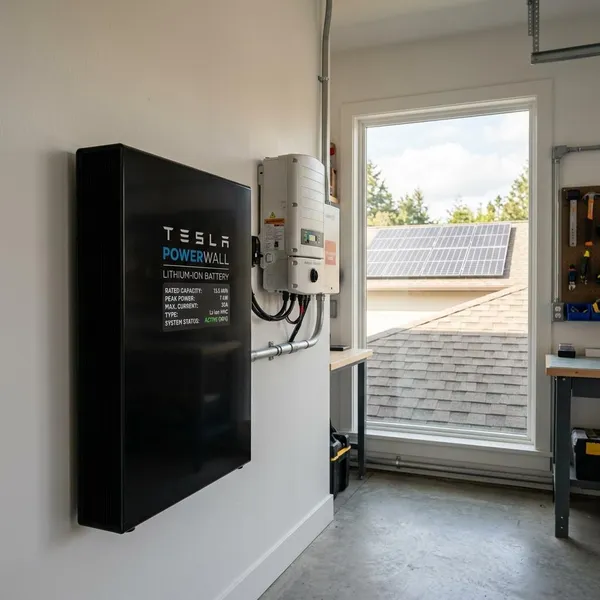
What Is the Best Battery for a Solar Power System?
The best choice depends on how the battery will be used. A home that charges and discharges a battery every day needs a different setup from a shed, cabin, or backup system that only runs during the occasional outage.
If you are choosing for a normal grid-connected home, start with three questions: how often will the battery cycle, how much backup do you actually need, and how long do you expect the system to last before replacement. Those answers usually matter more than the brand name on the case.
LiFePO4 batteries are the best choice for most homes
If you want a practical home battery that can handle regular use, LiFePO4 is usually the safest recommendation. It is a lithium iron phosphate chemistry known for long cycle life, good thermal stability, and very little routine maintenance.
The biggest advantage is not just that it lasts longer on paper. It also gives you more usable energy from its rated capacity than most lead-acid options. For a household that wants to store solar power in the afternoon and use it every evening, that difference becomes important quickly.
- Best fit: daily solar self-consumption, home backup, long-term residential storage.
- Less ideal: buyers who only need the cheapest short-term backup option.
Lithium batteries offer the best overall performance
Lithium batteries usually win on efficiency, charge speed, usable capacity, and compact design. That makes them a strong fit for homes where the battery needs to work smoothly with a hybrid inverter, backup panel, and changing household loads.
Not all lithium batteries are the same, though. LiFePO4 often has the edge for residential safety and long life, while NMC can be attractive where space is limited and the battery system is designed as a compact integrated unit. If two lithium batteries look similar in size, compare usable kWh, warranty conditions, supported inverters, and safety certifications before assuming they perform equally.
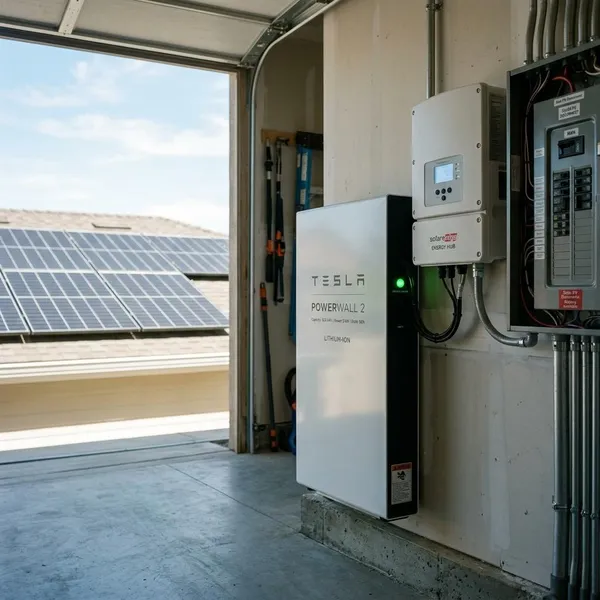
Why Battery Choice Matters for Solar Systems
A solar battery is not just extra storage. It decides how much of your solar energy you can actually use, how long your home can stay powered during an outage, and how soon you may face replacement costs.
Two batteries with the same advertised kWh rating can behave very differently. One may provide steady usable energy for years; another may lose capacity faster or require more careful charging habits. That is why chemistry, usable capacity, power output, and build quality should be checked before price.
Battery chemistry affects lifespan and efficiency
Chemistry affects how much energy is lost during charging and discharging, how deeply the battery can be used, and how quickly it wears out. Lithium batteries generally offer better round-trip efficiency than lead-acid, which means more of your stored solar power is available later.
For light backup, this may not matter much. For daily cycling, it matters a lot. A battery that loses more energy and wears faster can quietly cost more even if the first quote looks cheaper.
Battery capacity affects available solar energy
Capacity should be judged by usable kWh, not only the number printed on the battery. A 10 kWh battery is not automatically 10 kWh of practical backup power, because usable capacity depends on chemistry, depth-of-discharge limits, inverter settings, and reserve settings.
Also check power output. Capacity tells you how long the battery can run loads; power rating tells you what it can run at the same time. A battery may store enough energy for a refrigerator and lights, but still struggle if a pump, heater, or large appliance needs a high startup surge.
Best Solar Battery Types for Different Needs
The easiest way to choose is to match the battery type to the job. Daily home storage, compact installation, occasional backup, and off-grid use do not all reward the same chemistry.
| Battery type | Where it usually fits best | Main tradeoff to check |
|---|---|---|
| LiFePO4 | Daily home use, backup power, long-term storage | Higher upfront cost than lead-acid |
| NMC lithium | Compact systems and integrated premium batteries | Compare cycle life and safety design carefully |
| AGM or gel | Budget backup and occasional-use systems | Shorter life and less usable energy for daily cycling |
LiFePO4 batteries deliver long life and low maintenance
LiFePO4 is the most sensible default for homeowners who want a battery they can use regularly without much attention. It avoids the watering and ventilation concerns associated with some lead-acid setups and is generally more forgiving for daily cycling.
Think of a family using stored solar power most evenings. In that situation, cycle life is not a technical detail; it is the difference between a battery that still feels useful years later and one that may need early replacement.
NMC batteries provide high energy density
NMC batteries store a lot of energy in a relatively compact package. That can matter if wall space is limited, the battery must fit in a tight utility area, or the system is sold as a clean integrated unit.
Compactness should not be the only reason to choose NMC. If you have enough installation space, compare it against LiFePO4 on warranty, expected cycles, thermal management, and usable capacity. The better choice is the one that fits your home's use pattern, not the one with the most impressive energy density.
AGM and gel batteries offer affordable backup power
AGM and gel batteries are sealed lead-acid options that can be useful for smaller systems where daily cycling is not the plan. They are often easier to live with than flooded lead-acid batteries, but they still need correct charging and sensible discharge limits.
- Good use: short outages, small cabins, sheds, essential lights, occasional backup.
- Weak use: daily whole-home energy shifting or heavy off-grid cycling.
- Common mistake: buying lead-acid for the low price, then using it like a lithium battery.
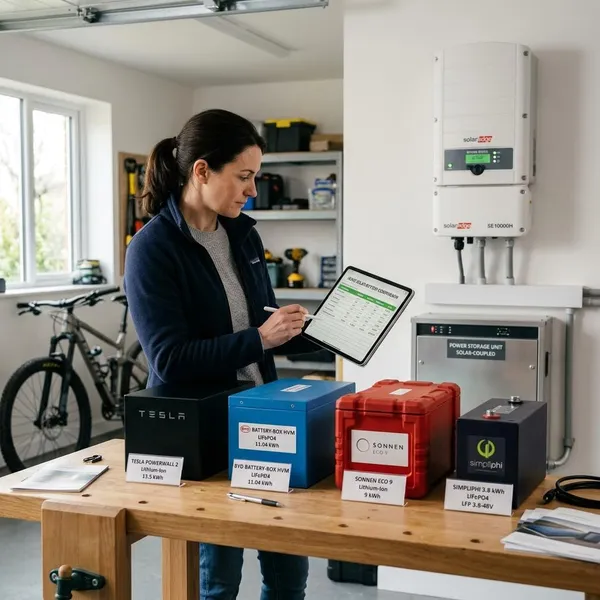
How to Choose the Right Solar Battery
Start with the job you need the battery to do, then size and compare products around that job. A battery for lowering evening grid use is not the same decision as a battery for storm backup or full off-grid living.
The first check should be your loads, not the battery catalog. Decide what must stay on, how long it should run, and whether the battery will be used every day or only during outages.
Define your energy and backup goals
Before comparing quotes, separate your goal into one of three buckets:
- Self-consumption: storing daytime solar power for evening use.
- Backup: keeping selected circuits running during outages.
- Off-grid support: covering nights, cloudy periods, and daily cycling without relying on the grid.
A homeowner who only wants the fridge, lights, Wi-Fi, and a few outlets during a blackout can often avoid the cost of full-home backup. Someone trying to run air conditioning, electric heat, or a well pump needs a more careful design because both energy use and surge power can be much higher.
Match battery capacity to your power needs
Match battery capacity to the loads you will actually run. Full-home backup sounds appealing, but it can make the system much more expensive than backing up essential circuits.
- List the appliances and circuits you want backed up.
- Estimate how many hours they need to run.
- Use usable kWh, not just rated kWh.
- Check continuous and surge power for large loads.
- Leave some margin for cloudy weather, aging, and unexpected use.
For example, if essential loads use about 1 kWh per hour and you want 8 hours of backup, you need roughly 8 kWh of usable storage before adding a reserve. If the same home wants to run air conditioning or electric water heating, the battery and inverter requirements can change dramatically.
Compare warranty and expected lifespan
A solar battery warranty is only useful if it matches the way you plan to use the battery. Read beyond the headline number of years and look for cycle limits, throughput limits, retained capacity, temperature conditions, and installation requirements.
For daily cycling, expected lifespan should carry more weight than the lowest purchase price. For occasional backup, the calculation can be different because the battery may sit idle most of the time. Either way, ask the installer what happens if capacity drops early, how monitoring works, and who handles warranty claims.
Are Solar Batteries Worth It?
Solar batteries are worth it when they solve a real problem: unreliable grid power, low export credits, high evening electricity rates, or a strong need for energy independence. They are less convincing when net metering is generous, outages are rare, and the battery would sit unused most of the year.
The mistake is treating a battery as an automatic upgrade for every solar system. Sometimes it is the best part of the setup. Other times, better insulation, load shifting, or more solar panels may produce a stronger financial result.
Batteries provide reliable backup power
Backup power is the clearest reason to buy a solar battery. A properly designed system can keep essentials such as refrigeration, lighting, internet equipment, garage access, or selected outlets running when the grid is down.
For short and moderate outages, batteries are quiet and convenient compared with fuel generators. For longer outages, you still need to think carefully about solar recharge, weather, essential-load limits, and whether a generator should remain part of the plan.
Batteries increase solar self-consumption
If your utility pays little for exported solar power, storing excess electricity for evening use can make more sense than sending it back to the grid. This is especially relevant with time-of-use rates, where evening electricity can cost more than midday power.
A practical example is a household that is empty during the day but uses most electricity after work. Without a battery, much of the daytime solar production may leave the home. With a battery, more of that energy can be used after sunset.
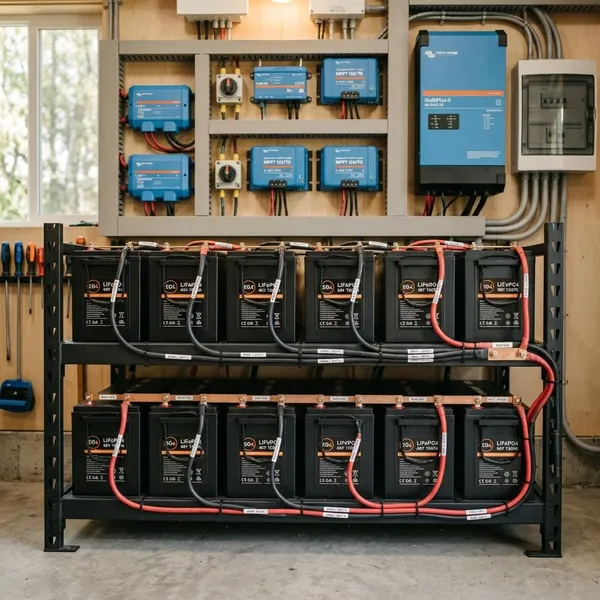
Conclusion
For most homeowners, LiFePO4 is the most balanced choice because it fits daily use, backup needs, safety expectations, and long-term value better than lead-acid. Lead-acid can still be reasonable for low-cost occasional backup, and NMC can work well where compact design matters, but the smart decision starts with your loads, backup goal, inverter compatibility, and how often the battery will actually cycle.