
Which Solar Battery Type Is Right for Your System?
Learn which is the best battery type for solar for home backup, off-grid use, or RVs, with tips on sizing, safety, and long-term value.
The best battery type for solar depends on how often the system runs, how much backup power is needed, and whether the setup is for a home, off-grid cabin, RV, or occasional emergency use. For most residential solar installations, LiFePO4 lithium batteries offer the best overall value because they last longer, charge efficiently, handle daily cycling well, and require almost no maintenance. Lead-acid batteries can still work for lower-cost or lightly used systems, but they usually have a shorter lifespan and lower usable capacity.
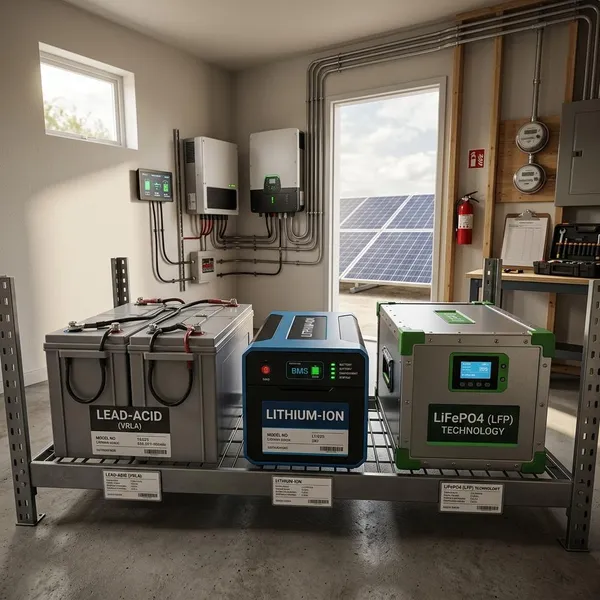
Why does battery type matter in a solar system?
Battery chemistry affects lifespan and performance
Chemistry decides how well a battery handles repeated charging and discharging. LiFePO4 usually performs better for solar because it can often handle deeper regular use with less wear than traditional lead-acid batteries.
For daily evening use, this matters a lot. A homeowner storing solar power every afternoon for nighttime loads will usually get better long-term value from lithium-based storage. For a shed light or backup battery used a few times a year, the advantage is still real, but the payback may be less obvious.
Battery capacity affects available stored energy
Capacity only helps if it is usable. A 10 kWh battery on paper does not always give you 10 kWh of practical energy, because batteries have recommended discharge limits and efficiency losses.
- Daily home use: focus on usable capacity, not just rated capacity.
- Emergency backup: list your essential loads first, such as fridge, lights, router, and medical devices.
- Off-grid use: leave room for cloudy days instead of sizing only for perfect sunshine.
A common mistake is buying a battery bank that looks large enough, then discovering the inverter, discharge limit, or safe usable capacity cannot support the appliances you expected.
Battery design affects safety and maintenance
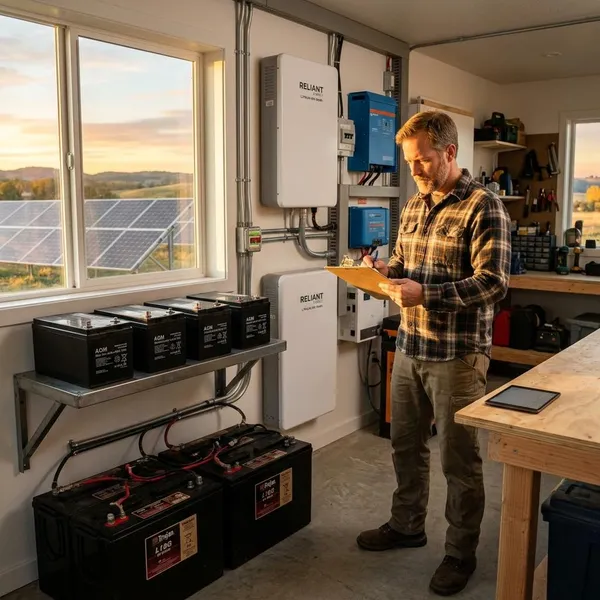
Battery design affects where you can install it and how much attention it needs later. Flooded lead-acid batteries may require ventilation and water checks, while sealed AGM, gel, and lithium batteries are usually easier to live with.
For a garage, utility room, RV compartment, or vacation cabin, low-maintenance design is more than a convenience. It reduces the chance that the battery is neglected after installation. If you do not want regular checks, avoid choosing a battery that depends on regular maintenance to stay healthy.
What are the main solar battery types?
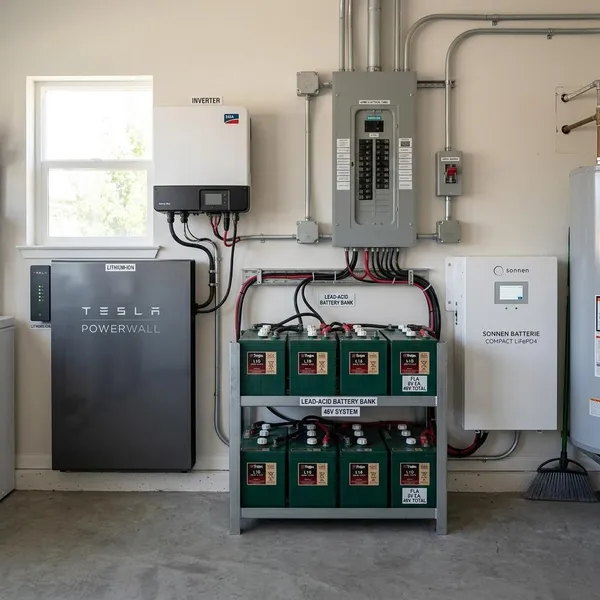
The main solar battery types are LiFePO4, other lithium-ion batteries, AGM, flooded lead-acid, and gel. The useful way to compare them is by matching each type to a real job: frequent cycling, low starting cost, tight space, simple backup, or specialty use.
| Battery type | Best fit | Main trade-off |
|---|---|---|
| LiFePO4 | Home backup, daily solar storage, off-grid systems | Higher upfront price |
| Lithium-ion | Compact systems where energy density matters | Chemistry and safety features vary by product |
| AGM | Small backup systems and occasional-use solar | Shorter life under deep daily cycling |
| Flooded lead-acid | Lowest-cost projects with hands-on maintenance | Heavy, less efficient, needs ventilation and care |
| Gel | Specific sealed-battery applications | More sensitive to charging settings |
Which battery type is best for your solar setup?
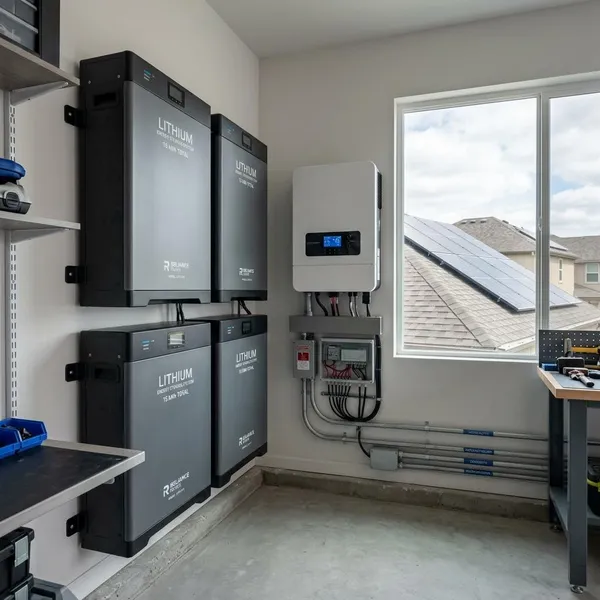
The best choice depends on your use case more than the battery name. Start with three checks: how often the battery will cycle, how much usable energy you need, and how much maintenance you are willing to accept.
A full-time off-grid home, a grid-tied house wanting backup, and a camper used on weekends should not automatically use the same battery. The right option is the one that fits the load, location, budget, and maintenance reality.
LiFePO4 batteries fit home solar backup systems
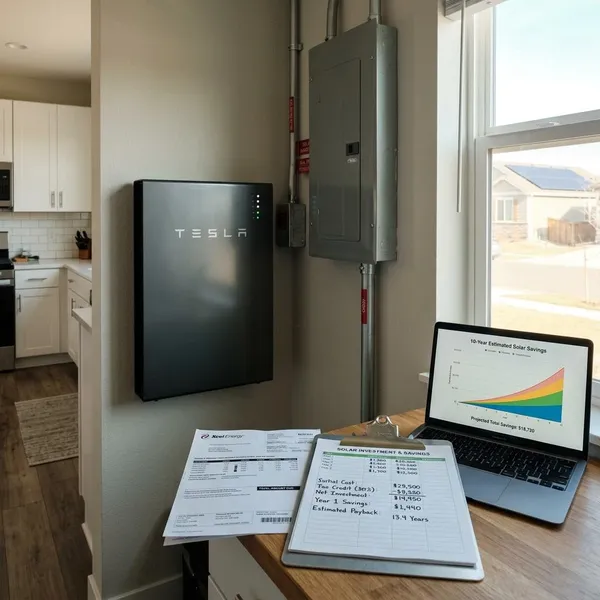
For home backup, LiFePO4 is usually the most practical choice. It can sit ready for outages, cycle regularly if you use stored solar at night, and operate with little routine attention.
This is especially useful if the battery supports essential loads during storms or grid failures. In that situation, reliability and safe operation matter more than shaving the purchase price as low as possible. Also check that the battery, inverter, transfer equipment, and monitoring system are designed to work together.
Lithium batteries suit off-grid solar systems
Off-grid systems usually favor lithium batteries because they cycle often and recharge efficiently. When every hour of sunshine matters, losing less energy during charging and discharging can make the whole system easier to live with.
For a cabin used a few summer weekends, AGM or lead-acid may be enough. For year-round off-grid living with a refrigerator, water pump, lights, and electronics, lithium is usually worth stronger consideration because replacement and downtime are more disruptive.
Lead-acid batteries fit budget solar projects
Lead-acid batteries fit projects where low starting cost matters more than maximum lifespan. They can work for small loads, learning systems, seasonal cabins, or backup that is rarely used.
The mistake is expecting a budget lead-acid bank to behave like a premium lithium system. If you plan to discharge it deeply every day, install it where maintenance is difficult, or depend on it for critical loads, the cheaper option may become frustrating and expensive later.
Lightweight batteries work well for RVs and cabins
RVs, vans, boats, and compact cabins benefit from lighter batteries because space and payload are limited. Lithium batteries usually give more usable energy in less space, which can free up storage and make installation easier.
For a weekend camper with basic lights and phone charging, AGM may still be acceptable. For longer trips with a fridge, fans, laptops, or cloudy-day backup, lithium often feels much more practical because it charges faster and provides more usable capacity from a smaller battery bank.
Low-maintenance batteries suit simple setups
If you want a solar setup that mostly runs in the background, choose a sealed, low-maintenance battery. LiFePO4 is usually the easiest option for regular use, while AGM can be a simpler budget choice for lighter duty.
This matters most in vacation homes, remote cabins, and home backup systems owned by people who do not want another maintenance task. A battery that needs regular attention is only a good deal if you will actually maintain it.
How much does a solar battery really cost?
The real cost of a solar battery is not just the purchase price. You also pay through replacement timing, efficiency losses, maintenance, installation complexity, and the amount of usable energy the battery delivers over its life.
When comparing options, look at cost per useful year or cost per cycle, not only the sticker price. This is where a more expensive lithium battery can beat a cheaper lead-acid battery in systems that are used often.
Battery type affects the upfront price
Flooded lead-acid batteries usually have the lowest starting cost, AGM and gel tend to sit higher, and lithium batteries usually cost the most upfront. Brand, warranty, capacity, and built-in electronics can change the price a lot.
A low upfront price can be a fair choice for a small project. It is less convincing when the battery is expected to power important loads every day or sit in a place where maintenance is inconvenient.
Lifespan affects the total ownership cost
A battery that lasts longer can be cheaper over time even if it costs more on day one. This is why LiFePO4 often looks expensive at checkout but more reasonable when compared across years of use.
- Daily cycling: prioritize cycle life and usable capacity.
- Occasional backup: upfront cost may carry more weight.
- Remote installation: replacement hassle should count as a real cost.
Higher-quality batteries can save money over time
Higher-quality batteries can save money when they reduce replacements, deliver more usable stored energy, and require less maintenance. The benefit is strongest in daily-use systems and weakest in very light-use setups.
- List your essential loads. Decide what must run, not what would be nice to run.
- Estimate runtime. Choose whether you need a few outage hours, overnight power, or multi-day support.
- Compare usable capacity. Do not rely only on the rated kWh or amp-hour number.
- Check compatibility. Confirm voltage, inverter support, charge controller settings, and installation requirements.
- Count replacement and maintenance. A cheaper battery is not cheaper if it wears out quickly in your use case.
Conclusion
LiFePO4 is the safest default recommendation for most modern solar users because it balances lifespan, efficiency, safety, and low maintenance better than the older options. Choose lead-acid only when the system is light-duty, budget is the main limit, and maintenance will not be ignored. The best decision comes from matching the battery to your actual loads and usage pattern, then checking compatibility before buying.