
Which Solar Battery Charger Fits Your Setup?
Find the best solar battery charger for cars, RVs, boats, and camping. Learn wattage, battery types, and setup tips.
The best solar battery charger is not always the largest panel available. For most users, the right choice starts with matching the charger to the battery type, then choosing enough wattage for the job, and finally making sure it suits the way it will actually be used—whether that is maintaining a parked car battery, supporting an RV, keeping a boat ready, or powering gear at a campsite.
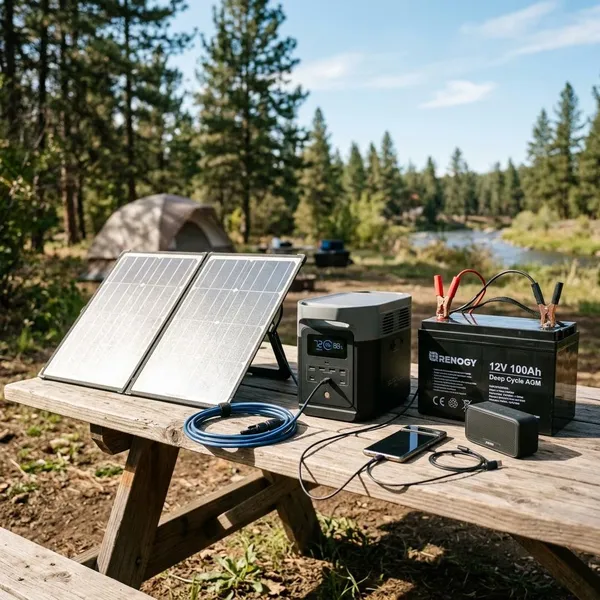
What is the best solar battery charger for most people?
For general use, a 12V solar battery charger with a built-in or included charge controller is the safest starting point. A small panel can maintain a healthy battery, while a mid-sized panel gives you more room for real charging when the battery has lost some power.
If you are buying one charger to cover several situations, do not judge by wattage alone. Look for battery compatibility, proper regulation, weather-resistant cables, and connectors you will actually use.
The best overall charger balances power and price
A practical all-round choice is often in the 20W to 50W range. That is enough for more than basic trickle charging, but still small enough to move, store, and set up without turning it into a project.
- Choose around 20W for light support on a stored car, motorcycle, or small 12V battery.
- Choose 30W to 50W if you want better recovery from mild drain or occasional outdoor use.
- Choose more than 50W when the battery powers lights, pumps, fridges, or other real loads.
A cheaper high-watt panel with weak wiring can be a worse buy than a smaller charger with a decent controller and solid clips. For long-term use, regulation and connection quality matter as much as the number printed on the panel.
The best car charger supports battery maintenance
For a car that sits outside for days or weeks, a 5W to 20W solar maintainer is usually the right tool. Its job is not to bring a dead battery back quickly; it is to slow down the gradual drain from alarms, keyless entry systems, onboard electronics, and natural self-discharge.
One common mistake is plugging a solar maintainer into a 12V socket that turns off when the ignition is off. If the socket is not live while parked, use battery clips or ring terminals instead, assuming the charger supports that connection safely.
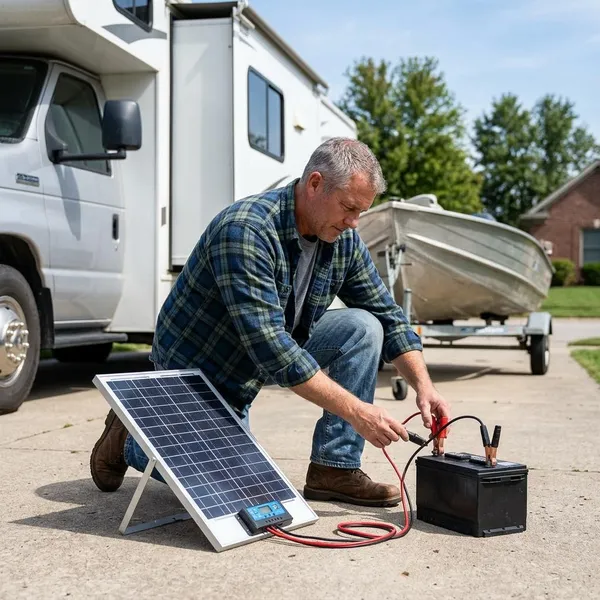
Who should use a solar battery charger?
A solar battery charger makes the most sense when a battery sits away from wall power or loses charge between uses. It is less useful for a daily-driven car parked in a garage, unless the panel can get real sunlight and the battery has a known drain problem.
The best use cases are usually storage, travel, and off-grid backup—not replacing a full plug-in charger when a battery is already deeply discharged.
Car owners use it for battery maintenance
Car owners benefit most when the vehicle is parked outdoors and not driven often. Think of a classic car stored over winter, a second vehicle used twice a month, or a motorcycle left in a storage lot. In those situations, a small regulated panel can help prevent the annoying “click” of a weak battery when you finally need the vehicle.
RV and boat owners use it for off-grid charging
RV and boat batteries often do more than start an engine. They may run cabin lights, pumps, radios, fans, or small appliances, so a tiny trickle panel usually feels underpowered.
For this type of use, start by estimating what the battery runs each day. A 50W panel may help with light loads, while 100W or more is often more realistic for longer trips, especially when shore power is not available. Marine use also calls for more caution: connectors, cable jackets, and mounting points should tolerate vibration, moisture, and possible corrosion.
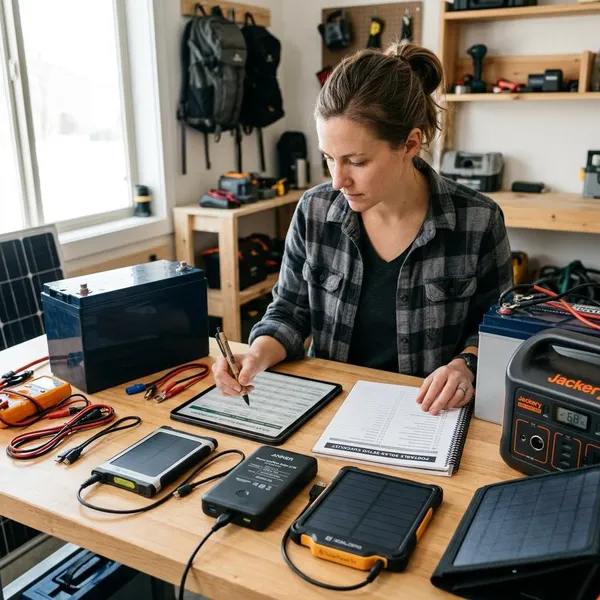
How do you choose a solar battery charger?
Choose in this order: battery type, wattage, then physical format. That order prevents the two biggest buying mistakes—getting a charger that is not safe for the battery, or buying a panel that looks powerful but is too awkward to use regularly.
Match the charger to your battery type
Battery chemistry comes first. Many solar chargers are built mainly for lead-acid batteries such as flooded, AGM, gel, or sealed lead-acid. Lithium batteries, especially lithium iron phosphate batteries, usually need a controller with a suitable lithium charging profile.
If one charger will be used on different batteries, look for selectable battery modes rather than assuming “12V” means universal compatibility. The safer check is simple: match battery voltage, battery chemistry, and the controller’s supported charging profile before connecting anything.
Match the size to your usage
A rigid panel can be a good choice for a fixed vehicle, shed, boat dock, or permanent RV setup. A folding panel is usually better when you need to pack it away, angle it during the day, or move it between batteries.
It also helps to separate three products people often confuse. A solar battery charger sends power to an existing battery. A solar power bank stores a small amount of energy for phones and small devices. A solar generator is a larger portable battery system with built-in charging electronics and usually an inverter. Buying the wrong category can leave you with gear that technically works but does not solve your actual problem.
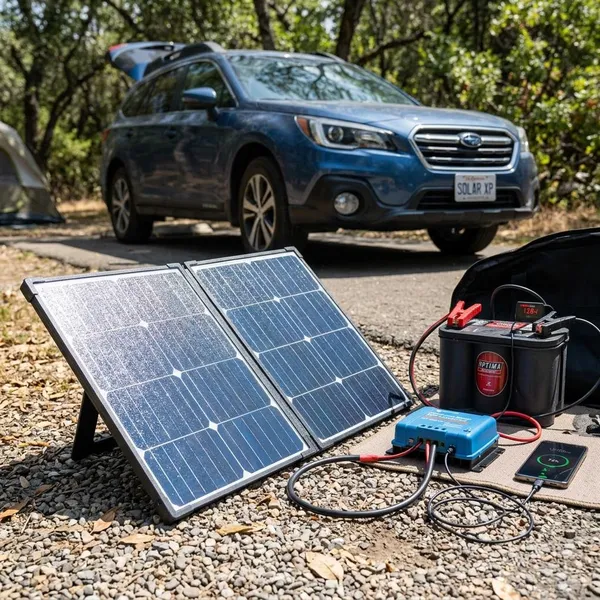
How well do solar battery chargers work?
Solar battery chargers work well when expectations match the setup. They are excellent for maintenance and useful for off-grid charging when the panel is large enough, but they are not magic fixes for a neglected or failing battery.
The main performance factors are sunlight, panel size, controller quality, cable losses, and battery condition. A healthy battery in good sun is a very different case from an old battery under a shaded windshield.
Full sunlight provides the fastest charging
Direct sunlight is the easiest performance upgrade. Put the panel where it is not shaded by trees, roof racks, glass, campsite gear, or the vehicle itself.
Advertised wattage is usually based on ideal conditions, so real output is often lower. If the panel is portable, moving it once or twice during the day can make a noticeable difference, especially in the morning and late afternoon.
Larger panels improve charging performance
Larger panels collect more energy and give you more margin when conditions are imperfect. That does not mean everyone needs a huge panel, but it does mean undersizing is the most common reason people feel solar chargers “do not work.”
- Small panel: best for keeping a healthy battery from slowly draining.
- Medium panel: useful for mild recovery and flexible household or vehicle use.
- Larger panel: better for deep-cycle batteries, RVs, boats, and repeated daily loads.
How do you use a solar battery charger safely?
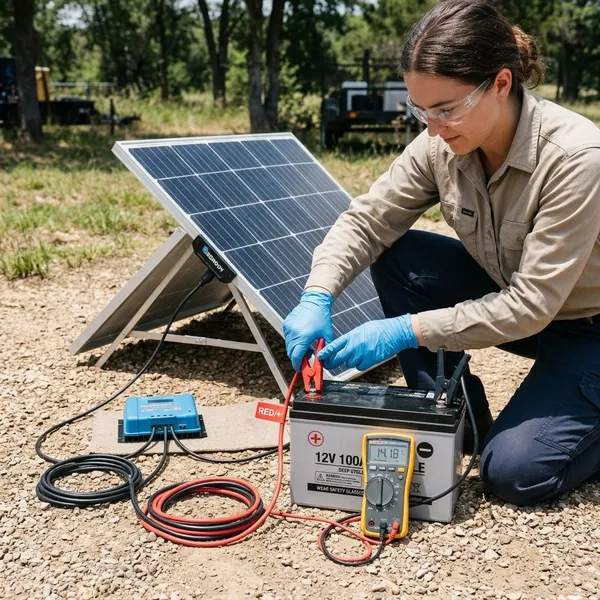
Safe use comes down to three checks: use a charger compatible with the battery, connect the cables in the correct order, and protect the equipment from avoidable damage. Most problems come from reverse polarity, poor regulation, wet connectors, or using a charger on the wrong battery chemistry.
Place panels in direct sunlight
Set the panel in a stable, sunny spot where it will not slide, fall, or become a trip hazard. On a vehicle, keep cables away from belts, fans, hinges, hot engine parts, and sharp metal edges. At camp, avoid running cables through walkways or under heavy gear.
Connect cables correctly
Before connecting, confirm the battery voltage and chemistry match the charger. Then follow the manufacturer’s connection order, especially if a separate controller is included.
- Check positive and negative terminals.
- Connect the controller to the battery if required first.
- Attach positive to positive and negative to negative.
- Make sure clips or ring terminals are secure.
- Place the panel in sunlight after the battery side is safely connected.
Reverse-polarity protection is helpful, but it should be treated as a backup, not a reason to rush the connection.
Conclusion
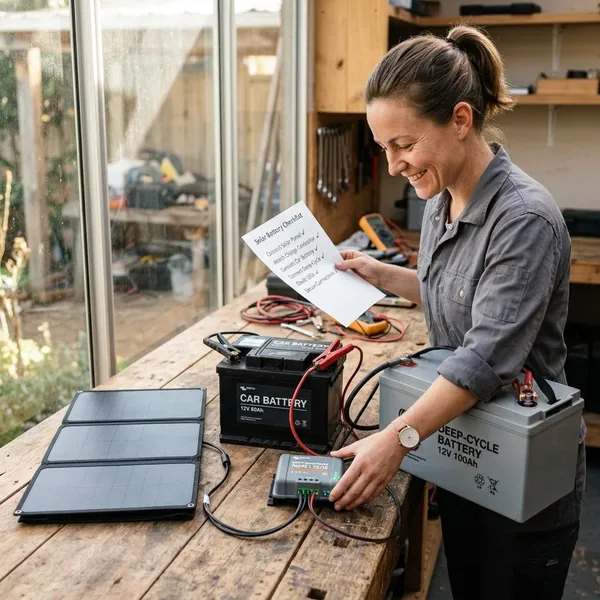
The right choice is the charger you can use safely and consistently, not just the one with the largest wattage claim. For a stored car, a regulated maintainer may be enough; for RVs, boats, lithium batteries, or daily off-grid loads, spend more attention on controller compatibility and panel size. If battery type, sunlight, and real usage all line up, a solar charger becomes a genuinely useful piece of gear instead of another accessory that stays in the box.