
Best Solar Battery Bank for Home, Camping, and Backup Power
Find the best solar battery bank for home backup, camping, or off-grid use. Learn capacity, output, and battery types.
The right solar battery bank should match the power you actually use, not just advertise the largest capacity. Start by comparing usable battery capacity, inverter output, battery chemistry, and solar charging speed, because a weakness in any one of these areas can limit how well the system performs during outages, camping trips, RV travel, or off-grid daily use.
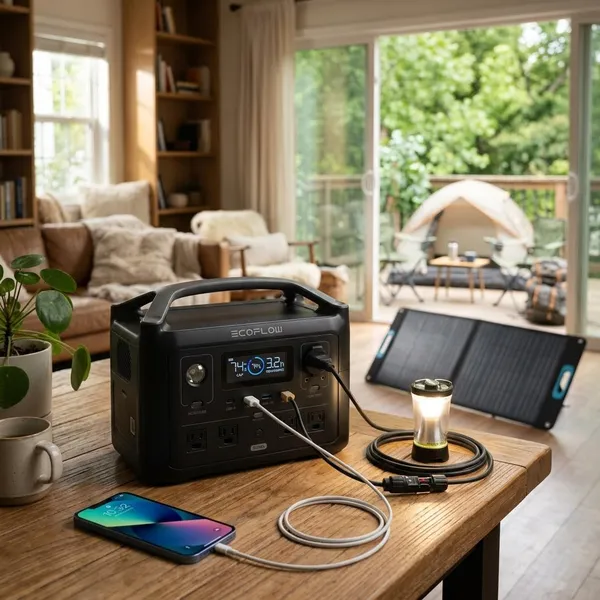
What features make a solar battery bank better?
A better solar battery bank should do four things well: store enough energy, deliver enough power, age slowly, and recharge without becoming a chore. For a weekend camper, portability may matter more than huge capacity. For outage backup at home, output and runtime usually matter more than a lightweight design.
The mistake is judging a model by only one spec. A 2,000Wh battery with weak AC output may not start the appliance you care about, while a powerful inverter paired with a tiny battery may run out too quickly.
Higher capacity provides longer runtime
Capacity is measured in watt-hours, and it tells you roughly how much energy the battery can store. A 300Wh unit is useful for phones, lights, cameras, and a laptop. A 1,000Wh unit gives you more room for a router, fan, CPAP machine, or small fridge. Once you move above about 2,000Wh, you are usually shopping for longer outage backup or more serious off-grid use.
Do not plan around the full printed rating. Inverter losses and real-world conditions often reduce usable AC power, so it is sensible to leave a margin instead of buying a battery that only just matches your estimate.
Stronger output supports more devices
Output decides what the battery can run at one time. A small 300W inverter is fine for electronics, but it is usually the wrong choice for microwaves, kettles, hair dryers, pumps, or larger tools. For home backup, many buyers are happier with a unit that can supply roughly 1,500W to 2,000W, depending on the appliances they expect to use.
- Running watts: the power a device uses after it is already on.
- Surge watts: the short startup burst needed by refrigerators, pumps, and compressors.
- Port layout: enough AC, USB, and DC ports to avoid awkward adapters.
Better batteries improve lifespan and safety
Battery chemistry affects how long the system stays useful. If you expect frequent charging and discharging, long cycle life matters more than a slightly lower purchase price. This is where LiFePO4 batteries often stand out, because they are commonly chosen for longer lifespan and stable performance.
For rare emergency use, a cheaper chemistry may still be acceptable. For daily cabin use, RV living, or regular outage backup, paying more for a more durable battery can be the better long-term decision.
Faster charging improves daily use
Charging speed becomes important the first time you need the battery two days in a row. A large battery that takes too long to refill may not recover enough energy during a multi-day outage or a cloudy camping trip.
Look at the charging limits, not just the battery size. A useful setup should have:
- Enough solar input to replace daytime energy use when sunlight is available.
- Fast wall charging so you can top it up before storms or travel.
- Car charging support for road trips or backup charging away from home.
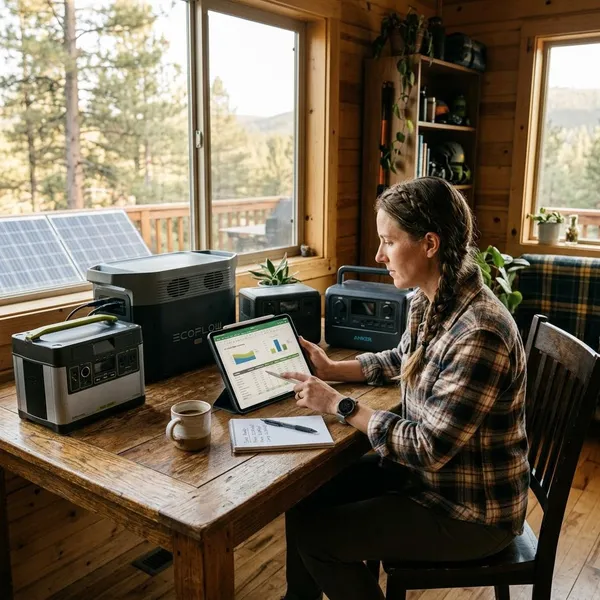
How much solar battery capacity do you need?
Start with the devices you refuse to lose during an outage or trip. Write down their watts, estimate how many hours you need them, then add a margin for losses. This is more reliable than choosing by category labels such as “camping,” “home,” or “emergency.”
A simple rule helps: watts × hours = watt-hours. If a router uses 10W for 10 hours, that is 100Wh. If lights use 40W for 5 hours, that is 200Wh. Add the numbers together, then leave extra room because batteries rarely deliver their full rating through AC outlets.
Small capacity fits basic devices
Small battery banks, roughly 150Wh to 500Wh, are best for low-power needs. They make sense for charging phones, tablets, cameras, laptops, LED lights, small fans, and Wi-Fi equipment.
This is the right choice for a low-risk scenario: a short camping weekend, a car emergency kit, or keeping phones and a router alive during a brief outage. It is not a good match if you expect refrigerator backup, heating appliances, or overnight support for several devices at once.
Medium capacity fits essential appliances
Medium systems, often around 500Wh to 1,500Wh, are the practical middle ground for many households. They can cover several small devices and may support essentials such as a CPAP machine, internet equipment, lights, a fan, or a small refrigerator for a limited period.
| Use case | What to check before buying |
|---|---|
| Short outage at home | Enough watt-hours for lights, router, phones, and one priority device |
| CPAP or medical comfort device | Runtime, AC/DC compatibility, and whether humidifier use increases power draw |
| Weekend travel | Weight, car charging, and enough ports for daily electronics |
Large capacity fits longer backup needs
Large systems usually start around 2,000Wh and are better for overnight refrigeration, longer blackouts, remote cabins, and off-grid routines. They cost more and take more space, but they reduce the constant worry of watching the battery percentage drop.
They are most useful when the risk is higher: a household with frequent outages, a sump pump concern, refrigeration needs, or equipment that cannot simply be turned off. If you only need to charge phones twice a year, this category is probably more than you need.
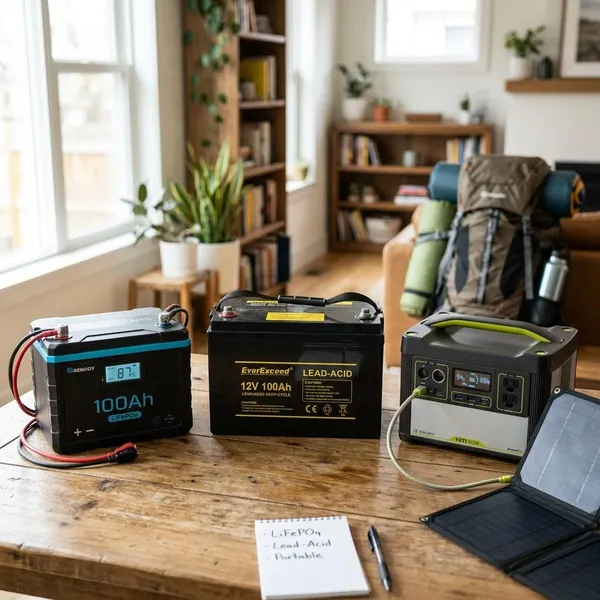
Which battery type is best for solar storage?
Battery type changes the weight, lifespan, price, and how confidently you can use the bank over time. For most modern buyers, lithium-based options are easier to live with than AGM because they are lighter and usually provide more usable energy.
The right choice still depends on your pattern of use. Occasional emergency storage is different from daily cycling in a cabin, RV, or off-grid workspace.
LiFePO4 batteries last longer with safer use
LiFePO4 is often the best all-around choice for solar storage when durability matters. These batteries are commonly rated for many more cycles than standard lithium-ion or AGM options, and they are widely valued for stable performance over repeated charging.
Choose LiFePO4 if the battery will be used often, if it will sit in a home backup setup, or if you want the best long-term value rather than the lowest starting price.
Lithium-ion batteries offer lighter designs
Standard lithium-ion batteries still make sense when portability is the main goal. They can keep a power station smaller and easier to carry, which matters if you move it between a car, tent, boat, or work area.
The tradeoff is usually cycle life. For occasional trips, that may not matter much. For daily use, a lighter design may not be worth giving up the longer lifespan of LiFePO4.
AGM batteries cost less upfront
AGM batteries are sealed lead-acid batteries, and their main appeal is lower upfront cost. They can work for fixed, budget-focused backup where weight is not a big issue.
The downside is hard to ignore: AGM batteries are heavy, less convenient for portable use, and less forgiving if deeply discharged often. If you plan to cycle the battery regularly, the cheaper purchase price can become less attractive over time.
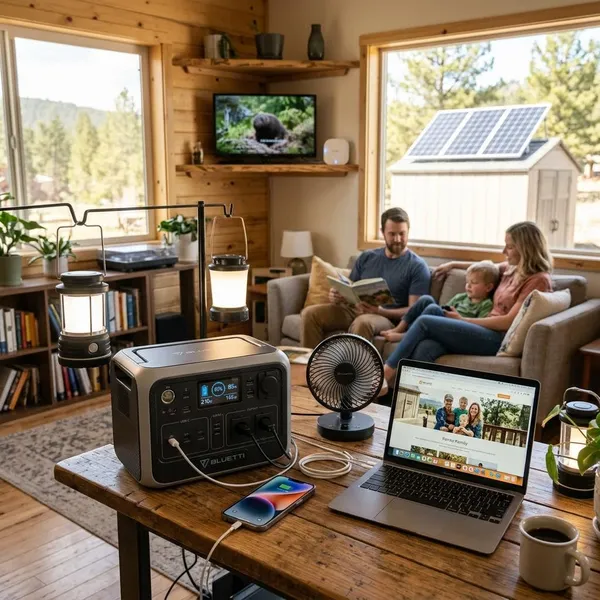
Which solar battery bank fits your needs?
The right category depends on where the battery will spend most of its life. A home backup unit can be too heavy for travel, while a camping-friendly unit may be too small for a serious outage.
Use your main scenario as the filter. Then compare capacity, output, charging method, battery chemistry, and price inside that category instead of comparing every model on the market.
Home systems support outage backup
Home systems should prioritize capacity, inverter strength, and simple operation during stress. If the power goes out at night, you do not want to discover that the unit cannot start the fridge or does not have enough outlets for the essentials.
A practical home setup often focuses on a short list: refrigerator, internet, phones, lights, fan, and any necessary medical or comfort device. Whole-home backup is a different level of planning and may require professional electrical work, so do not assume a portable battery bank replaces a full installed system.
Portable systems support camping and travel
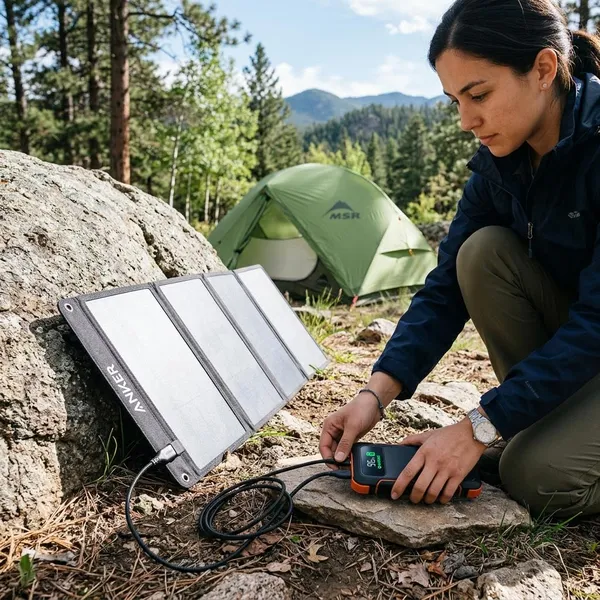
For camping and travel, the best system is the one you will actually carry and recharge. Weight, handle comfort, car charging, and panel setup can matter as much as capacity.
A weekend camper may be happier with a smaller unit that runs lights, phones, a laptop, and a cooler for limited periods. Someone living from a van or RV for weeks at a time should look more closely at solar input, daily energy use, and whether the unit can recover enough charge between stops.
Off-grid systems support remote power
Off-grid use changes the priority order. Solar input and expandability become more important because wall charging may not be available when you need it.
Look for a system that can replace a normal day of energy use during realistic sunlight, not perfect brochure conditions. If you use 800Wh per day but your panels only recover 300Wh on a cloudy day, the battery will slowly fall behind no matter how impressive the capacity looked at purchase.
Budget systems support basic backup
A budget solar battery bank can still be a smart buy if you give it a simple job. Phones, lights, Wi-Fi, small fans, and charging cables are realistic. Refrigerators, heaters, and power-hungry appliances usually are not.
The best budget choice is often the least disappointing one: honest capacity, safe charging, enough ports, and a clear limit. It can serve now as basic backup and later as a secondary unit if you upgrade.
Conclusion
Choose the battery bank around the devices you truly need to keep running, then make sure the capacity, inverter output, battery chemistry, and charging options all fit that use. A compact unit is enough for phones, lights, and travel; a larger LiFePO4 system is usually the better call for regular backup or off-grid use. The safest purchase is the one with a clear job, realistic runtime expectations, and enough margin that you are not pushing it to its limit every time you use it.