
Which Lithium Battery Is Best for Your RV Solar Setup?
Find the best lithium battery for RV solar system use by comparing sizes, features, and AGM vs lithium.
The best lithium battery for an RV solar system is usually a LiFePO4 battery sized around your real daily power use, not simply the largest battery you can afford. A weekend trailer running lights, fans, and phone chargers may do well with one 100Ah battery, while full-time off-grid camping often requires several batteries, a properly matched inverter, and a solar charging setup that can keep up with your routine.
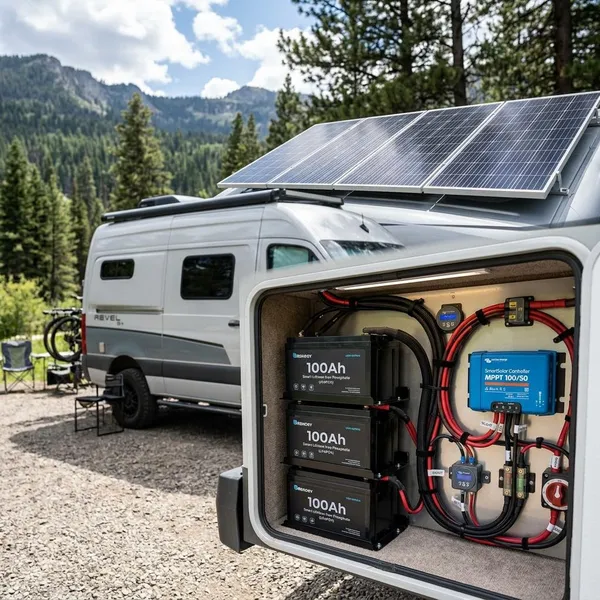
Which lithium battery is best for your RV setup?
Standard lithium batteries fit most RV solar systems
A 12V 100Ah LiFePO4 battery is the common starting point for many travel trailers, vans, and smaller motorhomes. It is a sensible fit when your main loads are lights, roof fans, the water pump, phone charging, and a few small electronics.
This is the low-drama choice for a part-time camper upgrading from AGM or flooded lead-acid. It keeps the system familiar, usually fits existing battery spaces more easily, and gives a noticeable improvement in usable energy without forcing a full electrical redesign.
Budget lithium batteries suit occasional campers
A budget lithium battery can be a good buy if you camp a few weekends a year and your loads stay light. The mistake is choosing purely by the lowest price. Even an entry-level battery should have a reliable BMS, clear charge and discharge ratings, and a warranty from a seller you can actually contact.
- Good fit: seasonal trips, small 12V loads, campground stays with occasional off-grid nights.
- Be careful: large inverters, cold-weather charging, or daily boondocking.
- Do not skip: BMS rating, low-temperature charge protection, and charger compatibility.
High-capacity lithium batteries support full-time RV living
Full-time RV use usually needs a larger battery bank because the RV is no longer just supporting lights and short evening use. A residential fridge, internet equipment, laptops, induction cooking, or a microwave can turn a small battery into a daily limitation.
Many serious off-grid setups land in the 200Ah to 600Ah range or higher, depending on solar input and appliance habits. The benefit is not only longer runtime; it also means less stress about cloudy days, fewer generator starts, and shallower daily cycling.
How much lithium battery capacity does your RV need?
Calculate capacity from your daily power use
The most useful first check is daily watt-hours. Write down each device, estimate its watts, and multiply by the hours used per day. Do this for both 12V items and AC appliances running through an inverter.
- List the daily loads: fridge, lights, fans, water pump, chargers, TV, router, medical devices, and kitchen appliances.
- Estimate watt-hours: watts used × hours per day.
- Add a reserve: allow for cloudy weather, inverter losses, and a day when you use more than usual.
If the total is around 800Wh to 1,200Wh, one 100Ah lithium battery may be workable for short trips with solar support. If you are closer to 2,000Wh per day, one battery will usually feel too tight for comfortable off-grid use.
Choose battery size based on your travel style
A weekend camper and a full-time boondocker should not shop for batteries the same way. For two-night trips with basic loads, buying a huge bank may add cost and weight you rarely use. For week-long dry camping, undersizing the bank usually means managing power all day instead of enjoying the trip.
| RV use pattern | Practical battery direction | What to watch |
|---|---|---|
| Occasional campground trips | One quality 100Ah LiFePO4 may be enough | Do not overbuy if hookups are common |
| Regular weekend boondocking | Consider 200Ah for more overnight reserve | Cloudy weather can expose a small bank quickly |
| Full-time or remote work travel | Plan a larger expandable bank | Internet gear, laptops, and fridge use add up daily |
Add capacity for inverters and high-power devices
Inverters change the sizing conversation because they pull heavy current from the battery bank. A microwave, coffee maker, air fryer, hair dryer, or induction cooktop may only run briefly, but the battery and BMS still need to handle the surge and continuous draw safely.
Do not size the battery only by average daily watt-hours if you want to run high-power appliances. Check the inverter wattage, the battery's continuous discharge rating, the surge rating, cable size, and fuse protection as one system. If those pieces do not match, the battery may shut down even when it still has charge left.
What features should a good RV lithium battery have?
A battery management system improves safety
The BMS is not an optional extra. It protects the battery from problems such as overcharge, over-discharge, overcurrent, short circuits, and unsafe temperatures.
For RV use, pay close attention to the BMS discharge rating. A small BMS may be fine for lights and fans but may trip when paired with a large inverter. If you plan to run AC appliances, compare the battery's continuous and peak current ratings with what the inverter can demand.
Low-temperature protection supports cold-weather charging
Low-temperature charging protection is important if your RV sees freezing mornings. Many lithium batteries can discharge in cold conditions, but charging below freezing can damage cells unless the battery blocks charging or warms itself first.
- Summer-only camping: low-temperature protection is less urgent but still useful.
- Spring and fall travel: charge cut-off protection is worth having.
- Winter camping: consider a heated LiFePO4 battery or an insulated battery location.
This is one feature where saving money can backfire. If the battery compartment gets cold and the solar panels begin charging early in the morning, protection can prevent expensive damage.
High cycle life improves long-term value
Cycle life matters most when you use the RV often. A battery rated for thousands of cycles can cost more upfront but may be cheaper over years of repeated boondocking than replacing AGM batteries more often.
Read cycle-life claims carefully. The number is usually tied to test conditions, depth of discharge, and remaining capacity at the end of the test. A realistic warranty, good temperature management, and correct charging settings matter just as much as the headline cycle count.
How do you choose the right RV battery bank setup?
Choose one or multiple batteries based on power needs
Choose one battery when your loads are small, your inverter is modest, and you mainly want better usable capacity than AGM. Choose multiple batteries when you need longer runtime, more current output, or backup capacity for several cloudy days.
If you plan to expand, buy batteries that are approved for parallel connection and follow the manufacturer's limits. Mixing old and new batteries, different capacities, or different brands can create uneven charging and weaker performance.
Select 12V or higher voltage based on system size
A 12V system is still the easiest choice for many RVs because most RV equipment is built around it. It is practical for modest solar arrays, smaller inverters, and normal 12V house loads.
When inverter power gets large, 12V current can become high enough to make wiring, voltage drop, and heat more difficult to manage. A 24V system can reduce current for the same wattage, but it also adds design complexity and may require compatible chargers, inverters, and DC conversion for 12V loads. For a small weekend setup, 12V is usually simpler; for a serious off-grid build, higher voltage deserves a closer look.
Plan space for future battery expansion
Leave room for more than the battery case. You also need safe cable routing, fuses, shutoffs, ventilation around components, and access for inspection. A cramped installation is harder to troubleshoot and harder to expand later.
- Measure the battery compartment before ordering.
- Confirm the battery can be mounted in the position you need.
- Check the maximum number of batteries allowed in parallel or series.
- Plan for service access, not just a tight physical fit.
Lithium vs AGM for RV solar systems
Lithium batteries offer longer lifespan than AGM batteries
A quality LiFePO4 battery is typically rated for far more deep cycles than an AGM battery. That matters if you boondock often, because repeated deep discharging is exactly where AGM batteries age faster.
For a once-a-year camper, AGM may last long enough to feel acceptable. For someone using solar power every week or living in the RV, lithium's longer service life is usually one of the clearest reasons to upgrade.
Lithium batteries provide more usable capacity than AGM batteries
A 100Ah lithium battery and a 100Ah AGM battery do not feel the same in real use. Lithium can usually provide a much larger share of its rated capacity without the same lifespan penalty, while AGM is commonly treated more conservatively to avoid wearing it out quickly.
That means a lithium bank may be smaller on paper but more useful at camp. It also reduces the habit of watching battery voltage nervously every time you run the fan overnight or make coffee in the morning.
AGM batteries cost less upfront than lithium batteries
AGM wins on initial price. If your RV mostly stays plugged in and the battery only covers brief overnight loads, that lower upfront cost may be enough reason to stay with AGM for now.
Lithium makes more sense when battery performance affects the trip: dry camping, solar charging, inverter use, long travel days, or full-time living. In those cases, paying more upfront often buys less hassle, more usable power, and fewer replacements later.
Conclusion
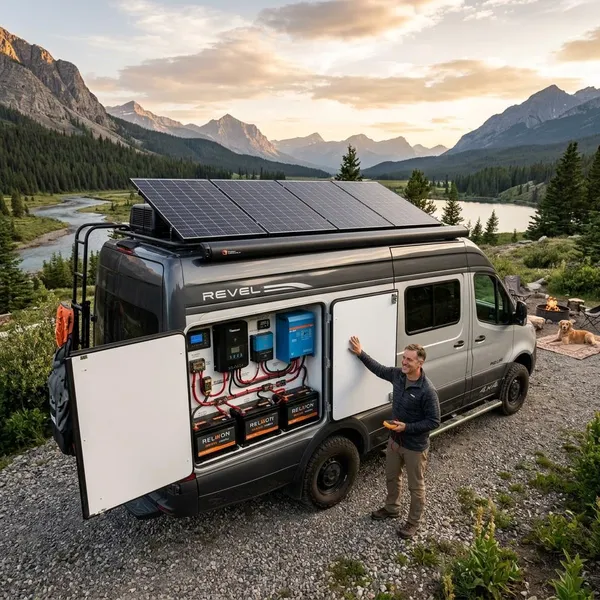
The right choice starts with one honest calculation: how much power you use in a normal day, plus enough reserve for bad weather and the way you actually travel. A light weekend setup may only need one good 100Ah LiFePO4 battery, while a full-time or high-inverter RV should be planned as a complete battery bank, not a single replacement part. Buy for your real camping style, make sure the charging system is compatible, and leave room to expand if off-grid comfort is likely to matter more over time.