
Best RV Solar Panel Kit With Battery and Inverter for Off-Grid RV Power
Find the best rv solar panel kit with battery and inverter by comparing system parts, sizing tips, and power needs.
The best RV solar panel kit with battery and inverter is the one that matches your actual daily power needs, not simply the kit with the highest advertised wattage. A good setup should keep your essential devices running overnight, provide enough backup for cloudy weather, and include an inverter capable of handling the AC appliances you plan to use, such as a microwave, coffee maker, TV, or laptop charger.
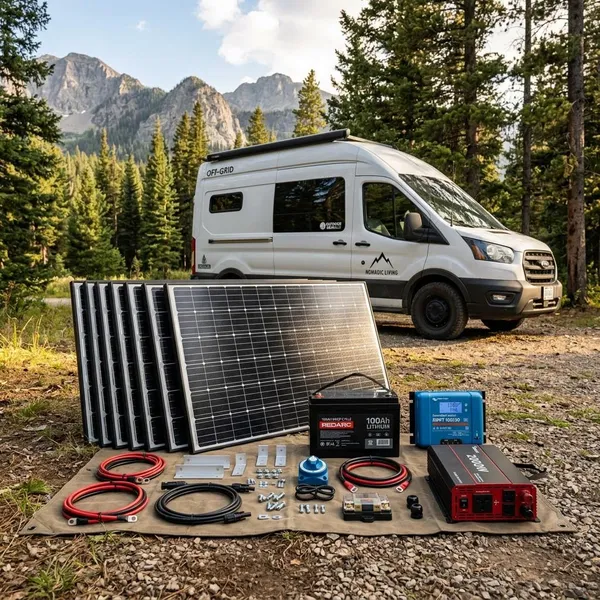
What Does an RV Solar Kit With Battery and Inverter Include?
A complete RV solar kit usually combines solar panels, a charge controller, battery storage, an inverter, and the wiring or protection parts needed to connect them safely. The useful part is not that everything comes in one box; it is that the parts are matched well enough to work together in real camping conditions.
The easiest mistake is judging a kit by panel wattage alone. A 400W solar array with a tiny battery can still feel limiting at night, while a large inverter is not very helpful if the battery bank cannot support the load.
Solar panels collect energy from sunlight
Panel wattage tells you how quickly the system can replace the power you use. A 100W to 200W setup can be fine for light weekend use, such as LED lights, phone charging, and a roof vent fan. Around 300W to 600W is more comfortable if you use a 12V fridge, laptops, internet gear, or stay off-grid for more than one night.
Roof-mounted panels charge whenever the RV is in the sun, which is convenient for travel days and regular camping. Portable panels make more sense if you often park in shade but can place the panel in a sunny spot nearby.
Batteries store power for later use
Battery storage is where RV solar starts to feel either useful or frustrating. The battery decides how much power you have after sunset, during cloudy weather, or early in the morning before the panels recover.
- Lithium batteries: lighter, faster charging, and usually more usable capacity from the same rated size.
- AGM batteries: lower upfront cost, but heavier and less tolerant of deep discharge.
If you only camp in summer for a night or two, a smaller battery may be acceptable. If you use a CPAP machine, 12V fridge, or work laptop overnight, battery capacity becomes a priority rather than an upgrade.
Inverters power RV appliances from stored energy
The inverter turns battery power into household-style AC power for devices such as a TV, laptop charger, coffee maker, or microwave. A 1000W inverter may suit small electronics and occasional light appliance use, while 2000W to 3000W is more realistic for larger kitchen loads.
For most RV setups, a pure sine wave inverter is the safer choice. It is generally better for laptops, chargers, CPAP machines, TVs, and appliances with motors or digital controls. A modified sine wave inverter may cost less, but it can cause buzzing, heat, poor charging, or compatibility problems with some devices.
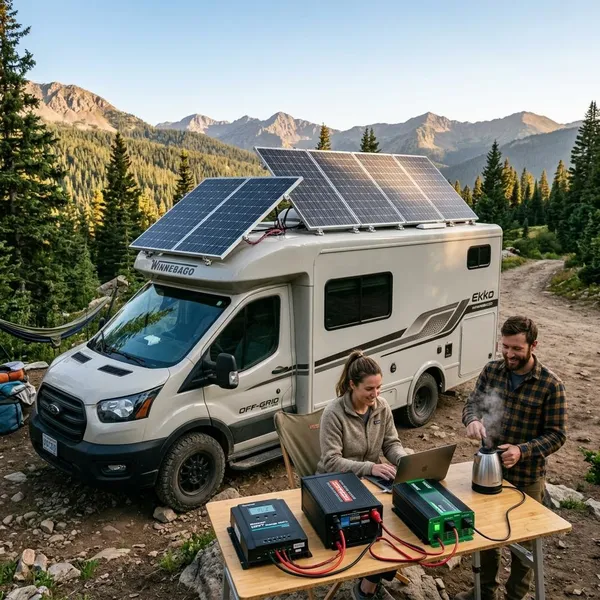
Best RV Solar Kit Types for Different Travel Needs
RV solar kits are easier to compare when you match them to travel style. A couple taking short weekend trips with propane appliances does not need the same system as someone working remotely from a fifth wheel for weeks at a time.
Use the categories below as a practical starting point, then adjust for your own appliances, climate, and tolerance for generator use.
Balanced kits fit most RV camping styles
A balanced kit is often the best first choice for regular campers. A common range is 300W to 600W of solar, 100Ah to 200Ah of lithium battery storage, and a 1000W to 2000W pure sine wave inverter.
This type of setup can usually support lights, fans, phone charging, a water pump, a 12V fridge, laptops, a TV, and Wi-Fi equipment without forcing you to think about every small load. It also leaves room for mixed weather, which is where very small kits often start to disappoint.
Budget kits fit short weekend trips
Budget kits make sense when your expectations are modest: keeping lights on, charging phones, running a fan, and reducing generator use. Many sit around 100W to 200W of solar with a small battery and either a small inverter or no meaningful AC power support.
- Good fit: weekend trips, propane fridge or stove, low device use.
- Weak fit: remote work, electric cooking, long cloudy stretches, or daily microwave use.
The warning here is simple: a budget kit is backup support, not a full off-grid power system.
High-capacity kits fit full-time RV living
High-capacity kits are for heavier routines: full-time RV living, extended boondocking, remote work, or a more home-like electrical setup. These systems may use 600W to 1200W or more of solar, 200Ah to 600Ah of lithium storage, and a 2000W to 3000W pure sine wave inverter.
They can make daily life much easier if you run a laptop workstation, Starlink-style internet equipment, coffee maker, microwave, chargers, and entertainment devices. They still are not unlimited. Air conditioners, electric heaters, and electric water heaters can drain batteries quickly, so those loads need especially careful sizing and realistic expectations.
How Much Solar Power Does Your RV Need?
The useful answer starts with watt-hours, not RV length. Two trailers can need completely different solar systems if one owner only charges phones and the other runs a fridge, router, laptop, fans, and a microwave.
Think of solar sizing in this order: calculate what you use, estimate what the panels can replace, then add margin for real-world losses.
Calculate daily energy use from your appliances
List every device you expect to use away from shore power and estimate watts multiplied by hours. This gives you daily watt-hours, which is the number that should guide the kit size.
- 40W fan for 8 hours: about 320Wh per day.
- 60W laptop charger for 3 hours: about 180Wh per day.
- 100W TV for 2 hours: about 200Wh per day.
- 10W LED lighting for 5 hours: about 50Wh per day.
Do not ignore quiet loads. A 12V fridge, router, signal booster, CPAP machine, or battery charger may run long enough to matter more than a short burst from a bigger appliance.
Match panel wattage to your power needs
Once you know your daily watt-hours, choose panel wattage that can replace that energy during a normal day of sun. As a rough example, if you use around 1200Wh per day and get 4 to 5 decent peak sun hours, a 400W array may be workable in good conditions.
That does not mean 400W will always produce the full amount you expect. Heat, shade, panel angle, wiring loss, and battery charging efficiency all reduce real output. If you dislike watching the battery monitor all evening, slightly more solar is usually more pleasant than sizing the system to perfect conditions.
Adjust for weather and charging losses
Real campsites are rarely perfect solar test conditions. Trees, roof vents, dust, cloudy afternoons, winter sun angle, and parking direction can all cut production.
A practical approach is to add at least 20% to 30% more capacity than the clean math suggests. For forest camping, shoulder-season travel, or year-round use, give yourself more margin. A kit that barely works on a sunny July day may feel too small in October.
How Battery and Inverter Size Affect RV Power
Solar panels recharge the system, but the battery and inverter decide what the system actually feels like to live with. If those two parts are undersized, the RV can still feel limited even with a decent amount of solar on the roof.
Battery capacity determines how long power lasts
A 100Ah lithium battery at 12V is roughly 1200Wh of stored energy before real-world losses. A 200Ah lithium bank gives about twice the storage. AGM batteries with the same rated amp-hours usually provide less practical usable energy because deep discharging them can shorten their life.
For a low-risk weekend setup, one battery may be enough if propane handles major appliances. For overnight medical equipment, a fridge, or multi-day boondocking, size the battery bank with a reserve instead of planning to drain it every night.
Inverter size determines which appliances can run
Inverter size is about load, not storage. It decides which AC appliances can run and whether you can use more than one at the same time.
| Appliance | Typical running range | What to watch |
|---|---|---|
| Laptop charger | 45W to 100W | Easy load, but daily work hours add up |
| Coffee maker | 600W to 1200W | Short use, high draw |
| Microwave | 900W to 1500W | Needs inverter headroom and battery support |
| Hair dryer | 1200W to 1800W | Often too much for small systems |
Startup surge and overlapping loads matter. A microwave may work by itself, but not while another heavy appliance is already running.
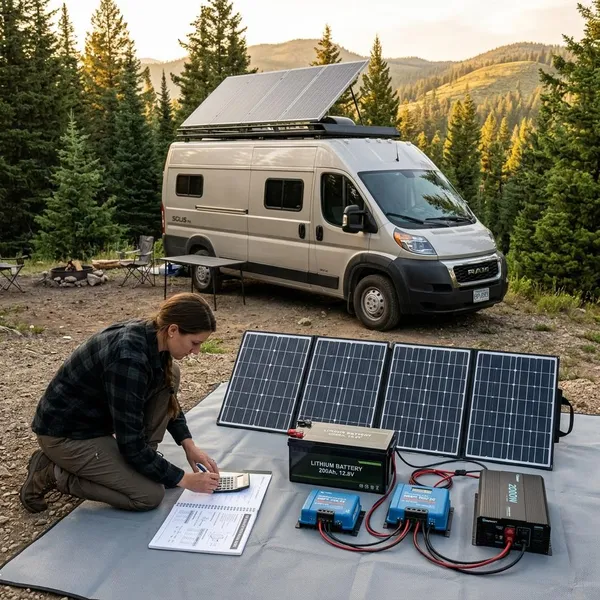
How to Size an RV Solar System Step by Step
The cleanest way to choose an RV solar kit is to work from your loads backward. Start with what you actually use, decide how long you want backup power to last, then choose the inverter and solar array around those numbers.
This order prevents the common mismatch of buying a big inverter, a small battery, and not enough solar to recover the next day.
List your appliances and daily usage
Write down the devices you use during a normal off-grid day, including the small ones that run for hours. Fans, routers, 12V fridges, chargers, water pumps, lights, and laptops all belong on the list.
If your camping style changes by season, make two lists. A summer setup with fans running all night may need more battery than a mild-weather weekend, while winter camping may add furnace blower use and weaker solar recovery.
Set your battery backup goals
Decide whether you want one night of power, a full cloudy day of reserve, or enough capacity for multi-day boondocking. That choice changes the system more than almost anything else.
- One-night backup: reasonable for fair-weather trips and nearby hookups.
- Two-day reserve: better for boondocking, shaded sites, or work-from-RV travel.
- More reserve: useful for full-time living, but cost, weight, and charging time increase.
Conclusion
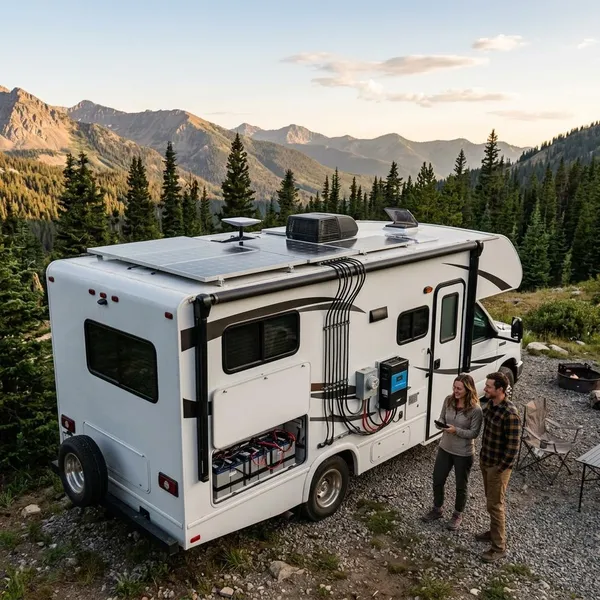
A good RV solar kit should match the way you camp on an ordinary day, with enough battery reserve for the nights and enough inverter capacity for the appliances you truly use. If you mostly take short propane-supported weekend trips, stay small and simple; if you work remotely, boondock often, or want kitchen appliances off-grid, spend more attention on lithium storage, pure sine wave inverter capacity, and solar recovery margin before you buy.