
Which Solar Generator Is Right for Your RV?
Find the best solar generator for RV travel by comparing battery size, inverter power, charging options, and appliance needs.
The best solar generator for RV use is the one that matches how you actually camp: enough battery capacity to cover your essential appliances, enough inverter power to start and run them safely, and enough solar input to recharge before your next night off-grid. A compact unit may be perfect for weekend trips with lights, phones, laptops, and a small fridge, while extended boondocking, microwave use, or RV air conditioning usually requires a much larger power station with faster charging and expandable batteries.
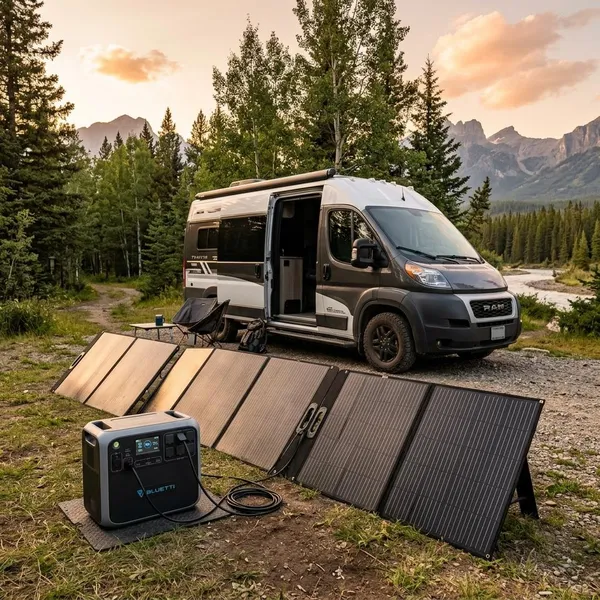
What is the best solar generator for RV use?
The best RV solar generator is usually a portable power station with enough battery storage for your daily loads, a pure sine wave inverter strong enough for your appliances, and charging options that match your travel routine. A camper who only needs phones, lights, and a fan should not buy the same system as someone trying to run a microwave, fridge, work laptop, and occasional air conditioning.
A useful way to narrow the choice is to think in three practical groups:
- Weekend comfort: light charging, fans, cameras, lights, and small electronics.
- Most RV trips: fridge support, laptops, TV, router, lights, fans, and short use of small appliances.
- Long off-grid stays: larger fridge loads, repeated cooking appliances, medical devices, e-bike charging, or limited AC support.
The best overall option fits most RV trips
For many RV owners, the safest all-around choice is a power station around 1,000Wh to 2,000Wh with roughly 1,500W to 2,200W of inverter output. That range is not tiny, but it is still manageable for mixed travel where you sometimes have hookups and sometimes dry camp for a night or two.
This size can usually handle phones, laptops, LED lights, fans, a TV, router, and many efficient 12V fridges. It may also run a microwave or coffee maker briefly, as long as the inverter rating and surge capacity are high enough. If your trips are a mix of campground stays, roadside overnights, and short boondocking stops, this is often the most practical balance.
The best budget option fits weekend camping
A budget RV setup usually sits around 300Wh to 800Wh with a smaller inverter. It works well when your goal is backup power and convenience, not full independence from hookups.
- Good fit: phones, tablets, lights, camera batteries, small fans, and a laptop.
- Possible with care: CPAP use or a compact cooler, if the runtime and settings are checked before the trip.
- Poor fit: kettles, hair dryers, toasters, induction cooktops, and air conditioners.
This is the right category for a weekend camper who wants quiet power at night and a safety margin for small devices. It is not the right category if one failed fridge night would ruin the trip.
The best high-capacity option fits long off-grid stays
Long off-grid stays usually call for at least 2,000Wh, and many RVers who boondock often prefer expandable systems. Stronger units in the 2,000W to 3,600W inverter range make heavy appliance use more realistic, although they also become heavier, more expensive, and harder to store.
This category makes sense if you camp away from hookups for several days, rely on a fridge overnight, recharge larger gear, or want a real reserve for cloudy weather. For summer travel with air conditioning in mind, treat this as the minimum planning zone rather than a guarantee. AC use can drain even a large battery quickly.
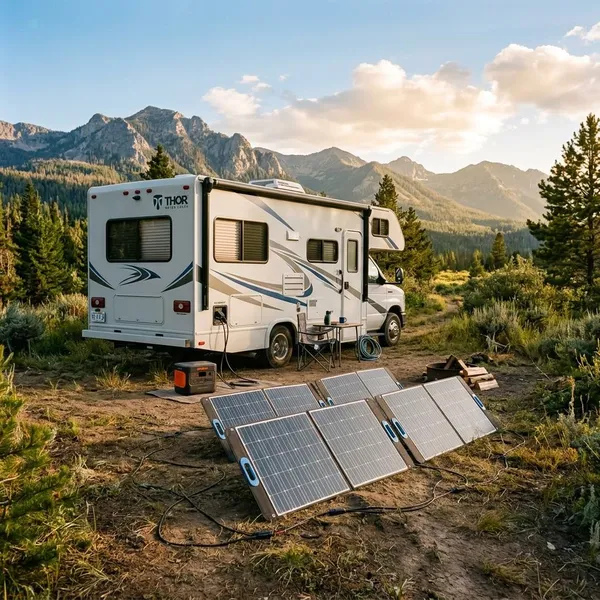
Why use a solar generator for an RV?
A solar generator is useful in an RV because it gives you quiet, portable power without fuel storage or engine maintenance. It is especially helpful when you want more flexibility than the RV house battery alone can provide, but you do not want to install a full permanent solar system yet.
The main decision is not whether solar generators are “better” than gas generators in every case. Gas generators still have an advantage for long, heavy loads when fuel is available. Solar generators are better for quiet daily use, lighter electrical needs, and campsites where noise, fumes, or generator-hour rules are a problem.
It provides quiet power at campsites
Quiet power is the most noticeable benefit. Instead of engine noise, you may only hear a fan from the power station when it is working hard.
That matters if you want to run a fan at night, keep a fridge powered, or charge devices early in the morning without annoying nearby campers. In a crowded campground, quiet power can be the difference between actually relaxing outside and constantly thinking about generator noise.
It reduces fuel and maintenance needs
A battery-based system removes the usual small-engine chores: no gasoline cans, oil changes, carburetor issues, or stale fuel problems. You still need to manage charging and storage, but the day-to-day upkeep is simpler.
This is especially useful for occasional RV owners. If you only camp a few weekends a year, a gas generator may sit long enough to become another thing to maintain. A solar generator that is stored properly and charged before travel is usually easier to bring back into use.
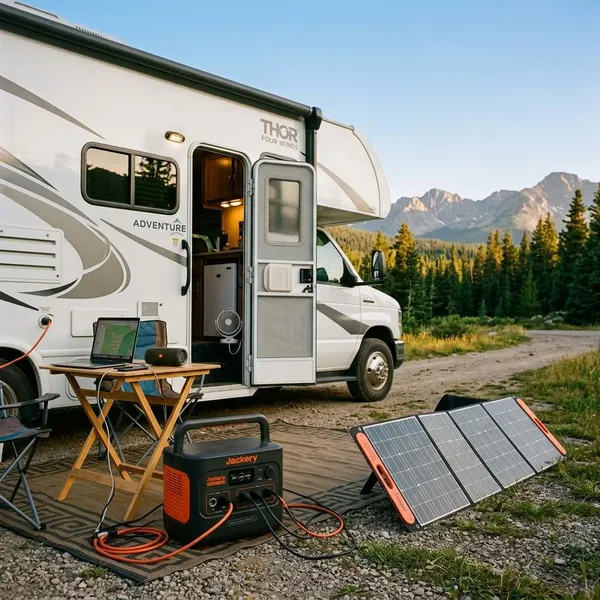
What can a solar generator run in an RV?
A solar generator can run many RV devices, but capacity and output matter more than the device category. Battery capacity tells you how long you can run something. Inverter output tells you whether the generator can run it at all. Surge capacity matters for appliances with compressors or motors.
Start with your non-negotiable loads first: fridge, medical equipment, lighting, communication, and charging. Comfort items such as TV, coffee makers, microwaves, and air conditioning come after that because they can change the size and cost of the system quickly.
Low-power devices work with smaller systems
Phones, tablets, LED lights, cameras, routers, small fans, and many laptops are easy loads for most solar generators. A smaller power station can often support these for a weekend, especially if you recharge with a portable panel during the day.
This is the low-risk scenario: if your battery runs low, you are inconvenienced, but your food, medical equipment, or cooling plan is not at stake. For this kind of use, portability may matter more than buying a huge battery.
Essential appliances need medium capacity
Fridges, CPAP machines, portable coolers, small TVs, and internet gear usually push you into a medium-size system. These loads may not look dramatic, but they often run for many hours, so daily watt-hours matter.
A practical check is to estimate one full day. If a fridge uses about 500Wh, lights use 100Wh, a fan uses 150Wh, and laptop charging uses 120Wh, you are already close to 900Wh before adding cooking appliances. A 1,000Wh unit might work for one night with little reserve; a 2,000Wh unit gives more room for real-life use and cloudy weather.
High-power appliances need stronger output
Microwaves, coffee makers, induction cooktops, kettles, toaster ovens, and hair dryers often draw around 1,000W to 1,800W or more. A solar generator may run them, but only if the inverter can handle the load and the battery has enough reserve.
The common mistake is looking only at battery size. A large battery with a weak inverter still may not run a microwave. Also think about overlap: a coffee maker and microwave used at the same time can exceed a system that would run either one separately.
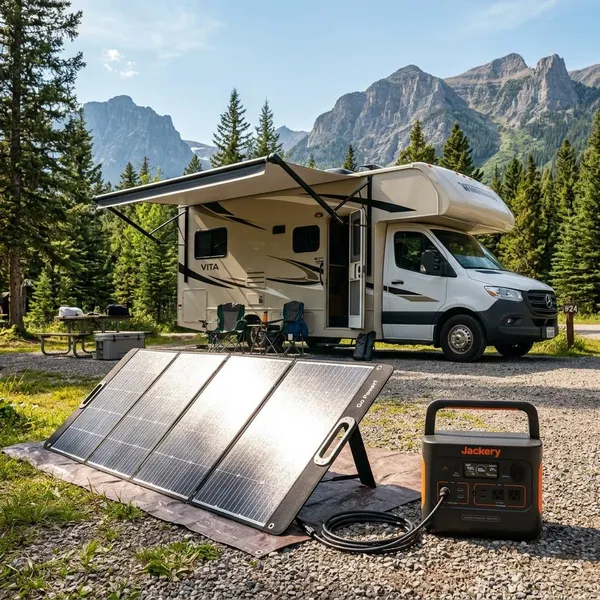
How do you recharge an RV solar generator?
Most RV solar generators recharge through solar panels, shore power, and vehicle charging. The best routine often uses more than one method: solar while parked, shore power when hookups are available, and vehicle charging as a backup during travel days.
Do not judge recharge speed by the best-case number on the box alone. Solar output changes with shade, season, panel angle, heat, and cloud cover. AC charging is usually more predictable. Vehicle charging is convenient but often too slow to recover heavy daily use by itself.
Solar panels provide off-grid charging
Solar panels are the main reason a portable power station becomes useful away from hookups. Portable panels are easy to aim at the sun, while rooftop panels are more convenient because they can charge whenever conditions allow.
A simple planning rule is to replace your normal daily use with some margin. If you use around 1,000Wh per day, a small 100W panel is unlikely to keep up in real conditions. Several hundred watts of solar input is often more realistic for medium RV use, and larger boondocking setups may need much more.
Shore power provides faster charging
Shore power is the easiest way to refill the battery quickly and predictably. If you are moving between campgrounds, plugging in for a few hours can reset the system before the next dry camping night.
This matters for mixed travel. A mid-size generator can feel much larger if you regularly recharge at hookups, while the same unit may feel too small if you expect solar alone to recover heavy appliance use every day.
Conclusion
The right choice is the one that covers your essential loads first and your comfort loads second. A small unit is fine for weekend charging and lights, a mid-size unit suits many mixed RV trips, and a large expandable setup is the better direction for serious boondocking or AC experiments. If you know your daily watt-hours, largest appliance draw, and realistic recharge plan, the decision becomes much easier and far less dependent on marketing claims.