
PV or CSP,Which Generates More Solar Power Today?
See why primary method of solar power generation pv vs csp favors PV today, with clear insights on cost, scale, storage, and siting. Learn more.
PV is the dominant way solar power is generated today, and its lead over CSP is substantial. For a real project, the PV vs CSP decision usually comes down to three factors: cost, site conditions, and the need for electricity after sunset. PV typically has the advantage on cost, deployment speed, and site flexibility, while CSP is mainly worth considering for large, high-DNI locations where thermal energy storage can provide valuable evening or dispatchable power.
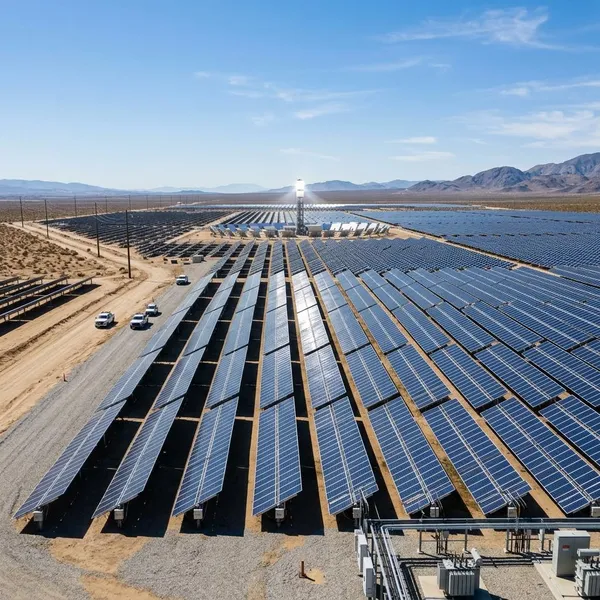
PV Is the Primary Method of Solar Power Generation Today
Photovoltaic solar has become the default solar technology because it works in more places, at more sizes, and with less project complexity. It can sit on a house roof, a warehouse, a parking canopy, a field, or a large utility site. CSP, by contrast, is closer to a solar thermal power plant and needs a much narrower set of conditions.
That difference matters for ordinary decisions. A homeowner, school, factory, or small business is not really choosing between PV and CSP; PV is the practical option. CSP enters the conversation mainly when a utility or grid planner is looking at large desert-region projects with a need for stored renewable heat.
PV Dominates Global Solar Capacity
PV dominates because it is easy to repeat. Panels, inverters, mounting systems, and installation methods are widely available, so projects can be designed and financed with relatively familiar assumptions.
- Small scale: a few panels can serve a home, cabin, or small business.
- Medium scale: rooftops and carports can reduce daytime electricity purchases.
- Large scale: utility projects can add capacity in phases instead of building one complex thermal plant.
This flexibility gave PV a much larger market than CSP. It is not just a better fit for one type of buyer; it fits almost every solar buyer except a few specialized utility cases.
CSP Remains a Specialized Utility-Scale Technology
CSP still has a role, but it is not a general-purpose solar option. It needs strong direct sunlight, large open sites, mirror fields, heat-transfer systems, turbines, and often cooling infrastructure. Those requirements push it toward desert or semi-arid utility-scale projects.
The reason CSP has not disappeared is storage. When a plant stores solar heat, often in molten salt, it may continue generating after sunset. That can be valuable where evening demand is high and the grid needs renewable power that is less tied to midday sunlight.
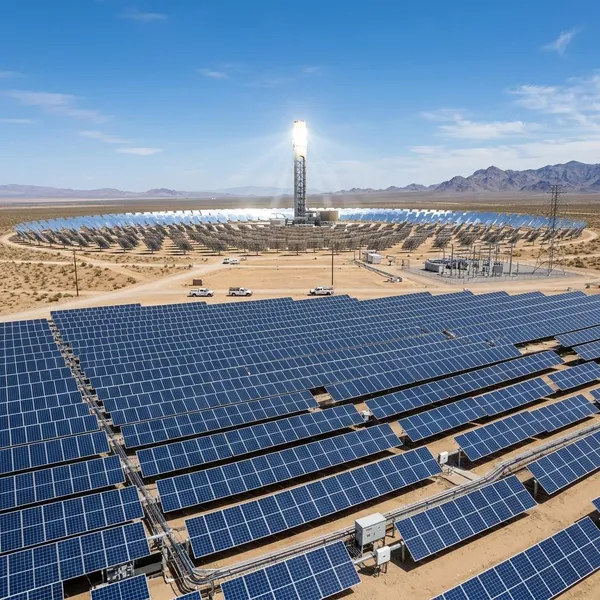
PV and CSP Generate Electricity in Different Ways
The biggest technical difference is simple: PV turns light directly into electricity, while CSP turns sunlight into heat first. That one difference explains much of the cost, site, maintenance, and storage gap between the two technologies.
PV behaves like an electrical system. CSP behaves more like a thermal power station that uses sunlight instead of fuel as the heat source. Once that is clear, the practical comparison becomes easier to understand.
PV Cells Convert Sunlight Directly into Electricity
PV panels use semiconductor cells, usually silicon-based, to produce direct current when light hits them. An inverter then converts that direct current into alternating current for a building, battery system, or the grid.
- Sunlight reaches the solar cells.
- The cells create direct current electricity.
- An inverter converts it into usable AC power.
- The power is used on-site, stored, or exported to the grid.
There is no steam cycle, boiler, or turbine in a standard PV system. That keeps the system comparatively simple and helps explain why PV can scale from a single rooftop to a large solar farm.
CSP Mirrors Concentrate Sunlight into Heat
CSP uses mirrors to focus direct sunlight onto a receiver, creating high-temperature heat. Parabolic trough systems focus light onto receiver tubes, while tower systems use many mirrors aimed at a central receiver.
This setup is more sensitive to weather than PV. Thin clouds, haze, and weak direct sunlight can reduce the value of concentration, even when there is still enough daylight for PV panels to produce some electricity.
CSP Uses Steam Turbines to Produce Electricity
After CSP captures heat, that heat is usually used to make steam and run a turbine connected to a generator. The electricity comes from a thermal cycle, not directly from the mirrors themselves.
That brings both strengths and drawbacks. Turbines and generators are proven equipment, but they require skilled operation and more plant-level maintenance than a typical PV array. Water can also become an issue, especially if wet cooling is used in a hot, dry region.
The useful exception is thermal storage. Because CSP already handles heat, storing that heat can be more natural than storing PV electricity in batteries.
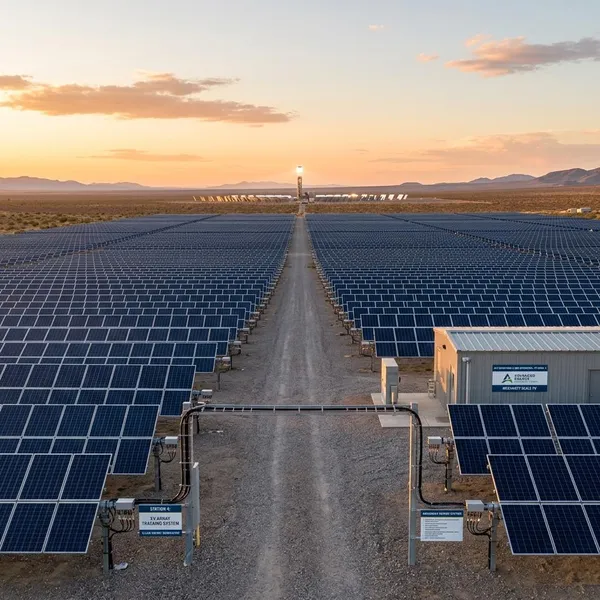
Why PV Became the Global Standard
PV became the global standard because it solved the basic adoption problem better than CSP: it became affordable, repeatable, financeable, and usable almost anywhere. A technology does not need to be perfect to dominate; it needs to be practical for the largest number of real projects.
For a buyer, the first question is rarely “Which technology is more elegant?” It is usually “Which one can I actually build, connect, maintain, and pay back?” PV gives a clearer answer in most situations.
Lower Costs Make New Projects More Competitive
Cost is the biggest reason PV pulled ahead. Large-scale manufacturing, standardized components, installer experience, and a mature supply chain have made PV projects easier to price and easier to finance.
| Decision point | PV usually offers | CSP usually needs |
|---|---|---|
| Project size | Small to utility scale | Large utility-scale plant |
| Equipment | Panels, inverters, mounting | Mirrors, receivers, thermal systems, turbines |
| Buyer type | Homes, businesses, utilities | Mainly utilities and large developers |
| Financial risk | More familiar in most markets | More site- and design-specific |
For a household or small business, that comparison is decisive: CSP is not a realistic behind-the-meter technology. For a utility, CSP may still be considered, but only when its storage value can justify the larger project burden.
Modular Systems Work at Almost Any Scale
PV is modular in a way CSP is not. Add more panels and supporting electrical equipment, and the system grows. That makes PV useful for a small roof today and a multi-phase solar farm tomorrow.
A practical example: a warehouse may start with rooftop PV to cover daytime load, then add batteries later if demand charges or evening use become more important. CSP does not offer that kind of gradual path because the mirror field, receiver, storage system, and turbine are part of a larger integrated plant.
Faster Construction Reduces Project Risk
PV projects can usually be built faster because the construction process is more standardized. Crews install racking, mount panels, wire inverters, test the system, and connect it through the required electrical infrastructure.
Speed reduces risk. A shorter build means less exposure to interest-rate changes, permitting delays, supply disruptions, and policy shifts. For a business trying to reduce electricity costs this year, or a utility trying to add capacity before a summer peak season, that timing advantage matters.
Wider Siting Options Support Global Deployment
PV can work with direct and diffuse light, so it remains useful in many climates, even though output is better in sunnier locations. It can also be placed near electricity demand, such as on rooftops, industrial land, parking areas, or brownfield sites.
CSP needs stronger direct normal irradiance and larger contiguous land areas. A site that is “sunny enough” for PV may still be poor for CSP if the sunlight is often scattered by clouds, humidity, or haze. That is one of the easiest mistakes to make when comparing the two: not all sunlight is equally useful for concentration.
PV vs CSP in Practical Terms
The practical choice comes down to the problem you need to solve. If you want low-cost solar electricity with a straightforward project path, PV is usually the first option to test. If you need renewable power after sunset at utility scale and you have an excellent high-DNI site, CSP may deserve a closer look.
A useful order is: check site quality first, then project scale, then storage need. Comparing storage before checking whether the site can support CSP often leads to the wrong conclusion.
PV Is Cheaper and Faster to Deploy
PV is usually cheaper and faster because it uses a simpler project model. That does not mean every PV project is easy, but the path is familiar: equipment is widely sourced, contractors are easier to find, and designs are more repeatable.
For homes and small businesses, the decision is even clearer. PV can be installed on a roof or small ground mount; CSP cannot be squeezed into a normal property in any practical way.
CSP Needs Larger Sites and Stronger Direct Sunlight
CSP should only be considered where direct sunlight is consistently strong and land is available for a large plant layout. A cloudy coastal region, a humid area with frequent haze, or a site broken up by roads and buildings is usually a poor match.
- Good CSP candidate: large desert site, strong direct sun, utility-scale grid need.
- Weak CSP candidate: small parcel, variable cloud cover, limited water access, nearby shading.
- Better PV candidate: rooftops, distributed sites, mixed weather, phased construction.
PV Output Follows Available Sunlight without Storage
PV production rises and falls with available sunlight. It usually peaks around midday, drops in the late afternoon, and stops at night unless a battery has stored earlier generation.
That profile is fine when your electricity use is mostly daytime, such as a school, office, retail store, or factory with regular operating hours. It becomes less ideal when the main need is evening power, backup power, or firm delivery during grid peaks. In those cases, battery storage or another flexible resource needs to be part of the design.
CSP Integrates Naturally with Thermal Storage
CSP’s strongest practical advantage is that it can store heat before making electricity. In the right location, stored thermal energy can help a plant generate later in the day instead of sending all solar output at midday.
That advantage is real, but it is not automatic. The extra value has to outweigh the higher complexity, larger site requirement, longer development process, and local operating constraints. In many markets, PV plus batteries now competes directly with the role CSP was expected to fill.
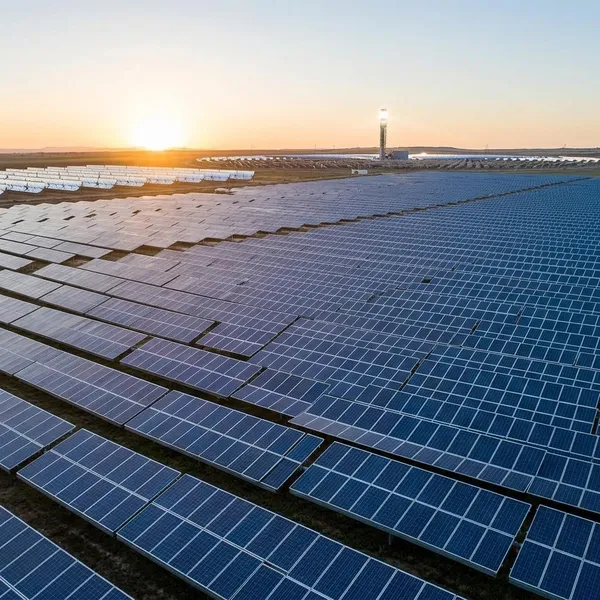
Conclusion
For most real-world solar decisions, PV is the practical starting point because it is cheaper, more flexible, and far easier to deploy across different sites and project sizes. CSP is worth considering only in a narrower utility-scale setting where strong direct sunlight, large land availability, and the value of thermal storage line up. If those conditions are not clearly present, the market’s preference for PV is not just a trend; it is the more sensible engineering and financial choice.