
Portable Power Station vs Tesla Powerwall Comparison for Home Backup Power
Portable power stations and Tesla Powerwall differ in cost, capacity, installation, solar support, and backup performance for different power needs.
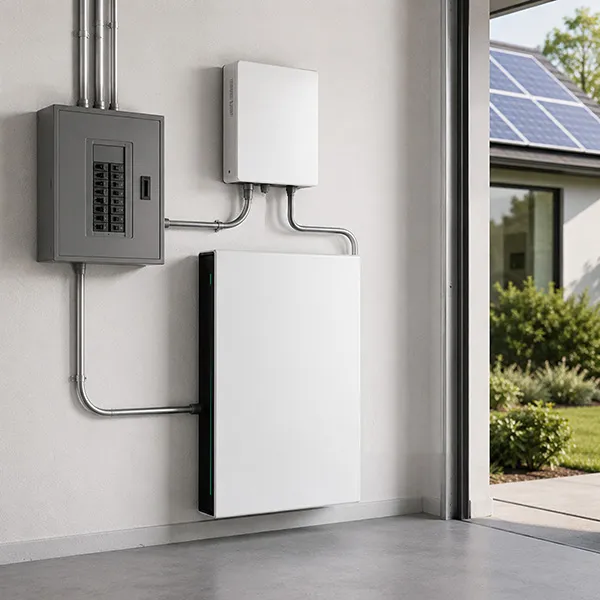
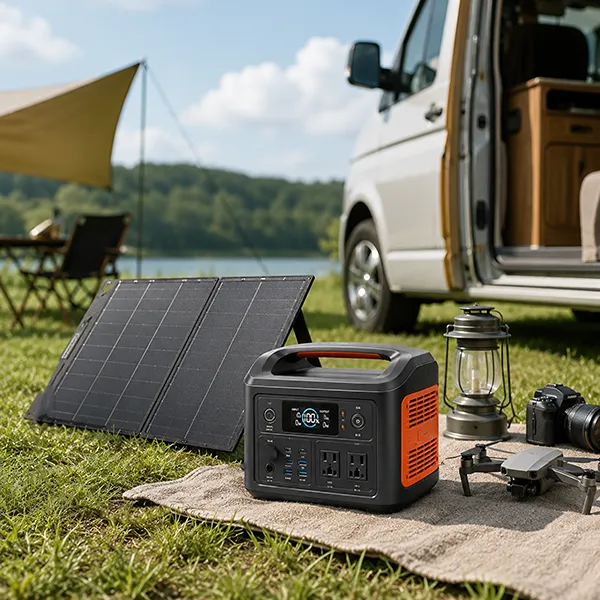
A portable power station is closer to a large rechargeable battery you can move, plug appliances into, and recharge from the wall, car, or solar panels. A Tesla Powerwall is a permanently installed home battery system designed to connect to your electrical panel, solar system, and utility grid.
Core Difference At A Glance
| Factor | Portable Power Station | Tesla Powerwall |
|---|---|---|
| Best for | Camping, apartments, renters, short outages, essential devices | Homeowners, solar users, whole-home backup, automatic outage protection |
| Installation | Usually plug-and-play | Professional installation required |
| Portability | Movable, though large units are heavy | Fixed to the home |
| Typical capacity | ~1-4 kWh per unit; expandable models can go higher | 13.5 kWh per Powerwall 3 unit |
| Power output | Often 1,000-4,000W depending on model | Up to 11.5 kW continuous per Powerwall 3 |
| Outage response | Manual unless paired with transfer/backup accessories | Automatic home backup |
| Solar integration | Portable panels or add-on solar input | Built for home solar and grid optimization |
| Cost profile | Lower upfront, flexible | Higher upfront, more complete system |
| Best buyer | Renter, RV owner, occasional outage prepper | Homeowner wanting integrated backup |
Why Compare Them?
Both products solve the same basic anxiety: “What happens when the power goes out?” But they solve it at different scales.
A portable power station is useful when you need to run a refrigerator, router, laptop, lights, CPAP machine, fan, or small appliance for a limited time. A Tesla Powerwall is meant to keep a home running more normally, especially when paired with solar.
Tesla lists Powerwall 3 at 13.5 kWh energy capacity and says it can support whole-home backup, including large appliances in many cases. Its datasheet describes up to 11.5 kW AC continuous power per unit and up to 20 kW DC solar input.
For comparison, a high-end portable unit such as the EcoFlow DELTA Pro 3 lists 4,096 Wh / 4.096 kWh capacity and 4,000W AC output, while Jackery's Explorer 2000 Plus class is around 2 kWh base capacity with expansion options.
Capacity And Runtime
This is where the Powerwall pulls ahead.
A single Tesla Powerwall 3 has 13.5 kWh of usable energy. That is roughly three times the capacity of a 4 kWh portable power station and six times the capacity of many 2 kWh models.
In practical terms:
| Load | Approx. Consumption | 2 kWh Portable Station | 4 kWh Portable Station | 13.5 kWh Powerwall |
|---|---|---|---|---|
| Wi-Fi router + phones | 20-40W | Many hours to days | Longer | Multiple days |
| Refrigerator | 100-200W average, varies | Several hours to ~1 day | ~1-2 days | Several days possible |
| Window AC | 500-1,500W | Short runtime | Limited runtime | More realistic |
| Central AC | Often several kW plus startup surge | Usually not practical | Sometimes with special high-end systems | Much more practical |
Actual runtime depends heavily on appliance efficiency, startup surge, weather, and whether solar is recharging the battery.
Power Output And Appliance Support
Portable power stations have improved a lot. Premium models can run refrigerators, microwaves, induction cookers, small AC units, pumps, and power tools. For example, EcoFlow lists the DELTA Pro 3 at 4,000W output with 8,000W surge. That is powerful for a movable battery.
But the Powerwall 3 is built for a different job. Tesla's Powerwall 3 supports up to 11.5 kW continuous AC power per unit, and Tesla highlights its ability to start heavy loads. That matters for HVAC systems, well pumps, dryers, and other appliances with high startup demand.
If your goal is “keep a few things alive,” a portable power station can be enough. If your goal is “make the house feel mostly normal during an outage,” Powerwall is the more natural fit.
Installation And Ease Of Use
Portable power stations win on convenience. You buy one, charge it, and plug devices into it. Some larger systems can connect to home backup panels or transfer switches, but the basic experience is simple.
Tesla Powerwall requires professional installation, permitting, electrical integration, and usually a site-specific quote. The upside is that once installed, it can work automatically. During an outage, the system can switch over without you moving cords around.
So the tradeoff is clear:
Portable power station: easier to buy, easier to move, easier for renters.
Powerwall: harder and more expensive to install, but much smoother once operating.
Solar Charging And Energy Management
Both can work with solar, but not in the same way.
Portable power stations usually connect to portable solar panels or compatible solar arrays. This is great for camping, RVs, balconies, emergency kits, and temporary setups. However, solar input is limited by the unit's controller, weather, panel placement, and connector compatibility.
Powerwall is designed for home energy management. It can store solar energy, discharge during outages, and shift usage away from expensive grid hours. Tesla also notes that Powerwall can recharge from the grid when utility prices are low and use stored energy later.
If you already have or plan to install rooftop solar, Powerwall is much more integrated. If you just want emergency solar charging without modifying a house, portable wins.
Cost And Incentives
Portable power stations generally cost less upfront. Small units can be a few hundred dollars; large 2-4 kWh systems often range from around $1,000 to several thousand dollars depending on brand, capacity, expansion batteries, panels, and home integration accessories.
Powerwall costs much more because it is not just a battery purchase. It includes hardware, installation, electrical work, permits, and system commissioning. EnergySage reported a typical all-in installed Powerwall 3 cost of about $13,473 before incentives, with average pricing around $998 per kWh based on marketplace quotes.
Important 2026 note for U.S. buyers: the IRS states the Residential Clean Energy Credit applies to qualifying property installed from 2022 through December 31, 2025, and is not available for property placed in service after December 31, 2025. Local incentives, lease structures, or utility programs may still matter, so check your location before assuming the final price.
Pros And Cons
Portable Power Station Pros
Lower upfront cost.
No permanent installation.
Good for renters, apartments, RVs, camping, and travel.
Can be moved where power is needed.
Works for targeted backup: fridge, router, lights, laptops, medical devices.
Easy to replace or upgrade.
Portable Power Station Cons
Limited whole-home capability.
Manual setup during outages unless extra hardware is added.
Lower capacity than a full home battery.
Large units can still be heavy.
Solar charging may be slow or weather-dependent.
Some appliances exceed the inverter's output or surge rating.
Tesla Powerwall Pros
Much larger base capacity.
Automatic outage backup.
Better for whole-home or large-load backup.
Strong solar and grid integration.
Can support time-of-use energy shifting.
Cleaner long-term setup for homeowners.
10-year warranty terms are available when conditions are met.
Tesla Powerwall Cons
High upfront installed cost.
Requires home ownership or landlord approval.
Requires professional installation and permitting.
Not portable.
Best economics depend on electricity rates, solar production, outage frequency, and incentives.
May be more system than you need if you only want to power essentials.
Which One Should You Choose?
Choose a portable power station if you are a renter, live in an apartment, want emergency backup for essentials, need power for camping or RV use, or want to avoid installation. It is the better first purchase for most people who want practical backup without committing to a home energy project.
Choose a Tesla Powerwall if you own your home, experience frequent outages, have or plan to install solar, want automatic backup, or need to support larger appliances. It is not just a bigger portable battery; it is a home energy system.
Simple Buying Recommendation
For most households, the smart decision starts with outage goals:
If you only need Wi-Fi, phones, lights, laptop, fridge, and maybe a fan, buy a portable power station.
If you need automatic backup for major home circuits, consider Tesla Powerwall.
If you need central AC, well pump, electric cooking, or multi-day home resilience, Powerwall or another professionally installed home battery system is the better category.
If you rent or move often, Powerwall usually does not make sense.
If you already have rooftop solar and high time-of-use electricity rates, Powerwall becomes much more compelling.
Conclusion
A portable power station is the better flexible backup tool. Tesla Powerwall is the better whole-home energy system.
If budget, mobility, and simplicity matter most, choose a portable power station. If automatic backup, solar integration, and powering the home as a system matter most, choose Tesla Powerwall.