
Best Off Grid Solar System Packages With Batteries for Cabins, Homes, RVs, and More
Find the best off grid solar system packages with batteries by matching loads, inverter size, battery backup, and site conditions.
The right off-grid solar system package with batteries should match your real power use, not just offer the largest number of panels or the highest advertised wattage. A weekend cabin, full-time home, RV, remote workshop, or backup power setup will each need a different balance of solar panels, battery storage, inverter capacity, and safety components. Focus first on the appliances and devices that must stay powered, then choose a system built to handle those loads reliably day and night.
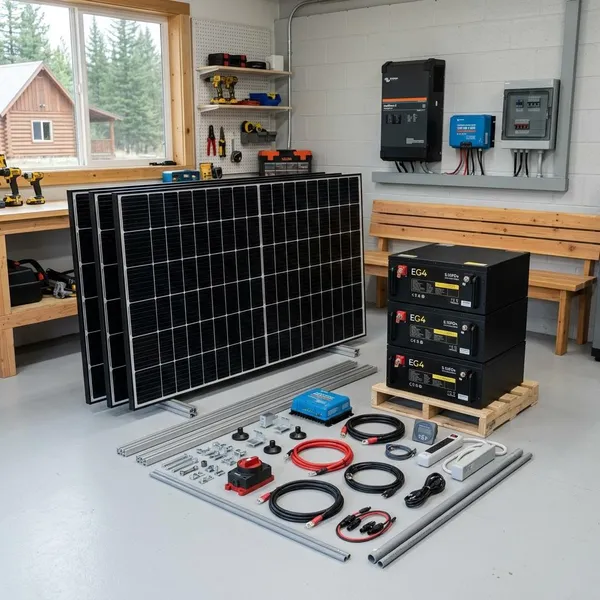
Which off-grid solar package fits your needs?
Choose the package category before comparing brands or panel counts. The right system depends on how often you are there, which appliances are non-negotiable, and whether you can change your habits during cloudy weather.
Cabin packages provide power for weekend and seasonal use
A cabin package makes sense when the property is used part-time and the goal is comfort, not running a conventional house. LED lights, phone charging, a laptop, a small efficient fridge, a fan, and a router are realistic loads for many smaller cabin kits.
The mistake is treating "seasonal" as "anything goes." A summer-only cabin with good sun may feel easy to power, while the same cabin used in late fall may need more battery reserve and a generator plan. If the cabin has a well pump, electric heater, coffee maker, or microwave, size around those loads early instead of adding them after the kit is installed.
RV packages support mobile off-grid living
RV packages need to be compact, light, and forgiving because parking angle, shade, and weather change constantly. Lithium batteries are common in this category because they usually offer more usable storage for less weight than traditional lead-acid options.
- Good fit: lights, vent fans, water pump, device charging, 12V fridge, laptop use.
- Possible with limits: short microwave use, coffee maker, small inverter loads.
- Usually difficult: regular air conditioning from solar and batteries alone.
A clear battery monitor is especially useful in an RV. It tells you whether you can stay parked another night or whether you need to drive, recharge, or reduce loads.
Tiny home packages cover daily essential power needs
Tiny homes sit between cabin kits and full residential systems. They often need daily refrigeration, lighting, internet, laptops, water pumping, fans, and some cooking or laundry use, but they work best when heating, hot water, or heavy cooking is handled by a non-electric option.
For a full-time tiny home, battery reserve matters more than the headline solar wattage. If most of your power use happens after sunset, a package with too little usable battery capacity will make normal routines feel restrictive.
Home packages support full-time energy independence
A home package is the right direction when the system must support everyday living through different seasons. It should be planned around refrigerators, freezers, lights, internet, pumps, laundry, office equipment, and any heating or cooling loads you expect to use.
Do not judge a full-time home system only by daily watt-hours. Pumps, compressors, and some appliances need strong startup power. If the inverter cannot handle those short surges, the system can trip even when the battery bank looks large enough on paper.
Workshop packages run tools and equipment
Workshop packages are less about running all day and more about handling sharp bursts of demand. Saws, compressors, grinders, dust collectors, chargers, and pumps may run briefly, but they can demand a larger inverter than a simple cabin kit.
If the workshop shares power with a cabin or home, size the system for the worst realistic overlap. A fridge cycling on while an air compressor starts is a very different load than lights and a battery charger.
How do you choose the right off-grid solar package size?
Size the system in the same order you will use it: daily energy first, peak power second, battery reserve third, and solar production last. Starting with panel count usually leads to a kit that looks impressive but does not match the way you actually live.
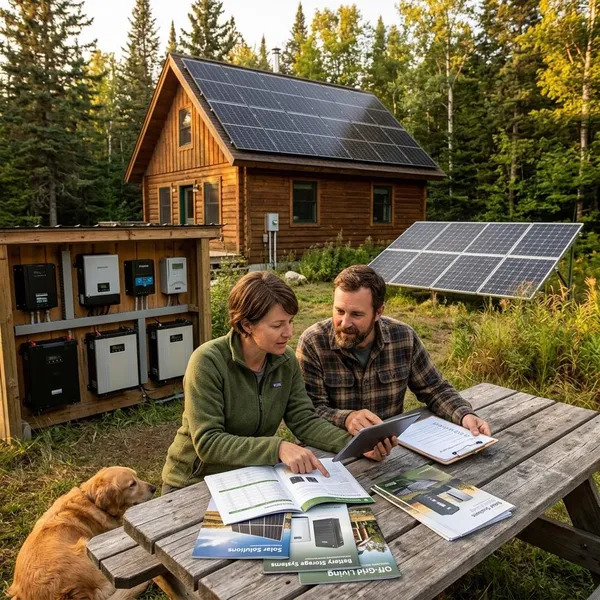
Calculate daily energy use before choosing a system
Daily energy use is the number that keeps the whole decision grounded. A 100-watt device used for four hours needs about 400 watt-hours, while a 1,000-watt microwave used for 15 minutes needs about 250 watt-hours.
Separate your loads into three groups before shopping:
- Critical loads: fridge, lights, water access, communications, medical equipment.
- Flexible loads: laundry, power tools, vacuum, some cooking appliances.
- Problem loads: heaters, kettles, hair dryers, compressors, large pumps.
This also shows where habits can save money. Running laundry or tool charging during sunny hours may reduce the battery size you need.
Match inverter size with peak power demand
The inverter must handle both continuous power and short startup surges. Refrigerators, freezers, pumps, compressors, and shop tools can draw much more power for a moment than they use while running normally.
For cabins, homes, RVs, and tiny homes, a pure sine wave inverter is usually the safer choice for modern appliances and electronics. Cheaper inverter options may work for simple loads, but they can cause compatibility problems with chargers, motors, and sensitive equipment.
Choose battery capacity for overnight and cloudy days
Battery capacity should be judged by usable storage, not only the advertised rating. Lithium batteries usually allow deeper usable discharge than AGM or other lead-acid batteries, so two battery banks with similar labels may not give the same real runtime.
A weekend cabin may only need enough storage for one evening and the next morning. A year-round home in a cloudy climate needs a more cautious plan, often with extra reserve or a generator as backup. If losing refrigeration, water, or internet would be a serious problem, do not size the battery bank to the bare minimum.
Size solar panels based on location and sunlight
Solar panels need to replace the energy you use and refill the battery after overnight draw. The same package can perform well in one location and feel weak in another because of shade, roof angle, latitude, snow, dust, or short winter days.
When comparing kits, ask what the production estimate is based on. Annual average sun can make a system look better than it feels during the lowest-production month, which is usually the month that matters most off-grid.
What can different off-grid solar system sizes run?
System size is best understood by lifestyle, not only by watts. A small kit can be excellent for simple living, a medium kit can support daily routines, and a large kit can cover a home more comfortably, but none of them are unlimited.
Small systems power lights, charging, and basic appliances
Small systems are best for disciplined use: LED lights, phones, laptops, routers, fans, and possibly a compact efficient refrigerator. They suit a hunting cabin, remote shed, simple RV, or emergency backup circuit.
They are not a good match for regular electric cooking, heating, hair dryers, large pumps, or frequent tool use. If you already know you want those conveniences, buying the smallest kit usually becomes more expensive later because you end up replacing parts.
Medium systems run refrigerators, pumps, and essential loads
Medium systems are often the sweet spot for tiny homes, larger cabins, and practical off-grid living. They can support an efficient full-size fridge, lights, internet, charging, entertainment, and moderate appliance use when loads are managed sensibly.
- Works well: daily essentials and some comfort loads.
- Needs planning: pumps, microwaves, washing machines, and coffee makers.
- Still risky: running several high-wattage loads at the same time.
Large systems support homes and high-power devices
Large systems are for full-time homes, bigger families, heavier water needs, and properties where outages are not acceptable. They may support multiple refrigeration loads, pumps, laundry, office equipment, kitchen appliances, and selected heating or cooling equipment.
Even then, large does not mean grid-like freedom. Electric resistance heat, large water heaters, central air conditioning, and heavy workshop loads can become expensive fast. Many successful off-grid homes reduce those demands with efficient appliances, propane, wood heat, heat pumps, or careful load scheduling.
What should a complete off-grid solar package include?
A complete package should include more than panels, batteries, and an inverter. The missing parts are often the ones that affect safety, installation time, and the final cost.
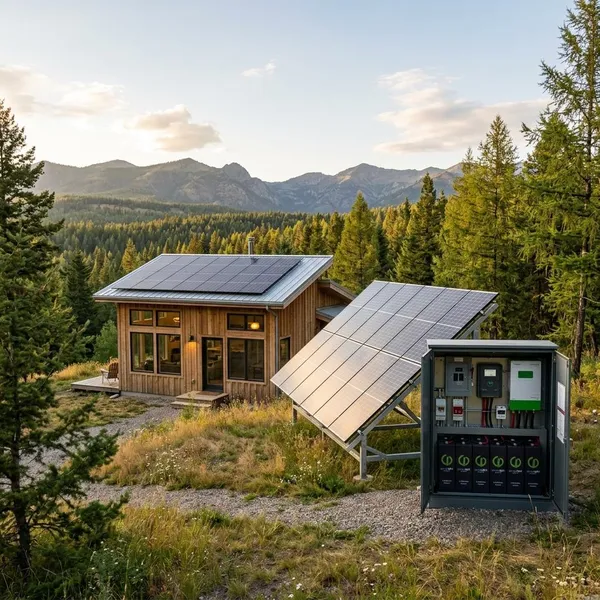
Before buying, compare the included parts list against what your site actually needs. A cheaper kit may stop being cheaper once you add mounts, disconnects, breakers, battery cables, monitoring, and proper documentation.
Solar panels, batteries, inverter, and charge controller
These are the core components. Panels collect energy, batteries store it, the charge controller manages charging, and the inverter supplies AC power for standard appliances.
Battery choice changes the feel of the system. Lithium is usually better for regular cycling, lower weight, and deeper usable capacity. AGM can still make sense for occasional use or tighter budgets, but it is less forgiving if it is deeply discharged often.
Wiring, mounting, protection, and monitoring equipment
Wiring, mounts, fuses, breakers, disconnects, grounding parts, combiner boxes, and surge protection are not small details. They help the system run safely and make maintenance less stressful.
- Wiring: should match current, voltage, and distance.
- Mounting: should fit the roof, ground rack, RV, or cabin structure.
- Protection: should allow safe shutdowns and reduce fault risks.
- Monitoring: should show battery charge, solar input, and load demand.
For larger systems or anything tied to insurance, permits, or code requirements, get qualified electrical help rather than guessing on protection and grounding.
Warranty, support, and system documentation
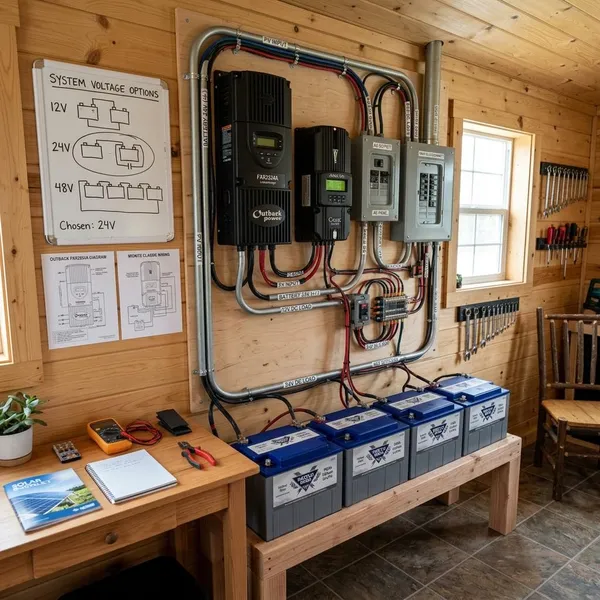
Good documentation matters because off-grid systems eventually need troubleshooting. Look for wiring diagrams, component manuals, battery settings, parts lists, and clear setup instructions.
Warranty terms should be checked by component, not only by the headline claim. Batteries, inverters, and panels often have different coverage rules, and battery warranties may depend on temperature, charging settings, cycle use, or installation conditions.
Conclusion
The right off-grid solar package is the one that can handle your essential loads on an ordinary day and still give you a workable plan when the weather is poor. If two packages look close, choose based on usable battery reserve, inverter surge capacity, winter solar production, and included safety hardware rather than the lowest price. For full-time homes, pumps, workshops, or high-voltage systems, professional design help is usually worth the cost.