
Best Off-Grid Solar System Packages With Batteries for Cabins, Homes, and RVs
Compare the best off-grid solar system packages with batteries, learn sizing basics, and choose the right setup.
The best off-grid solar system packages with batteries are not always the largest kits on the page; they are the ones sized around your real daily power use, your backup expectations, and the sunlight available at your site. Start by identifying what you need to run, then compare whether the battery bank, inverter, and solar array can support that load together. A weekend cabin and a full-time off-grid home may both need solar power, but they should not be choosing the same package.
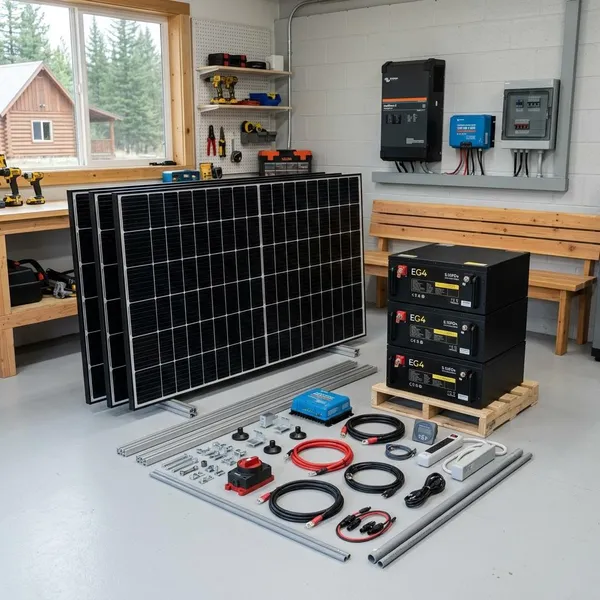
What is included in an off-grid solar package?
A typical off-grid solar package includes the core parts needed to make power, store it, and turn it into usable electricity for everyday devices. Most kits include solar panels, batteries, an inverter, and charging equipment, but “complete” does not always mean ready to install without extra parts.
Solar panels generate power from sunlight
Solar panels are the part of the package that replaces the energy you use. Their listed wattage is useful for comparison, but real output changes with shade, season, heat, dust, roof angle, and local weather.
For a summer-only cabin with open southern exposure, a modest array may recover quickly during long sunny days. A year-round cabin under trees or in a cloudy northern area needs more panel headroom because winter production can be the limiting factor.
Batteries store energy for later use
Batteries decide how comfortable the system feels after sunset, during cloudy weather, and before the panels start producing the next morning. Compare usable capacity, not just the advertised battery size.
- LiFePO4 batteries: usually offer more usable capacity, lower maintenance, and better daily cycling.
- Lead-acid batteries: may cost less upfront but usually need more careful charging and shallower discharge.
- Too little storage: causes deeper cycling, more generator use, and less margin during bad weather.
Inverters convert power for home devices
The inverter turns battery power into AC electricity for outlets, appliances, tools, and electronics. Its continuous wattage must cover what you run at the same time, while its surge rating must handle brief startup loads from refrigerators, pumps, freezers, and some air conditioners.
A package with plenty of panels can still feel weak if the inverter is undersized. For cabins and homes, a pure sine wave inverter is usually the safer choice because it works better with modern electronics, chargers, routers, refrigerators, and medical devices such as CPAP machines.
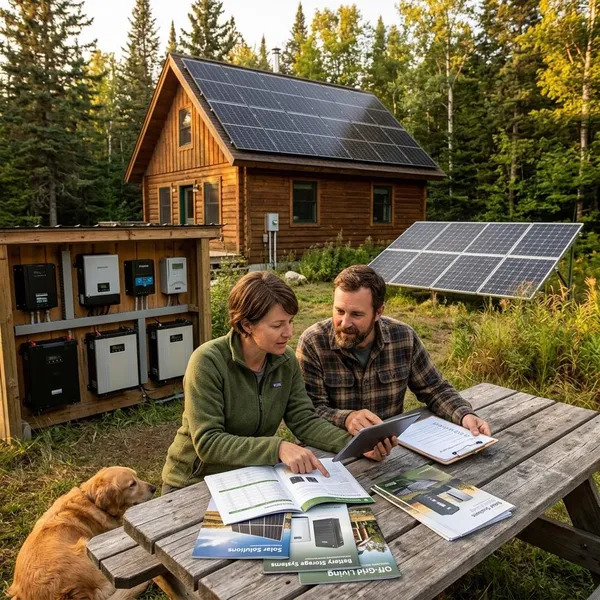
How do you choose an off-grid solar package?
Choose an off-grid package by working from your loads outward: daily energy use first, inverter demand second, battery reserve third, and solar input last. Brand, kit size, and sale price matter only after those numbers make sense for your situation.
Match system size with daily energy use
Daily energy use tells you how much electricity the system must replace in a normal 24-hour period. If your fridge, lights, router, laptop, and fan use about 3 kWh per day, the package must produce and store enough usable energy to cover that pattern without draining the batteries too deeply.
Do not size only for a quiet weekday if the property is used differently on weekends. A cabin that is easy to power with two people may need a larger package when guests arrive, the microwave gets used often, or the water pump runs more than expected.
Match inverter output with power needs
Look at the appliances that may run at the same time. A fridge plus lights and a router is a small load; a fridge, microwave, well pump, coffee maker, and power tool can overload a modest inverter quickly.
Use the inverter’s continuous rating for normal running loads and its surge rating for startup loads. If the package does not clearly show both numbers, it is hard to judge whether it can run motor-driven appliances reliably.
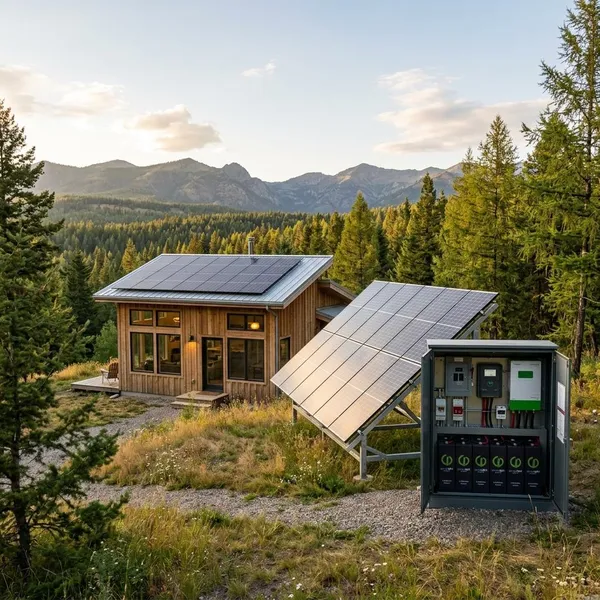
What size off-grid solar system do you need?
Most buyers can start by thinking in small, medium, and large system ranges, then refine the choice with actual watt-hours and appliance loads. The label on the property is not enough: a “small cabin” with a refrigerator, pump, microwave, and internet may need more power than a larger but simpler shed.
Use system size as a comfort and risk decision. Smaller systems cost less but require discipline; larger systems cost more but give you more normal household routines and better backup during poor weather.
Small systems power basic devices
Small systems are best for low-demand loads such as LED lights, phone charging, laptops, cameras, routers, small fans, and possibly a compact efficient refrigerator. They suit sheds, hunting cabins, basic workshops, and short RV stays where power use is predictable.
The limit is flexibility. If you want to use a kettle, toaster, space heater, microwave, or power tools without thinking about timing, a small system will probably feel restrictive.
Medium systems power cabins and essentials
A medium system is often the practical middle ground for cabins and seasonal homes. It can support lighting, refrigeration, charging, internet, TV, and selected pump or kitchen loads when the inverter and battery bank are properly matched.
- Good fit: weekend cabin with fridge, router, lights, and moderate appliance use.
- Needs caution: deep well pumps, freezers, long cloudy seasons, or frequent microwave use.
- Better upgrade: more battery reserve is often more useful than only adding panels.
Large systems power full homes
Large systems are for full-time homes, bigger cabins, or properties with heavier loads such as pumps, freezers, laundry equipment, office gear, and occasional high-demand appliances. They often use larger battery banks, stronger inverters, and 48V architecture.
This is the point where a standard kit may not be enough. If the home needs split-phase power, a deep well pump, air conditioning, generator backup, or code-compliant subpanels, a professional design review is usually worth the extra step before buying.
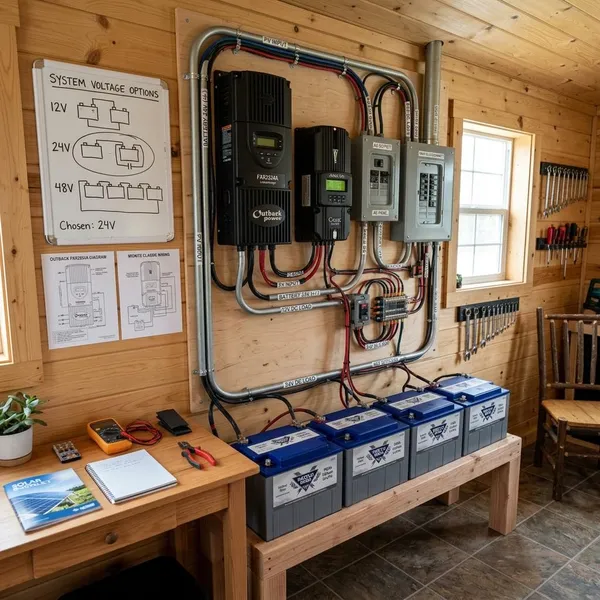
What inverter and voltage setup do you need?
The inverter and battery voltage setup affect how efficiently the system moves power, how thick the cables need to be, and how well the package can grow later. Small systems can work well at lower voltages, but larger systems usually benefit from moving to 48V.
24V systems fit smaller energy needs
A 24V setup can be a sensible choice for small and medium systems that run basic cabin loads, compact appliances, lighting, charging, and moderate inverter demand. It is more efficient and practical than many 12V setups while staying manageable for modest installations.
It becomes less attractive when you expect major expansion. If you already know you want a large inverter, long cable runs, or a bigger battery bank later, starting with 48V may avoid an expensive rebuild.
48V systems fit larger power demands
For larger cabins and full-time off-grid homes, 48V is often the stronger long-term platform. It handles higher power with lower current, which can reduce losses and make wiring more manageable.
A 48V package is especially worth considering when the system needs to run several appliances at once, support a large solar array, charge a substantial battery bank, or leave room for future loads. It is usually not necessary for a tiny weekend setup, but it becomes more important as the system starts to resemble normal household power.
Pure sine wave supports sensitive devices
Pure sine wave power is the better default for most homes, cabins, and RVs. It is more compatible with laptops, routers, TVs, efficient refrigerators, smart chargers, variable-speed tools, and many medical or communication devices.
How do you maintain an off-grid solar system?
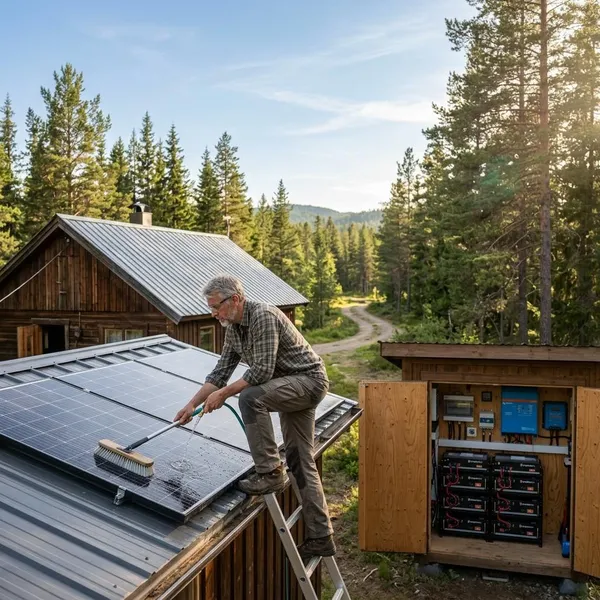
Off-grid solar maintenance is mostly about preventing small losses from becoming big problems. Clean panels, good placement, stable charging, and healthy batteries matter more than constant hands-on work.
A simple routine is enough for many systems: look for new shade, check charging behavior, review battery state of charge, inspect visible cables, and pay attention to inverter warnings. Remote systems deserve extra attention because problems can go unnoticed until the batteries are already low.
Proper placement improves solar output
Panel placement can make or break an off-grid package. Aim for the clearest sun window your site allows, and think about winter sun angles, falling leaves, snow, and future tree growth rather than only checking the roof at noon in summer.
Ground mounts can be easier to clean and adjust, while roof mounts save space and keep panels out of the way. The better choice is the one you can keep shade-free and maintain safely.
Regular checks protect system performance
Check the system often enough to know what “normal” looks like. If charging suddenly drops, battery levels fall faster than usual, or inverter alerts appear, investigate before the battery bank is deeply discharged.
- After storms: look for loose wiring, debris, water intrusion, or shifted panels.
- Before winter: confirm panels are clean and battery reserve is realistic for shorter days.
- During heavy use: watch whether the batteries recover fully after normal daily loads.
Conclusion
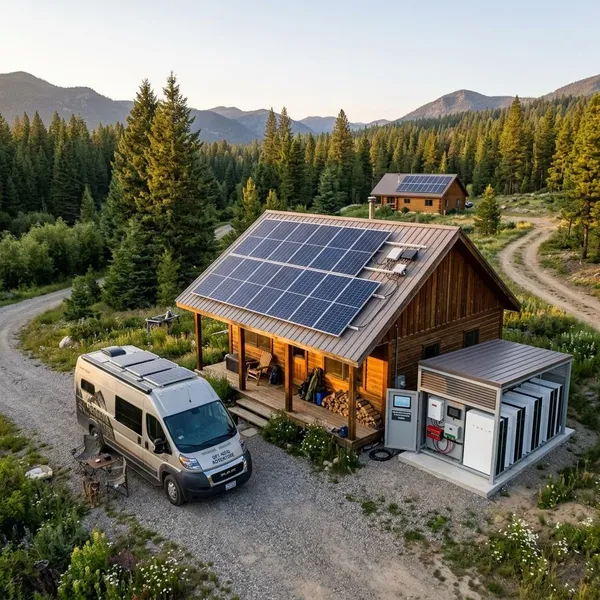
A good off-grid package should feel balanced: enough solar to recharge, enough battery to carry you through low-sun periods, and enough inverter capacity to run the loads that actually matter. If your use is simple and predictable, a complete kit can be a convenient choice; if the property has pumps, HVAC, split-phase needs, or full-time living demands, get the design checked before committing. The smartest buy is the package that fits your real routine, not the one with the biggest headline wattage.