
Which Home Solar Battery Bank Is Right for You?
Learn how the best solar battery bank for home can support outages, store solar energy, and fit your budget.
The best solar battery bank for home use is usually a LiFePO4 system sized around your real evening use and outage priorities, not simply the biggest battery you can afford. Start by deciding whether you want to run only essentials, most of the house, or a system you can expand later. That choice affects battery size, inverter power, installation cost, and how useful the system feels during the first real outage.
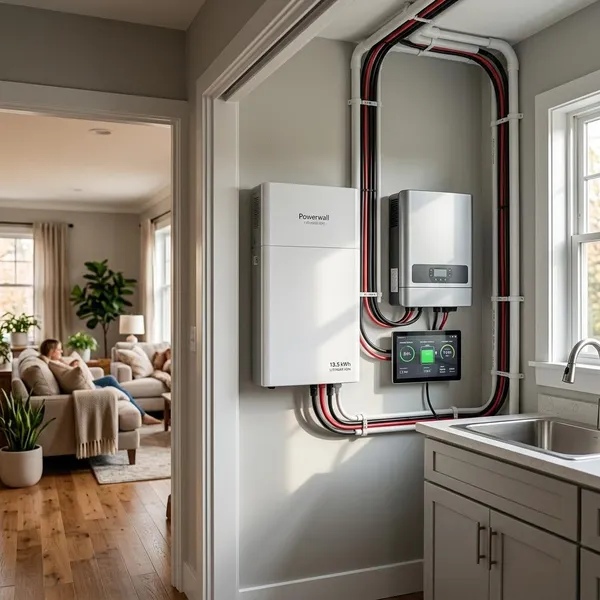
What Is the Best Solar Battery Bank for Home Use?
For most households, the best home solar battery bank is a LiFePO4-based system with enough usable storage for nighttime use and enough inverter output for the loads you actually want to run. Capacity matters, but it is only one part of the decision. A battery with a large kWh rating can still disappoint if it cannot start a pump, support a backup panel, or work cleanly with your inverter.
The first check is simple: separate "daily savings" from "backup power." A battery used mainly to store afternoon solar for evening use can be smaller than a system expected to keep a home comfortable through long outages. Once that goal is clear, chemistry, usable capacity, output power, warranty terms, and expansion options become much easier to compare.
LiFePO4 batteries are the best choice for most homes
LiFePO4 batteries are the safest default choice for many residential solar storage projects because they usually offer strong cycle life, low maintenance, and good usable capacity. They are especially sensible if the battery will charge and discharge most days, rather than sit idle for rare emergencies.
- Daily solar use: LiFePO4 handles frequent cycling better than old lead-acid setups.
- Home installation: The chemistry is generally known for better thermal stability than some other lithium types when installed correctly.
- Long-term value: More usable capacity and slower practical wear can matter more than the cheapest upfront price.
Whole-home systems are best for complete backup
A whole-home system is the right direction if you want the house to feel close to normal during an outage. That usually means more than one battery module, a capable inverter, and load management for large appliances such as central air, well pumps, or electric heating.
This setup makes the most sense in high-risk situations: frequent storm outages, wildfire shutoffs, unreliable rural service, or a household where losing heat, cooling, water, or refrigeration creates a real problem. If outages are rare and short, whole-home backup can be more comfort purchase than financial necessity.
Best Solar Battery Banks for Different Home Needs
The best battery bank depends on what problem you are trying to solve. A small essential-load system can be excellent for keeping food cold and Wi-Fi running, while a larger system may be needed for homes with pumps, HVAC, or long outage concerns.
A practical way to compare systems is by use case:
| Home need | Best fit | What to watch |
|---|---|---|
| Evening solar use plus basic backup | Balanced battery system | Usable kWh and backup circuit selection |
| Long outages or large electrical loads | High-capacity battery bank | Inverter surge power and load control |
| Refrigerator, lights, internet, charging | Small essential-load system | Do not expect HVAC or heavy appliances |
Balanced systems fit daily backup and savings
A balanced system is often the sweet spot for a grid-tied home. It stores extra solar during the day, reduces evening grid use, and keeps selected circuits running when the power goes out.
This is a good fit for a household with normal evening demand: cooking, lights, TV, laptops, internet, and refrigeration. It may not run everything at once, but it usually solves the most common problem without pushing the project into whole-home pricing.
High-capacity systems fit whole-home power needs
High-capacity systems are built for homes where "just the essentials" is not enough. They are more appropriate when you need to support large loads, longer runtimes, or a more normal routine during outages.
The key detail is not only storage size. Large appliances can require strong startup power, so the inverter and battery system must be designed for both continuous demand and short surges. Bigger batteries without enough output can still leave important equipment unusable.
Small systems fit essential-load backup
A small system can be the smartest choice if your real goal is food safety, lighting, phone charging, internet access, and one work area during short outages. It is also a reasonable starting point for older solar systems where a full retrofit would become expensive.
The mistake to avoid is expecting a small battery to behave like a generator for the whole house. Electric ovens, dryers, central air conditioning, and resistance heating can drain or overload a compact system quickly.
How to Choose the Right Solar Battery Bank
Choose the battery after you know three things: how much energy you use after sunset, what must stay on during an outage, and whether your existing solar equipment can support storage. Those checks matter more than brand rankings because two homes with the same roof size can need very different battery setups.
Match battery size to your energy use
Start with your utility app or electric bills. Look at daily kWh use, then estimate how much happens after sunset. If your home uses 25 kWh per day but only 8 to 12 kWh in the evening, a battery in that usable range may cover nighttime solar shifting without trying to replace the grid.
- For daily savings: size around evening and overnight consumption.
- For outage backup: list the exact circuits and likely runtime.
- For whole-home comfort: include surge loads such as pumps, compressors, and HVAC.
- For real comparison: use usable capacity, not only the advertised kWh number.
Choose backup coverage for your needs
Essential-load backup is usually enough if you want refrigeration, Wi-Fi, lights, charging, and a few outlets. It keeps cost lower and stretches runtime because the battery is not trying to feed every circuit in the house.
Broader backup is worth considering if outages are frequent, medically important equipment needs power, a sump pump protects the basement, or a well pump is your only water source. In those cases, a smart panel or load management system may be more valuable than simply buying more battery capacity.
Check safety and reliability features
Look for a battery with a proper battery management system, temperature monitoring, recognized certifications where applicable, clear installation requirements, and a warranty that explains retained capacity and usage limits. The installer matters too: a well-made battery is still a poor choice if local support, commissioning, or troubleshooting is weak.
How to Install a Home Solar Battery Bank
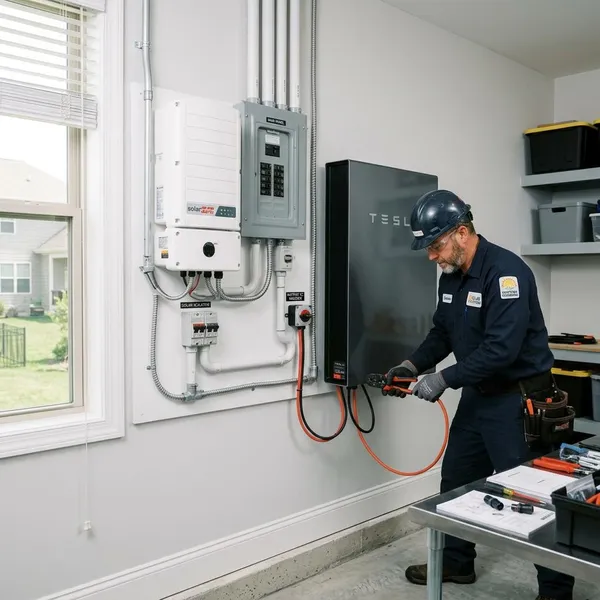
A home solar battery bank is normally a professional installation, not a casual DIY project. The installer has to design the electrical layout, meet code requirements, handle permits, connect backup equipment, and commission the system safely.
Choose the right battery system setup
New solar-plus-storage projects are usually easier to design cleanly because the array, inverter, battery, and backup plan can be matched from the start. Retrofits can still work well, but they may need extra equipment or a different coupling method.
Decide early whether you want a critical-loads panel or broader backup. A critical-loads panel is simpler and often more affordable; whole-home backup needs more planning because large appliances must be controlled instead of assuming everything can run at once.
Connect with existing solar equipment
If your current solar system has a compatible hybrid inverter, the battery connection may be straightforward. If not, an installer may suggest an AC-coupled battery, inverter replacement, or additional gateway equipment.
Do not skip the utility and permitting side. A battery can change export behavior or outage isolation requirements, so approvals and inspections may be needed even when panels are already installed.
Plan space, wiring, and installation needs
Battery placement affects cost and reliability. Garages, utility spaces, and approved outdoor locations may all be possible, but the final location depends on manufacturer rules, local code, temperature exposure, wiring routes, service access, and fire-safety requirements.
- Site assessment: review the panel, inverter, wall space, backup goals, and upgrade needs.
- Design and permits: confirm battery location, coupling method, disconnects, and inspection requirements.
- Installation: mount the battery, install wiring, add gateway or backup panel equipment, and label circuits.
- Commissioning: test charging, backup transfer, monitoring, and homeowner controls before final handoff.
How Much Does a Solar Battery Bank Cost?
Solar battery bank cost depends on more than the battery box. Storage size, inverter type, backup hardware, labor, permits, panel upgrades, and local installation conditions can make two similar-looking quotes very different.
The better question is whether the installed system solves the job you are paying for. A lower-cost battery that cannot support your priority loads may feel expensive during the first outage, while a larger system may be unnecessary if your grid is reliable and your rates are low.
Equipment and installation drive upfront costs
The battery module is only part of the price. A full project may include an inverter, gateway or transfer equipment, backup subpanel, disconnects, conduit, monitoring hardware, labor, permits, inspection fees, and sometimes electrical panel upgrades.
- Higher cost is often justified when it adds usable storage, stronger output, safer backup switching, or better integration.
- Higher cost is questionable when it only adds capacity you are unlikely to use.
- A clear quote should separate battery capacity, inverter equipment, backup hardware, labor, and required upgrades.
Battery life affects long-term value
Battery life matters because home storage is usually expected to work for many years. A system with better retained capacity, stronger cycle life, and reliable service support can be a better value than a cheaper battery that degrades faster or becomes hard to expand.
Read the warranty beyond the headline year count. Check retained capacity, throughput limits, required operating conditions, and whether the warranty depends on approved installation or internet-connected monitoring.
Energy rates and incentives affect savings
Batteries tend to make more financial sense where electricity rates are high in the evening, net metering credits are weak, or outages create real costs. In places with low flat rates and reliable service, the value may come more from resilience and control than bill savings.
Incentives can change the math, but they vary by location and project type. Ask the installer to show the expected net cost after eligible credits or rebates rather than relying on a generic payback claim.
Conclusion
The right solar battery bank is the one that matches your actual loads, not the one with the biggest number on the spec sheet. For many homes, a LiFePO4 system with essential or balanced backup is the most sensible choice; whole-home storage is worth the added cost mainly when outages, large loads, or future electrification make that extra capacity useful.