
Solar Battery Backup Cost Explained for Homeowners
Learn what drives best solar battery backup system for home cost, from battery size to installation and incentives.
The best solar battery backup system for home cost is usually the cost of keeping the right parts of your home running, not the cost of backing up every outlet. For many homes, installed battery backup often lands in the low five figures and rises quickly when you add more storage, high-power appliances, or electrical upgrades. Start by deciding what must stay on during an outage, then compare quotes around that list.

What affects solar battery backup cost?
Solar battery backup cost is driven by three things first: usable battery capacity, installation difficulty, and the extra equipment needed to make backup power work safely. Brand and software matter too, but they should come after the basics.
A small essential-load system may cover the refrigerator, lights, internet, phone charging, and a few outlets. A whole-home design that tries to support central air, electric cooking, well pumps, or heating equipment usually needs more batteries and stronger power electronics, so the price can climb fast.
Larger batteries increase system prices
Battery capacity is measured in kilowatt-hours, or kWh. More usable kWh gives you longer runtime or lets you support more circuits, but it also raises equipment cost and can add installation labor.
As a practical example, one moderate battery may be enough for a short evening outage with basic loads. A home that wants overnight backup, work-from-home equipment, and some kitchen use may need more storage. If the goal is to keep central air or multiple large appliances running, the system often needs both more capacity and higher output, not just a bigger battery nameplate.
Complex installations increase total costs
Installation gets more expensive when the home needs panel work, a new critical-load subpanel, long wiring runs, utility coordination, or changes to older solar equipment. A battery added to an existing solar array can be straightforward in one house and complicated in another, depending on the inverter and electrical layout.
Ask for a line-item quote if your home has an older main panel, limited breaker space, or solar equipment installed years ago. Those are common places where a low initial estimate turns into a higher final project cost.
What does a home solar battery backup system include?
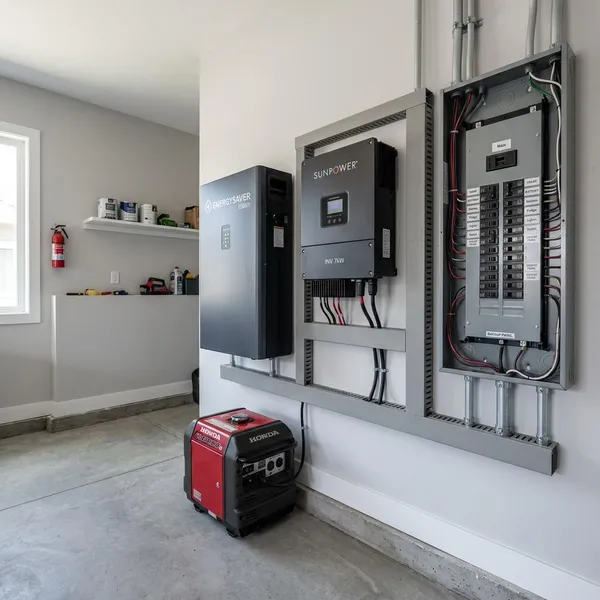
A complete home solar battery backup system stores energy, converts it into usable household power, and disconnects the home safely from the grid when utility power fails. If a quote only highlights the battery price, it is not showing the full backup system.
The exact package depends on whether you are installing solar and storage together or adding batteries to an existing solar system. New installs can sometimes be designed more cleanly from the start, while retrofits may need extra compatibility work.
Batteries store energy for backup use
Batteries hold the energy you will use during an outage. Solar can recharge them during the day if the system is designed for that, while some systems can also charge from the grid under normal conditions.
Look at usable capacity, not only advertised capacity. Some storage is reserved to protect battery health, and real runtime depends on what your home is actually using. A smaller battery used for essentials can feel generous during a short outage, while the same battery may feel limited if you expect it to run HVAC or electric cooking.
Inverters convert stored power for home use
The inverter turns battery power into AC electricity your home can use. Its output rating affects how many things can run at once and whether demanding appliances can start.
This is where many quotes get misunderstood. A battery may have enough stored energy on paper, but the inverter may not have enough continuous or surge power for central air, a well pump, or a large motor. If those loads matter, ask the installer to confirm the actual appliance startup requirements, not just the battery kWh.
How do you choose the right battery size?
The right battery size starts with your outage plan, not your full monthly electric bill. Monthly usage helps, but it does not show which appliances must run at the same time when the grid is down.
Use a priority list before asking for quotes. Put refrigeration, lighting, internet, medical devices, garage access, and key outlets in the must-have group. Put central air, electric ovens, dryers, EV charging, and whole-home comfort in a separate group, because those choices change the system size dramatically.
Match battery capacity with essential loads
Essential-load backup is usually the best-value path for a homeowner who wants comfort and safety without paying for full-house coverage. A refrigerator, modem, lights, device charging, and a few outlets are much easier to support than an entire home running normally.
For a small household with brief outages, one battery may be enough. For a family that works from home and needs internet, office equipment, refrigeration, and overnight lighting, the same setup may feel too tight. The useful question is not “How many batteries can I afford?” but “Which loads would actually cause a problem if they stopped?”
Match storage with outage time
Runtime changes the budget. A system meant for two- or three-hour outages can be modest; a system meant for overnight or multi-day outages needs more storage, better load discipline, or reliable solar recharging.
Climate matters too. In a sunny area with daytime solar production, a moderate battery may recharge enough to handle repeated short outages. In a winter-heavy or cloudy region, planning for the same outage length may require more stored energy because solar recovery is less predictable.
Match output with high-power appliances
High-power appliances need special attention because they can overload a system even when the battery has plenty of stored energy. Central air conditioning, well pumps, electric ranges, dryers, and large HVAC equipment may need high startup power.
If central AC is a must-have, ask the installer for a design that names the AC unit, expected runtime, surge requirement, and whether a soft-start device is needed. If the quote only says “whole-home backup” without showing those limits, treat it as incomplete.
Solar battery backup vs generator cost
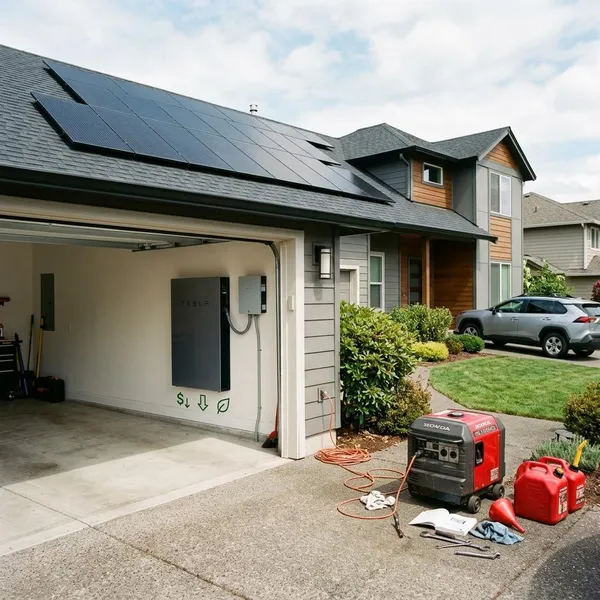
Solar batteries usually cost more upfront than generators, while generators often bring fuel, maintenance, noise, and testing costs over time. The better value depends on whether you need quiet automatic backup for common outages or long-duration power for severe events.
A battery is often the more comfortable choice for short outages, homes with solar, and people who want the system to work without fuel storage. A generator may make more financial sense for long outages where many large loads must run for days.
Solar batteries have higher upfront costs
A battery backup project includes batteries, inverters, controls, electrical work, permitting, and commissioning. That is why the installed price can look high compared with a generator quote.
The higher upfront cost can still be reasonable when the battery does more than emergency backup. In some utility areas, batteries can help shift solar energy into evening use or reduce peak-rate usage. Those savings are not guaranteed everywhere, so they should be treated as a bonus only when the installer can show how they apply to your rate plan.
Generators have ongoing fuel costs
Generators usually cost less to install for large backup loads, but they keep costing money when they run. Fuel, oil changes, maintenance visits, testing, and repairs should be part of the comparison.
Portable generators also require manual setup and safe outdoor placement. Standby generators are more convenient, but they still depend on a fuel source. During long storms, that fuel dependency can be either a strength or a weakness, depending on whether natural gas or stored fuel remains available.
How do you choose the best-value system?
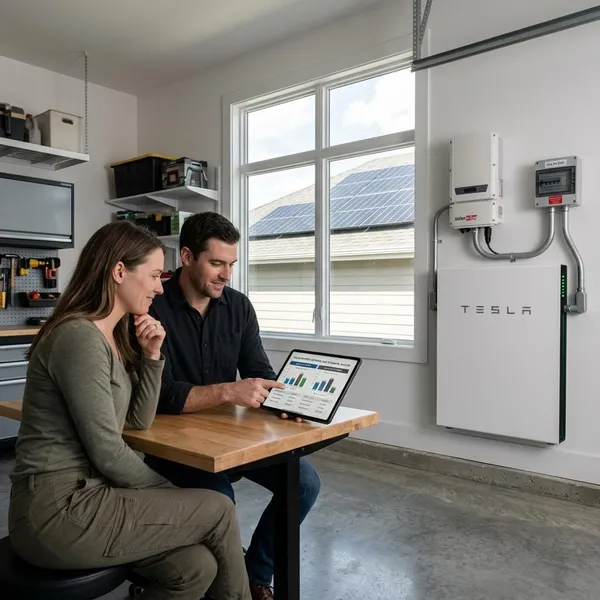
The best-value system is the one that backs up your priority loads reliably, has a warranty you understand, and is installed by someone who will support it after the sale. The cheapest quote is not always the best deal if it leaves out important equipment or overpromises runtime.
Compare proposals using the same backup scenario. For example, ask every installer to price refrigeration, internet, basic lighting, a few outlets, and one special load such as a well pump or medical device if needed. That makes the quotes easier to compare than vague “home backup” packages.
Compare battery size and warranty
Compare usable kWh, continuous output, surge output, warranty length, capacity retention terms, and whether the system can be expanded later. A slightly smaller system with a strong warranty and clear support may be a better value than a larger system with weak service coverage.
If incentives are available, ask for the estimated net cost in writing. Federal, state, local, or utility programs can change the final price, but eligibility rules can change and may depend on the installation details.
Check installation quality and support
A battery system is part of your home’s electrical infrastructure, so installer quality matters as much as the hardware. Poor design can lead to nuisance shutdowns, limited backup performance, or expensive corrections later.
- Ask what is included: permits, inspections, utility paperwork, monitoring setup, and panel work.
- Ask what is backed up: exact circuits, expected runtime, and loads that are excluded.
- Ask who handles service: local installer, manufacturer, or a third-party support line.
- Ask for limits in writing: especially for HVAC, pumps, and other high-draw appliances.

Conclusion
The smartest system is rarely the biggest one; it is the one that keeps your important loads running for the outage length you realistically face. Price the essentials first, check whether high-power appliances truly need backup, and make sure every quote explains usable capacity, output, warranty, incentives, and installation scope. If a system clearly shows what it will power and what it will not, you are much less likely to pay for battery capacity you never use.