
Choosing the Best Home Battery Backup Without Solar for Your Home
Learn how the best home battery backup without solar works, what it can run, and how to size it for outages.
A home battery can provide reliable backup power even without solar panels by charging from the grid and supplying electricity when an outage occurs. The right choice depends less on buying the largest battery available and more on matching capacity, output, and recharge time to the essential devices you need to keep running, such as lights, Wi-Fi, refrigeration, medical equipment, and heating or cooling support.

Can a home battery backup work without solar?
Yes. A home battery backup does not need solar panels to store and deliver electricity. Solar is only one charging source; many systems charge from a normal wall outlet, a dedicated circuit, or another compatible power source before an outage happens.
The important limit is recharging. A battery-only setup is easy to live with during short outages, but it needs a realistic plan if storms or grid failures often last overnight or longer.
Grid charging prepares the battery before outages
With grid charging, the battery is filled while utility power is available and kept ready for backup use. For a portable power station, that may be as simple as plugging it into a wall outlet. For an installed battery, the charging connection is usually part of the home electrical setup.
- Best fit: short outages, apartment use, remote work, refrigerator backup, and basic emergency power.
- First check: how long the battery takes to recharge from the outlet or circuit you plan to use.
- Common mistake: buying a large battery without checking whether it can recharge fast enough between outages.
Battery systems provide quiet indoor backup power
Batteries are popular because they are quiet and do not produce exhaust during use. That makes them much easier to use indoors than a fuel generator, especially in an apartment, bedroom, home office, or during a nighttime outage.
A practical example: if your main concern is keeping Wi-Fi, a few LED lights, phones, and a CPAP running overnight, a battery is often a much calmer solution than starting a generator outside. You still need to follow the manufacturer’s placement and ventilation instructions, but daily operation is usually simple.
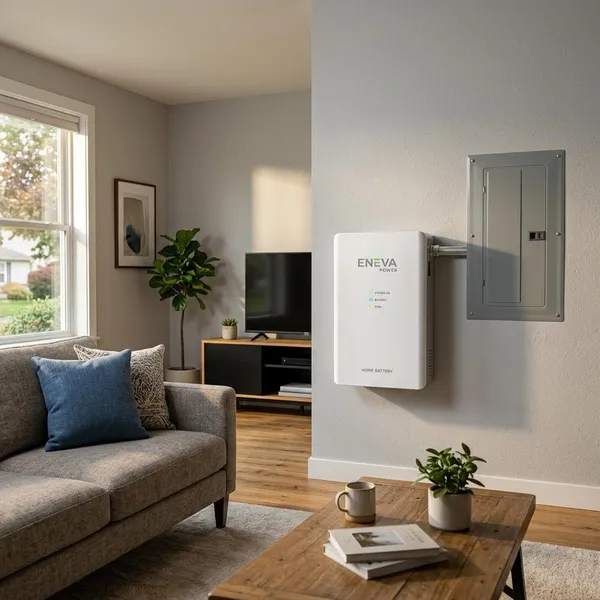
What are the best home battery backup options?
The right option depends on whether you want to power individual devices, a growing list of essentials, or selected home circuits. Start with the level of backup you actually need before comparing brands or battery chemistry.
Portable power stations fit small backup needs
A portable power station is the easiest starting point. It combines the battery, inverter, outlets, and charger in one unit, so renters and homeowners can use it without permanent electrical work.
This is the sensible choice for light use: a modem and router, phones, laptops, LED lamps, a fan, or a small medical device. It may also run a refrigerator for a limited time, but only if the battery capacity and surge output are high enough.
- Choose this if: you want plug-and-play backup for one room or a few devices.
- Be careful if: you expect it to run multiple appliances overnight.
- Test before relying on it: plug in your real devices and note how quickly the battery drops.
Expandable battery systems fit growing power needs
Expandable systems are useful when your needs are bigger than a basic portable unit but you are not ready for a fully installed battery. You can start with a main unit and add battery modules later if real outages show that you need more runtime.
They work well for households that want refrigerator and Wi-Fi backup now, then may add a freezer, extra lighting, or longer medical-device runtime later. This staged approach is often smarter than guessing a large size upfront.
Installed home batteries fit full-home backup
Installed home batteries are designed for a cleaner, more automatic setup. Instead of running extension cords, the system can support selected circuits through proper transfer equipment, a backed-up loads panel, or a smart panel, depending on the design.
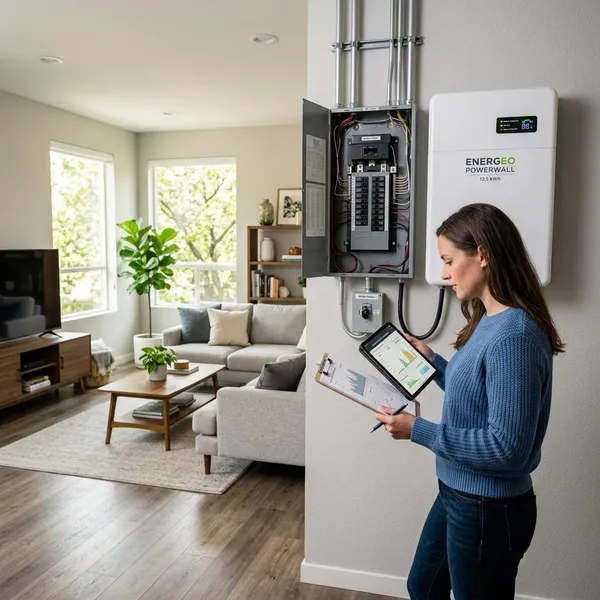
What size home battery backup do you need?
Size the battery from your essential loads, not from the size of your house. A small home with electric heat may need far more backup capacity than a larger home that only wants Wi-Fi, lights, and refrigeration.
The order matters: list what must run, estimate energy use, check surge power, then match the battery to your usual outage length.
Essential devices define your power needs
Make a short “must run” list before shopping. Most households should start with communication, food protection, basic lighting, and health-related equipment.
- Write down the device: refrigerator, router, modem, CPAP, phone charger, LED lamp, fan, freezer, or laptop.
- Mark the priority: must run, nice to have, or skip during outages.
- Estimate use time: continuous for Wi-Fi, overnight for medical devices, occasional for a microwave or kettle.
This prevents the classic buying mistake: choosing a battery that looks impressive online but cannot support the few loads you actually care about.
Watt-hours estimate your runtime
Battery capacity is usually shown in watt-hours, or Wh. A simple estimate is: battery watt-hours divided by average watts equals runtime hours. Real runtime is lower because inverters lose some energy and appliances cycle unevenly.
For example, a 2,000Wh battery running an average 200-watt essential load might give roughly 8 to 9 usable hours after losses. If your load is only a router, phone charging, and LED lighting, the same battery lasts much longer. If you add a refrigerator, freezer, and fan, runtime drops.
Surge power supports motor-driven appliances
Capacity tells you how long the battery may run a load. Surge output tells you whether it can start that load in the first place.
Refrigerators, freezers, sump pumps, and some fans can briefly demand much more power when the motor or compressor starts. Check both the continuous output and surge rating of the battery system, then compare them with the appliances you want to run. If the numbers are unclear, test the appliance before depending on it in an outage.
Battery size matches outage duration
A battery for a two-hour interruption is very different from a battery for an overnight storm. Use your local outage pattern as the sizing filter.
- 300Wh to 1,000Wh: good for phones, laptops, internet gear, LED lights, and light emergency use.
- 1,000Wh to 3,000Wh: better for a refrigerator, router, lights, charging, and selected essentials for several hours.
- Above 3,000Wh: more realistic for longer outages, multiple appliances, expandable systems, or partial-home backup.
If you are buying for a high-risk situation, such as medical equipment that must run overnight, leave more margin than the math suggests. Batteries age, rooms get hot or cold, and real outages rarely follow a perfect schedule.
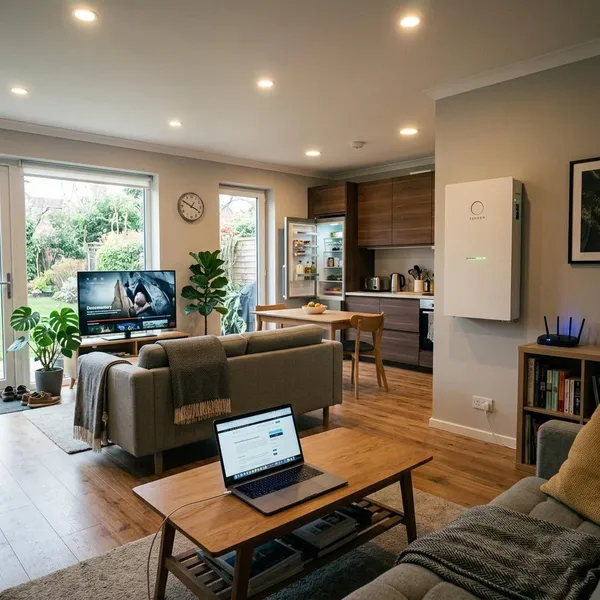
What can a home battery backup run?
A home battery backup can run plenty of household essentials, but it should not be treated like unlimited grid power. The easiest loads are small electronics. The hardest loads are appliances that make heat, cool the whole home, or use large motors.
Small devices need basic backup power
Phones, tablets, routers, modems, laptops, LED lamps, radios, and small fans are the most battery-friendly loads. Even a modest power station can keep these running long enough to make a short outage much less disruptive.
For an apartment renter, this may be all that is needed: stay connected, keep a light on, charge a phone, and run a fan for a few hours. In that scenario, paying for a large installed system would usually be unnecessary.
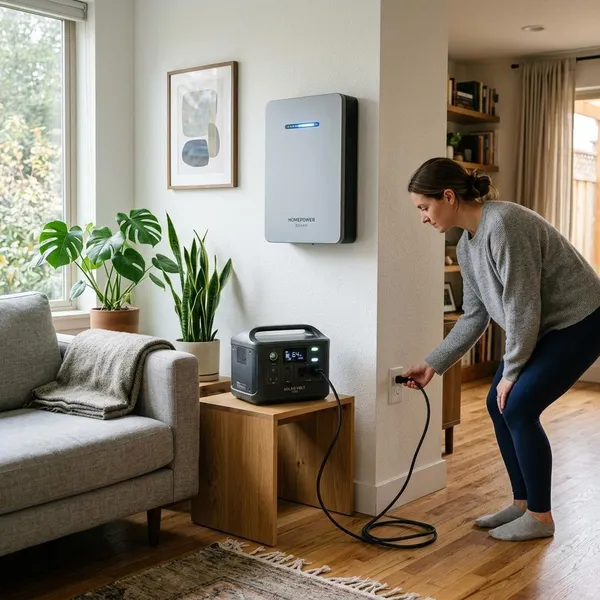
How do you charge a home battery backup without solar?
You charge it from a compatible non-solar source, most commonly grid power. The real question is not whether it can charge without solar, but how quickly it can recharge and what you will do if the grid stays down.
Wall outlets provide regular charging
A standard wall outlet is the simplest charging method for most portable power stations and some larger systems. It is convenient, widely available, and easy to manage before a storm: charge the battery, leave it ready, and top it off after use.
Higher-power circuits provide faster charging
Some systems can charge faster through higher-power AC input, dedicated circuits, or installed connections. This can matter a lot in areas where the grid comes back briefly and fails again.
If you are considering this route, treat it as an electrical planning question, not just a product feature. The circuit, plug type, installation method, and local code requirements may need an electrician, especially if the system connects to home circuits rather than only charging as a portable unit.
Is a home battery backup without solar worth it?
It is worth it when your outages are short enough, your loads are realistic, and you value quiet indoor backup more than maximum runtime. It is less convincing when you need days of power for large appliances without a reliable recharge source.
It works well for short and frequent outages
Battery backup shines when the power goes out often but usually returns the same day. You avoid fuel storage, engine noise, fumes, and the stress of starting equipment during bad weather.
This is the sweet spot for keeping a refrigerator cold, staying online, charging phones, and using a few lights. The battery may not feel dramatic, but it quietly solves the outages people actually experience most often.
It fits homes that need essential backup
A battery makes the most sense when you are honest about essentials. If the goal is refrigeration, internet, lighting, device charging, and one health-related device, a portable or expandable system can be a clean solution.
It is also a good fit where generator use is restricted or awkward, such as apartments, condos, dense neighborhoods, or homes where someone needs a simple system they can operate without moving fuel cans or extension cords outside.
It may not replace large backup systems
A battery-only setup may not be the right replacement for a generator if you often face multi-day outages, need central AC, rely on electric heat, or have heavy loads such as a large well pump. In those cases, the battery capacity required can become costly very quickly.
A simple buying rule works well: choose a battery for clean, quiet essential power; choose a generator or hybrid plan when long runtime and heavy loads matter more. Some homes are best served by both, with the generator doing the recharging and the battery handling quiet indoor use.
Conclusion
Start with the loads you cannot afford to lose, then size the battery for the outage length you actually see, not the worst scenario you can imagine. A portable unit is enough for light device backup, an expandable system is better for growing essential loads, and an installed battery is the cleaner choice for circuit-level backup. If long outages and heavy appliances are common, plan a recharge source before spending more on battery capacity.