
Should You Choose a Generator or Solar Battery?
Compare generator vs solar battery for outage runtime, noise, maintenance, and daily value so you can choose the right backup.
If you are weighing generator vs solar battery, start with one question: are you trying to ride through a few hours quietly, or keep larger parts of the house running for days? A solar battery is usually the cleaner, quieter choice for short outages and daily solar use, while a standby generator is usually stronger for long outages, heavy loads, and less careful energy budgeting.
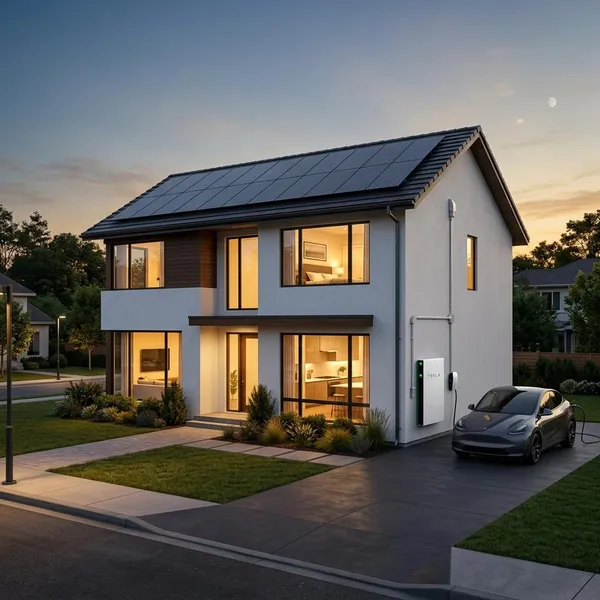
Two Home Backup Systems to Compare
| Decision Point | Tesla Powerwall 3 | Generac 14kW Standby Generator |
|---|---|---|
| Best For | Short outages, solar storage, quiet backup | Long outages and larger backup loads |
| Daily Value | Stores solar power and can reduce grid use | Mainly useful during outages |
| Energy Source | 13.5 kWh battery capacity | Natural gas or propane |
| Power Output | Up to 11.5 kW continuous AC | 14 kW standby output |
| Runtime | Limited by charge and solar recharge | Runs as long as fuel is available |
| Solar Integration | Built-in solar inverter | No storage function; requires proper design |
| Noise | Very quiet | Noticeable engine noise |
| Installation | Indoor or outdoor, code-dependent | Outdoor only with exhaust clearance |
| Maintenance | Low routine maintenance | Requires oil, filter, spark plug, and battery service |
| Emissions | No on-site emissions | Produces exhaust emissions |
| Warranty | Typically 10 years | Typically 5 years |
| Main Limitation | Finite stored energy | Fuel, maintenance, noise, and space needs |
Solar Battery Tesla Powerwall 3
The Tesla Powerwall 3 is designed to store electricity and deliver it when the home needs it. In a solar home, that often means saving daytime solar production for evening use, then also having backup power available when the grid fails.
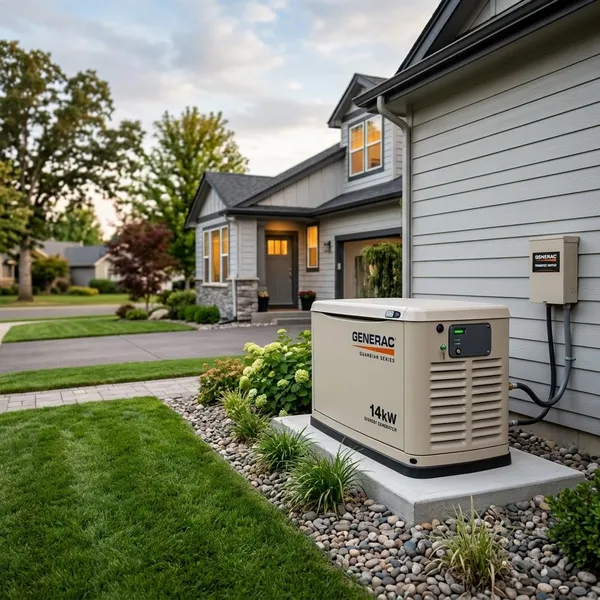
Standby Generator Generac 14kW
A Generac 14kW standby generator is a permanently installed outdoor unit that can start automatically when grid power goes out. It usually runs on natural gas or propane and works through a transfer switch, so the homeowner does not need to pull out a portable generator or run extension cords.
Solar Battery Pick Tesla Powerwall 3
A solar battery makes the most sense when your outage plan is based on comfort, quiet operation, and smart use of stored electricity. It is not just emergency equipment; in the right home, it can also make solar power more useful on normal days.
Stored solar energy and daily use
Powerwall 3 is strongest in homes where solar panels produce more electricity during the day than the home uses immediately. Instead of sending all excess power away, the battery can store some of it for evening appliances, lighting, cooking, device charging, or time-of-use rate periods.
- Good fit: a solar home with high evening electricity rates.
- Good fit: a household that wants backup power without noise or fumes.
- Weaker fit: a home with no solar, cheap flat-rate electricity, and rare outages.
Backup performance and expansion
During a short outage, a battery can feel almost invisible. Refrigerators, Wi-Fi, lights, garage access, phone charging, and a few key outlets are the kinds of loads that make sense for a battery-first backup plan.
Installation and practical limitations
Battery installation is usually cleaner than a generator project, but it still needs proper electrical integration, space for the equipment, backup-load planning, and utility-compliant setup. The common mistake is assuming that adding a battery automatically backs up the whole house; in many homes, the smarter plan is to choose critical circuits first and expand only if the budget and electrical design support it.
Standby Generator Pick Generac 14kW
A standby generator is the more practical pick when your main fear is a long outage, not a brief interruption. If storms in your area can leave the grid down for days, fuel-based backup usually gives more breathing room than stored battery energy alone.
Whole-home power and automatic operation
A 14kW standby generator can often cover essential circuits and a meaningful share of normal household use, depending on the home’s electrical demand. In a smaller gas-heated home, that may feel close to whole-home backup. In an all-electric home with large HVAC loads, it may still require careful load selection.
Fuel supply and extended runtime
Fuel is the generator’s biggest strength and its biggest dependency. Natural gas can be convenient because there is no tank to refill, but it still depends on local gas service. Propane gives more on-site independence, yet the tank has to be sized, monitored, and refilled before a widespread storm makes delivery difficult.
- Choose natural gas carefully if local gas reliability is a concern during regional emergencies.
- Plan propane capacity early if outages in your area commonly last more than a day.
- Do not size by hope: list the loads you actually expect to run, including startup surges.
Installation, maintenance, and limitations
Maintenance is the other long-term tradeoff. Engines need periodic service, testing, oil changes, and attention before storm season. If you want a system that mostly sits quietly with minimal routine upkeep, a battery may be more comfortable; if you want longer runtime for heavier loads, the maintenance may be worth it.
Which System Works Better During an Outage
The better outage system depends less on the product name and more on the outage pattern at your house. A two-hour utility failure, a summer blackout with air-conditioning demand, and a winter storm that lasts three days are three different problems.
Solar batteries for short and recurring outages
Solar batteries are usually the better match for short, repeated outages where comfort and seamless operation matter. A neighborhood with frequent grid flickers, half-day interruptions, or rolling outages may get more practical value from a quiet battery than from a generator that runs only occasionally.
Generators for long outages and heavy loads
Generators usually win when the outage lasts long enough that stored energy becomes the weak point. They are also better suited to homes that cannot easily reduce demand, such as houses with well pumps, sump pumps, multiple cold-storage appliances, or cooling needs during hot-weather outages.
- Long storm outages: generator runtime is usually more valuable than silence.
- Heavy motor loads: pumps and compressors need careful surge planning.
- Year-round resilience: a generator may be easier if winter heat and summer cooling both matter.
Hybrid systems for greater resilience
A hybrid setup can be the most resilient option when the budget, equipment compatibility, and site conditions work. The battery handles short outages, fast switchover, and normal solar storage; the generator becomes the backup for long outages or unusually heavy demand.
Conclusion
Choose the solar battery if your outages are usually short, your home can prioritize essentials, and daily solar storage matters; choose the standby generator if your main risk is multi-day power loss or larger electrical loads that you do not want to ration. If both problems are real at your house, a hybrid design is often the most practical answer, but only if it is planned as one coordinated backup system instead of two separate purchases.