
Which Solar Generator Does Consumer Reports Recommend?
Compare top solar generators by capacity, output, runtime, ports, and use case to choose reliable backup power for home, RV, or travel.
If you are searching for the consumer reports best solar generator, the most useful answer is not one universal model. Choose by matching three things first: battery capacity, continuous output, and the devices you cannot afford to lose during an outage or trip. A quiet weekend camping setup and a home backup plan for a refrigerator need very different systems.
Why are solar generators becoming popular?
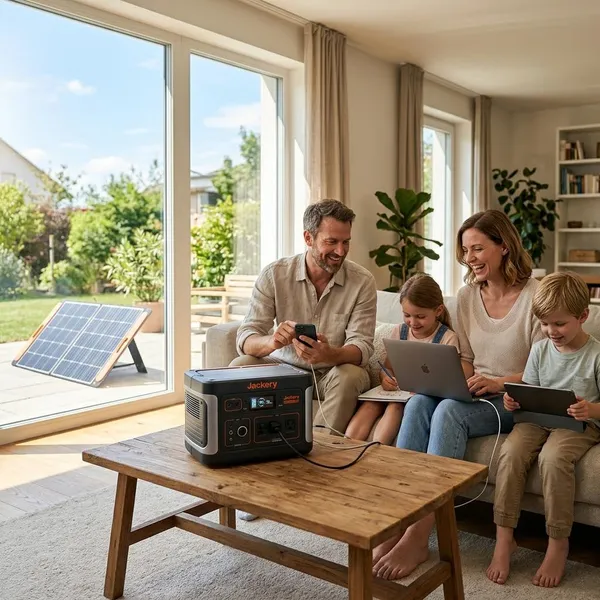
Solar generators are becoming popular because they solve everyday power problems without the noise, fumes, and maintenance of a fuel generator. For many households, the appeal is simple: keep phones charged, run a few essentials, and avoid dealing with gasoline during bad weather.
They also fit modern travel habits. More people now camp, work remotely, use RVs, or keep emergency kits at home, and all of those situations involve small electronics, lighting, internet gear, or appliances that need backup power.
They provide quiet backup power during outages
During a blackout, quiet power matters more than it seems when shopping online. A battery power station can sit indoors while solar panels stay outside, so you can run lights, a router, phones, or selected appliances without engine noise or exhaust.
The important limit is load size. A small unit may be perfect for communication and lighting during a short evening outage, while a refrigerator, sump pump, or medical device calls for more capacity and stronger output.
They support camping and mobile lifestyles
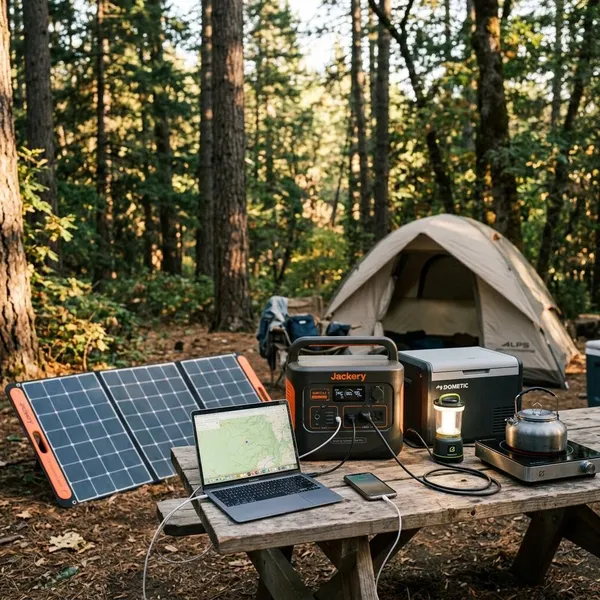
For camping, the best choice is usually not the largest unit. It is the one you will actually carry, recharge, and use without turning every trip into a gear-hauling exercise.
- Weekend tent camping: prioritize weight, USB-C ports, lights, phones, and a small fan.
- Overlanding or van use: look for higher solar input, car charging, and enough capacity for a fridge.
- Remote work trips: check laptop charging, outlet count, and how fast the unit recharges between work sessions.
They offer a cleaner alternative to fuel generators
A solar generator is cleaner in daily use because there is no fuel storage, no oil change, and no exhaust while the battery unit is running. That makes it easier to use around apartments, townhomes, campsites, and homes where a loud outdoor generator is not practical.
It is not always a full replacement for a gas generator. If you need to run high-draw appliances for many hours, fuel generators can still have an advantage when safely operated outdoors with ventilation. For light and moderate backup, though, battery power is often the easier tool to live with.
Which solar generator fits your needs?
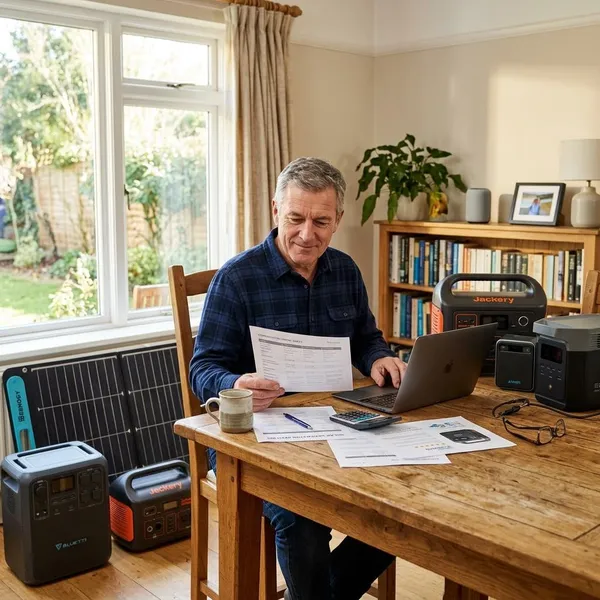
Start with the use case before comparing brands. A home user usually cares about runtime and appliance compatibility, while a camper may care more about weight and fast recharging. RV users need flexibility, and emergency users need a system that is simple enough to use under stress.
A useful first exercise is to write down your top five must-run devices. If the list is mostly phones, lights, and a laptop, you are in a very different category from someone who needs refrigeration, a CPAP machine, a freezer, or a pump.
Home users need reliable backup power
Home backup is where capacity and output need to work together. A large battery with weak inverter output may store plenty of energy but still fail to start a refrigerator. A strong inverter with a small battery may run the appliance but not for long enough to matter.
For a household that only gets brief summer outages, a medium unit may be enough for lights, internet, phones, and short refrigerator support. If your area has long winter outages, look more carefully at expansion batteries, recharge speed, and solar input instead of buying only by price.
Camping users need portable power
Camping users should be honest about weight. A heavy unit with impressive specs can become useless if it stays in the car because it is annoying to move.
For light camping, a smaller power station that charges quickly may beat a larger one with more battery on paper. The better buy is often the unit that comfortably covers lights, phones, camera batteries, a fan, or a small cooler without taking over your packing space.
RV users need flexible off-grid power
RV users should pay close attention to charging options. Wall charging, car charging, solar input limits, and expansion support can matter more than the battery size on the product page.
- Short RV weekends: moderate capacity and easy car charging may be enough.
- Longer off-grid stays: higher solar input and battery expansion become much more useful.
- Daily RV living: clear displays, stable output, and port layout affect comfort every day.
Emergency users need dependable backup
Emergency buyers should choose for readiness, not just maximum power. The unit should be easy to store, simple to turn on, and checked often enough that it is charged when needed.
A medium-size system is often the practical middle ground for emergency kits. It can usually support communication, lighting, a router, and selected essentials without becoming too heavy to move during a stressful situation.
What size solar generator do you need?
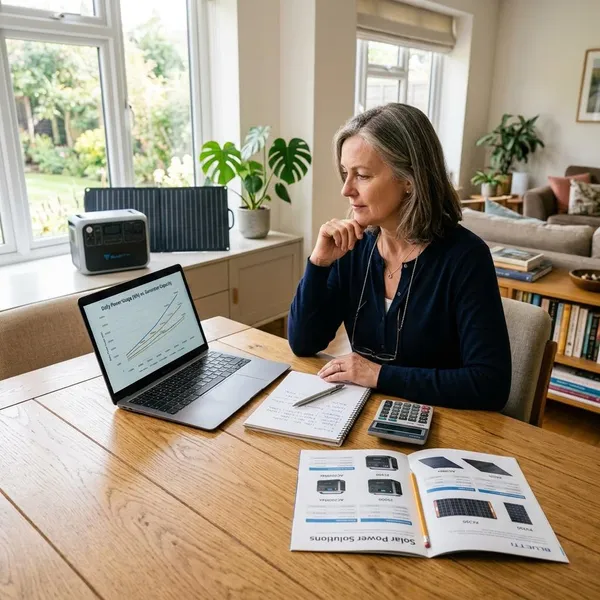
The right size depends on two separate numbers: watt-hours for runtime and watts for what the unit can power. Do not choose by battery size alone. A generator must have enough stored energy and enough inverter output for the devices you plan to run.
| Size range | Best fit | What to avoid expecting |
|---|---|---|
| Small | Phones, laptops, lights, routers, cameras, small fans | Refrigerators, heaters, microwaves, pumps |
| Medium | Essential outage support and practical camping or RV use | Whole-home backup or long heavy-load use |
| Large | Heavier appliances, longer runtime, expansion setups | Unlimited power without recharge planning |
For a quick estimate, list each must-run device, note its running watts, and multiply by the hours you expect to use it. Then leave extra room for losses, startup surges, and real-life use that never goes exactly as planned.
Small models power basic electronics
Small models are best when your priority is staying connected. They can be very useful for phones, tablets, laptops, LED lights, cameras, routers, and small fans.
This size makes sense for a car kit, a short camping trip, or a low-risk outage plan where communication matters more than appliances. It is not a good choice if your main goal is keeping a refrigerator cold overnight or running kitchen equipment.
Medium models power essential appliances
Medium solar generators are where backup power starts to feel practical for many people. They may support a refrigerator for part of an outage, plus lights, internet gear, phones, a fan, or a CPAP machine, depending on the model and the actual load.
The key is not to treat “essential” as everything you normally use at home. Food safety, communication, medical needs, and basic comfort should come first. Coffee makers, space heaters, and microwaves may need a larger system or a different plan.
Large models power heavier loads
Large models are built for heavier loads, longer runtime, or setups where expansion batteries and stronger solar charging make sense. They can be a good fit for frequent outages, RV owners who stay off-grid longer, or households that want more than phone-and-light backup.
The tradeoff is ownership friction. Large units cost more, weigh more, and take more planning to recharge. If you only lose power once a year for a few hours, a smaller or medium system may be easier to justify.
What features should you compare before buying?
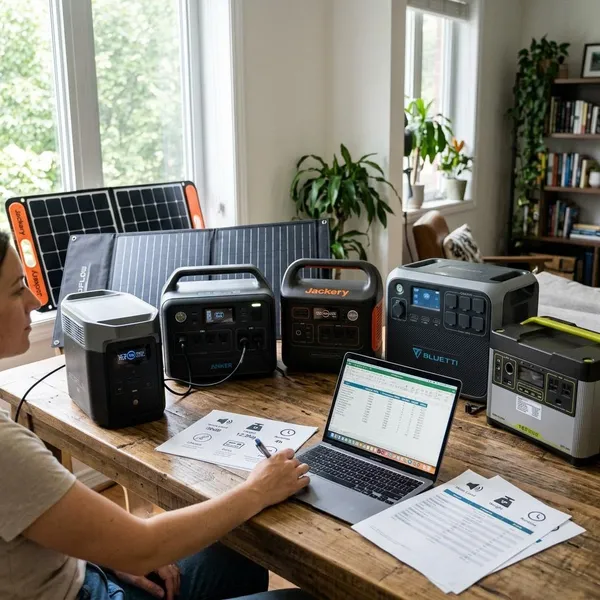
Compare the specifications that affect real use, not just the biggest number in the product title. The three numbers to check first are watt-hours, running watts, and surge watts. After that, compare battery chemistry, recharge speed, solar input, weight, port layout, warranty, and whether panels are included.
A solar generator works by storing energy in a battery and using an inverter to deliver AC power to household-style devices. Solar panels, wall outlets, or car chargers refill the battery. Once you understand that, the specs become much easier to judge.
Watt-hours show available battery energy
Watt-hours tell you how much energy the battery can store. A 1,000Wh unit powering a steady 100-watt load will not run for a perfect 10 hours because conversion losses and system overhead reduce usable runtime, but the number gives you a practical starting point.
Use watt-hours to compare runtime, especially for low and medium loads. If two models have similar output but one has much more battery capacity, the larger one should generally last longer between charges.
Running watts support normal device use
Running watts show how much continuous power the inverter can provide. Add up the devices you expect to use at the same time, not just the largest single device.
For example, a refrigerator, router, lamp, and laptop may each look manageable alone. Together, they can push a small unit past its comfort zone. A little extra headroom is usually worth having because appliances do not always behave exactly like their labels suggest.
Surge watts support startup power
Surge watts matter for appliances with motors or compressors, such as refrigerators, pumps, power tools, and some portable AC units. These devices may need a brief burst of power when they start, even if their normal running watts are much lower.
- Check running watts for normal use.
- Check surge watts for startup loads.
- Leave headroom instead of buying a unit that barely matches the label.
If a solar generator shuts down when an appliance starts, the problem may be surge demand rather than battery size.
Conclusion
The best choice is the unit that covers your essentials without adding weight, cost, or complexity you will not use. Start with watt-hours, running watts, and surge watts, then judge charging speed, portability, battery type, and long-term support. If the generator fits your real outage, camping, RV, or emergency routine, it will be far more useful than a model chosen only because it has the biggest number on the box.