
Bluetti or EcoFlow: Which Power Station Is Better?
Compare bluetti power station vs ecoflow on battery life, charging speed, expandability, and output so you can choose the right fit.
When you compare a bluetti power station vs ecoflow, do not start with the logo on the front. Start with the appliances you need to run, how long you need them to run, and how quickly you need the station charged again. Bluetti often suits buyers who care about long battery life and expandable backup, while EcoFlow often suits buyers who want fast charging, smooth controls, and portable convenience.
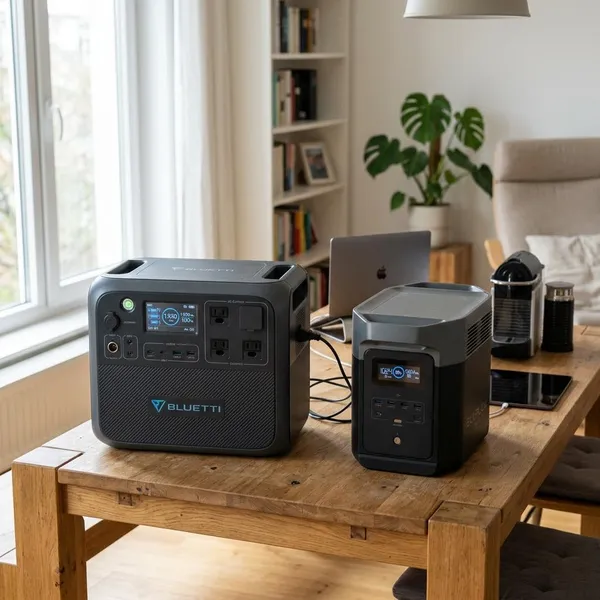
What are the key differences between Bluetti and EcoFlow?
The useful difference is not "Bluetti is better" or "EcoFlow is better." The real difference is how each model balances battery chemistry, inverter output, recharge speed, expansion, weight, and everyday usability.
Battery capacity and lifespan
Battery capacity tells you how much energy the unit stores; lifespan tells you how well that battery should hold up after repeated charging. A station used twice a year during storms has different needs from one charged by solar every weekend.
Bluetti has a strong reputation for LiFePO4 batteries and long cycle life, especially for frequent use and larger backup setups. EcoFlow also offers many newer LFP models, so do not assume the chemistry by brand alone. Check the exact model, then ask whether you are buying for occasional emergency use or regular cycling.
Appliance power and surge output
For appliances, the inverter rating matters as much as the battery size. Continuous AC output tells you what the station can run steadily, while surge output matters for devices with motors or compressors, such as refrigerators, pumps, and some power tools.
- Check running watts first: this shows the normal load.
- Check starting surge: motor-driven appliances may need a short burst.
- Leave headroom: running a station at its limit is rarely ideal.
- Match outlets to your gear: AC, USB-C, DC, and car ports all matter.
EcoFlow often feels strong here because some models pack high output into a compact body. Bluetti also has powerful inverter options, especially in larger systems. The safer rule is simple: choose the model that comfortably exceeds your actual load, not the one with the biggest headline number.
AC and solar charging
Charging speed is one of EcoFlow's biggest selling points. If you need to top up quickly before a storm, during a campsite stop, or between errands, fast AC charging can be more useful than a slightly larger battery.
Solar is a different decision. Look at the maximum solar input, accepted voltage range, and whether your panels will realistically reach that input in mixed weather. For a cabin, shed office, or long RV stay, solar input can matter more than wall-charging speed because sunlight becomes your main refill source.
Weight, ports, and app controls
A power station that looks portable online can feel very different when you lift it into a car. Weight, handle placement, cable storage, outlet spacing, and screen readability all affect whether you will actually use it.
EcoFlow usually has the more polished app experience, with easy monitoring and charge settings on many models. Bluetti can feel more straightforward on the hardware side, especially when the station will sit in a garage, utility room, or RV bay most of the time.
Expansion options
Expansion is worth caring about if your needs might grow. Some Bluetti and EcoFlow models accept extra batteries, but many smaller units do not. If you buy a fixed-capacity station and later want multi-day backup, you may have to replace the whole setup instead of adding storage.
Bluetti often competes well for scalable battery systems. EcoFlow also has strong expandable ecosystems, especially where app control and integrated backup accessories matter. Before paying extra for "expandable," confirm which battery packs fit the exact model and whether expansion changes charging speed or output limits.
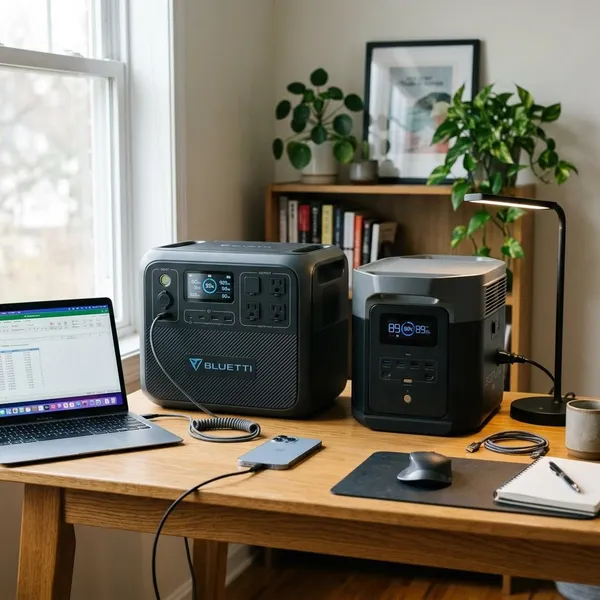
How to compare Bluetti and EcoFlow models fairly
Compare models in the same size class, not brands in general. A small camping EcoFlow against a large Bluetti backup unit tells you almost nothing, and the reverse is just as misleading.
- List the devices you must run.
- Write down running watts and any starting surge needs.
- Decide your minimum runtime.
- Set a weight limit you can actually handle.
- Compare one Bluetti and one EcoFlow in the same capacity range.
Compact units for camping
For camping, the best unit is usually the one you do not mind carrying and recharging. Phones, lights, fans, cameras, drones, laptops, and small coolers are realistic compact-station jobs; electric kettles, microwaves, and heaters quickly push you into a larger class.
If you take short weekend trips and can recharge from a wall outlet or vehicle, EcoFlow's fast charging may feel very convenient. If you camp often through the season and cycle the battery repeatedly, a Bluetti model with long-life chemistry may be more appealing even if it is a little less sleek.
Mid-size units for essential devices
Mid-size models are often the practical household choice because they can handle essentials without becoming a full home-backup project. Think router, phones, lamps, laptop, fan, CPAP machine, TV, or a refrigerator for limited periods, depending on the model and load.
| Use case | What to prioritize | Common mistake |
|---|---|---|
| Overnight essentials | Battery capacity and quiet operation | Buying for peak watts instead of runtime |
| Kitchen appliance bursts | Inverter output and surge rating | Ignoring starting loads |
| Work-from-home backup | Stable output, ports, and recharge speed | Forgetting router and monitor power draw |
Expandable systems for longer outages
Longer outages need a different mindset. A single portable station may be fine for a night, but several days of refrigeration, communications, fans, and device charging requires more stored energy and a plan to refill it.
This is where expandable systems become attractive. Bluetti often stands out for larger battery banks, while EcoFlow can be very strong if you want a more connected, app-managed setup. If cloudy weather is common where you live, do not size the system as if every solar day will be perfect.
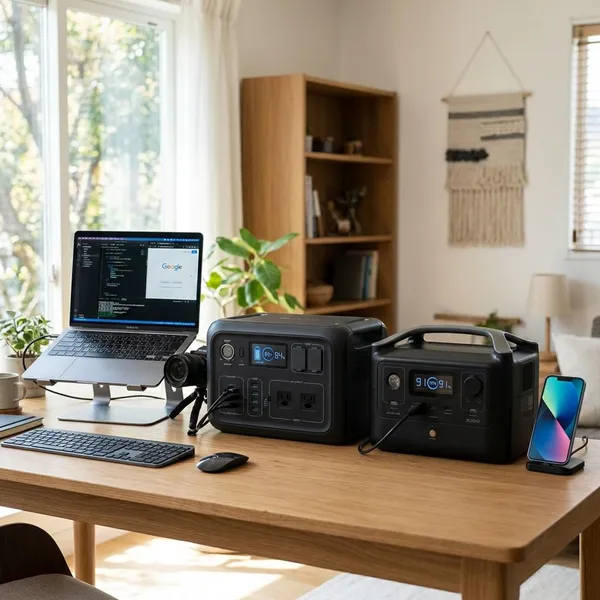
Which is better for your setup?
The better choice depends on the job you expect the station to do most often. A home backup buyer, a weekend camper, and someone building a small off-grid solar setup should not be using the same buying logic.
Home backup
For home backup, choose around your must-run list first: refrigerator, modem, phones, lights, medical devices, fans, or work equipment. If the list is short and outages are brief, fast recharge and easy operation may matter more than building a huge system.
Bluetti often makes sense for repeated outages, longer battery life, and room to expand. EcoFlow often makes sense when you want quick AC charging, simple monitoring, and a unit that is easy for different family members to use. If a device is medically important, verify the exact model's output, transfer behavior, and runtime instead of relying on broad brand claims.
Camping and RV trips
Travel style matters more than the brand name. Someone who moves between powered campsites may appreciate EcoFlow's quick top-ups, while someone who stays off-grid for several days may care more about solar input, battery durability, and quiet operation.
- Car camping: keep weight and fast charging high on the list.
- RV weekends: check outlet placement and app monitoring.
- Longer boondocking: compare solar input and expansion options first.
Off-grid solar power
For off-grid solar, the station becomes part of a small energy system, not just a big battery. Bluetti often appeals here because frequent cycling and expandable storage are important. EcoFlow can still be a better fit if you value fast charging options, software control, or a neater integrated setup.
The practical test is whether the solar input can refill what you use on an ordinary day, not just under perfect sunlight. Match panel voltage, estimate shade and weather, and make sure your daily loads are realistic before buying extra batteries.
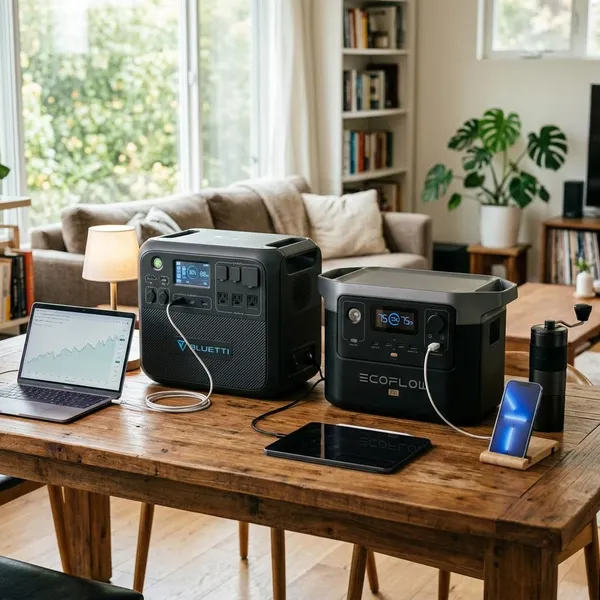
Which offers better value?
Better value is not always the cheaper cart price. It is the station that gives you enough usable capacity, suitable output, reasonable charging, and support without making you replace or upgrade too soon.
Power and capacity for the price
Bluetti often looks strong when you compare stored energy and long cycle life. EcoFlow often looks strong when fast charging, compact high output, and app convenience are part of the value equation.
For occasional storm backup, paying more for features you rarely use may not make sense. For weekly camping, RV travel, or solar charging, a cheaper unit with shorter lifespan or limited inputs can become the worse buy over time.
Cost of panels and extra batteries
Panels and expansion batteries can change the real price quickly. Portable folding panels are easy to move but often cost more per watt, while rigid panels can be better value for a fixed shed, cabin, or home setup.
Before choosing a base station, price the likely second step: one extra battery, the solar panels you would actually buy, and any cables or adapters required. This avoids the common mistake of buying a discounted station and discovering later that expansion is limited or expensive.
Warranty and support
Warranty length matters, but it is not the whole support story. Check the warranty for the exact model, where you are buying it, who handles claims, and whether shipping or replacement rules are clear.
This matters most for larger systems because repairs, batteries, and accessories are not cheap. A slightly better deal from an unclear seller may not be worth it if support becomes difficult later.
Conclusion
Bluetti is often the stronger fit when you want long battery life, frequent cycling, solar expansion, or a backup system that can grow. EcoFlow is often the easier choice when fast charging, compact design, and polished controls matter more. Pick the model after you know your loads, runtime, recharge plan, and upgrade needs; that gives you a much better answer than choosing by brand reputation alone.