
Best Solar Generators for Home Backup Power
Compare the best solar generators for home backup, including EcoFlow, Anker, and Jackery models for refrigerators, essential appliances, expandable systems, and larger backup needs. URL Slug:
The EcoFlow DELTA Pro 3 is the best overall solar generator for most home backup needs because it combines a large 4096Wh battery, 4000W AC output, 120V/240V support, strong solar input, and serious expansion potential.
For shorter outages and essential appliances, the Anker SOLIX C1000 is the more practical compact pick. For longer outages with modular expansion, choose the Jackery Explorer 2000 Plus. For apartments and small homes, the EcoFlow DELTA 3 Plus is easier to live with. For larger backup loads and 120V/240V power, the Anker SOLIX F3800 is the premium high-output choice.
| Pick | Product | Best for | Key specs | Main advantage | Main drawback |
|---|---|---|---|---|---|
| Best overall | EcoFlow DELTA Pro 3 | Balanced home backup | 4096Wh, 4000W output, 120V/240V | Strong capacity, power, and expandability | Heavy and expensive |
| Best for essential appliances | Anker SOLIX C1000 | Fridge, router, lights, CPAP | 1056Wh, 1800W output, 600W solar input | Compact and practical | Limited runtime for longer outages |
| Best expandable system | Jackery Explorer 2000 Plus | Longer outages | 2042.8Wh, 3000W output, expandable 2-24kWh | Flexible modular system | Expansion adds cost |
| Best compact backup option | EcoFlow DELTA 3 Plus | Apartments and small homes | 1024Wh, 1800W output, 1000W solar input | Fast charging and compact size | Base capacity is modest |
| Best premium high-output system | Anker SOLIX F3800 | Larger backup needs | 3840Wh, 6000W output, 120V/240V | High output and home integration potential | Very heavy |
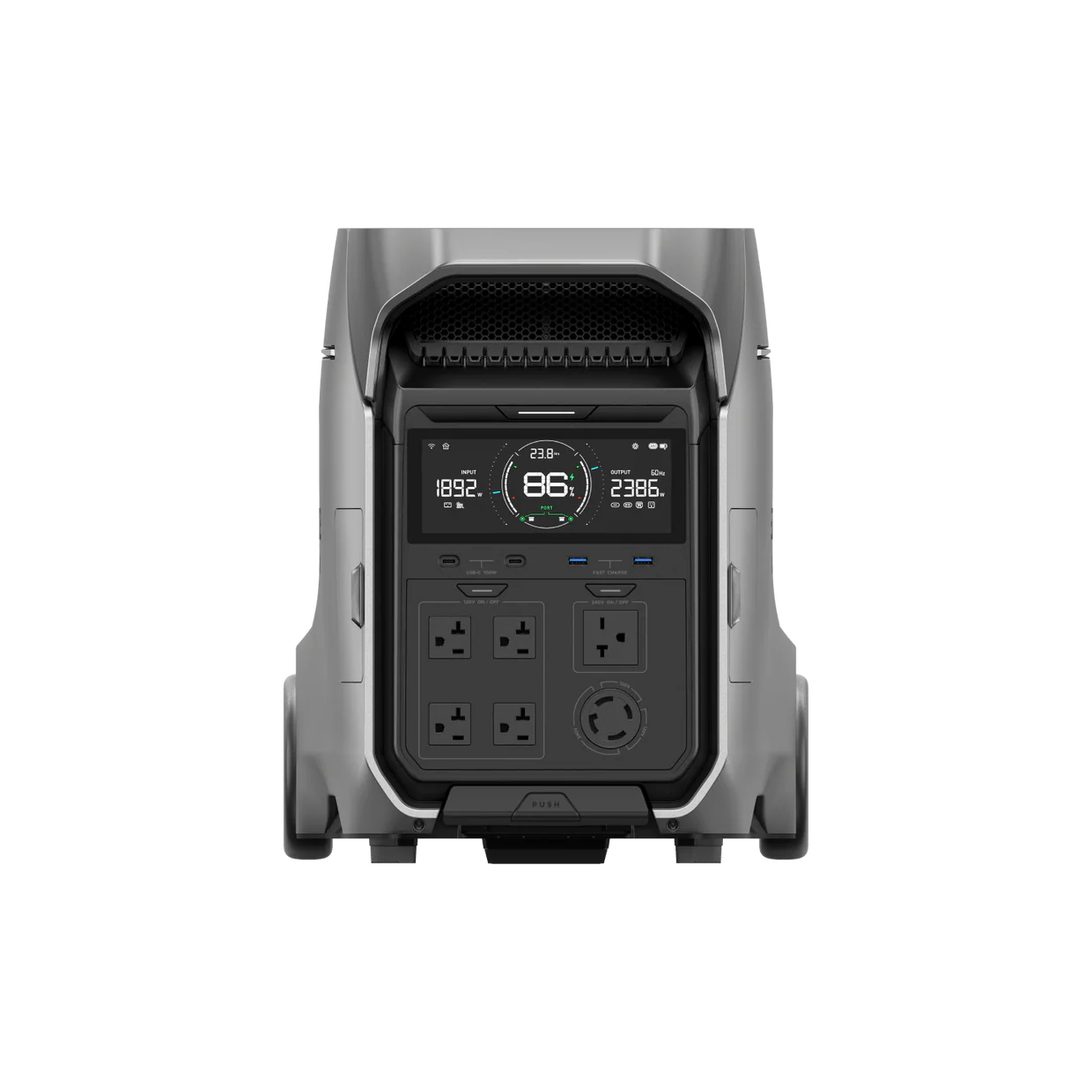
Best Overall: EcoFlow DELTA Pro 3
Why it is the best balanced home backup choice
The EcoFlow DELTA Pro 3 is the strongest all-around pick for most homes because it sits between portable power station and serious backup system. It has enough output for many household essentials and enough expansion potential for users who want to build a larger backup setup over time.
Key specs for home backup
EcoFlow lists the DELTA Pro 3 with a 4096Wh LFP battery, 4000W AC output, 8000W surge, 120V/240V support, up to 2600W solar input, and 5-year warranty. It can also expand from 4kWh up to 48kWh depending on system configuration and accessories.
Pros and cons
Pros: strong 4000W output, large 4096Wh capacity, 120V/240V support, high solar input, expandable for longer outages.
Cons: heavy, premium-priced, and more than many apartment or short-outage users need.
Who should buy it
Buy the EcoFlow DELTA Pro 3 if you want one main backup power system for refrigerators, freezers, routers, lights, laptops, fans, and some higher-demand appliances during outages.
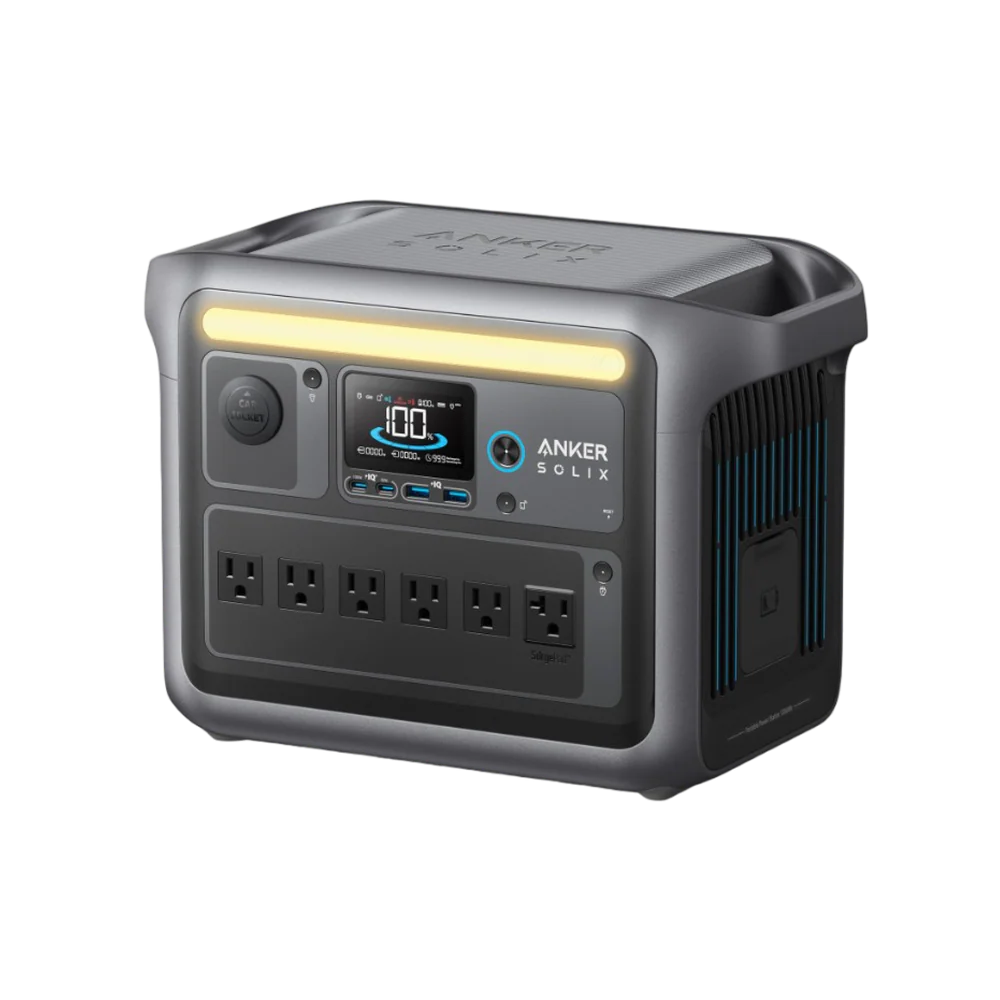
Best for Essential Appliances: Anker SOLIX C1000
Why it works for short outages
The Anker SOLIX C1000 is a better fit if your goal is not whole-home backup, but keeping the most important devices running. It is compact enough to move easily and powerful enough for many common home essentials.
Key specs for refrigerators, routers, lights, and CPAP
Anker lists the SOLIX C1000 with 1056Wh capacity, LiFePO4 battery chemistry, 1800W pure sine wave AC output, 2400W surge output, 600W max solar input, under 20ms UPS switch time, and a 5-year warranty.
Pros and cons
Pros: portable, fast to recharge, good output for its size, useful for refrigerators, Wi-Fi routers, lights, laptops, and CPAP machines.
Cons: 1056Wh is not enough for long multi-day outages unless loads are very light or solar recharging is reliable.
Who should buy it
Buy the Anker SOLIX C1000 if you want a practical, compact backup power station for short outages, apartments, renters, or essential-device backup.
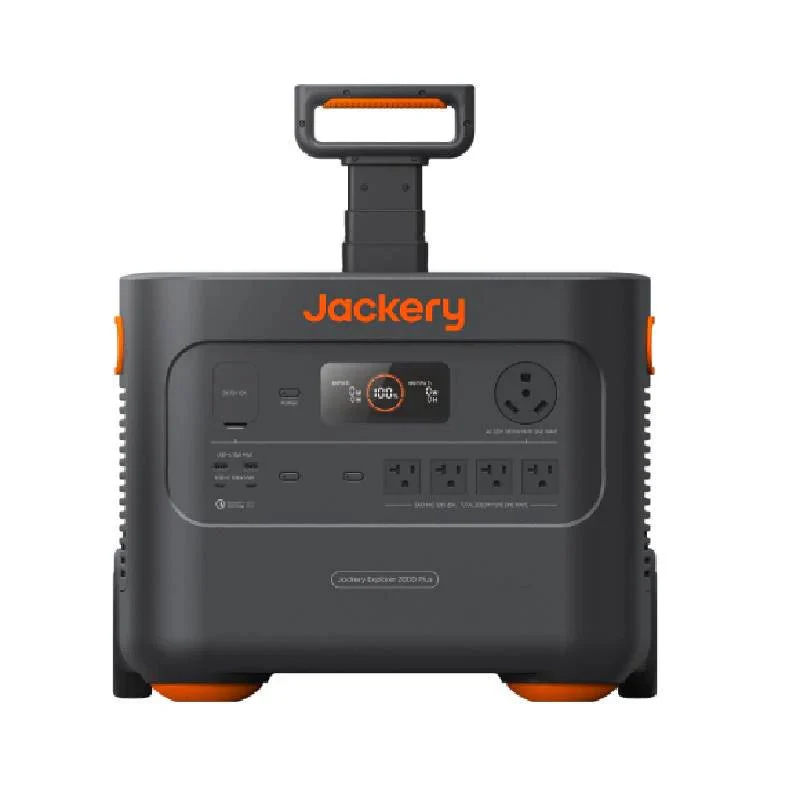
Best Expandable System: Jackery Explorer 2000 Plus
Why it is better for longer outages
The Jackery Explorer 2000 Plus is best for users who want to start with a 2kWh-class system but keep room to expand. It is more powerful than many compact models and better suited to users who expect longer outages.
Expansion capacity and solar charging
Jackery lists the Explorer 2000 Plus with 2042.8Wh capacity, 3000W output, 6000W peak output, LiFePO4 battery chemistry, and expandable capacity from 2kWh to 24kWh. The official specs also list DC input up to 1400W.
Pros and cons
Pros: strong 3000W output, modular expansion, useful for longer outages, suitable for home backup, RV, and off-grid use.
Cons: not as compact as 1kWh units, and the expansion batteries and solar panels can raise the total system cost.
Who should buy it
Buy the Jackery Explorer 2000 Plus if you want a flexible backup system that can grow beyond basic essential-device power.
Best Compact Backup Option: EcoFlow DELTA 3 Plus
Why it fits apartments and small homes
The EcoFlow DELTA 3 Plus is the best compact choice for users who want fast charging, manageable size, and enough power for small-home or apartment essentials. It is not designed to be a full-home solution, but it is very practical for everyday emergency backup.
Portability, charging speed, and limitations
EcoFlow lists the DELTA 3 Plus with 1024Wh capacity, 1800W output, 3600W surge, 1000W solar input, and 10ms UPS support. EcoFlow also says it can charge from 0-100% in 56 minutes via AC input or in about 70 minutes with 1000W solar input under suitable conditions.
Pros and cons
Pros: compact, fast charging, strong output for its size, useful UPS feature, good fit for apartments and small homes.
Cons: 1024Wh base capacity is limited for refrigerators or multiple appliances over long outages.
Who should buy it
Buy the EcoFlow DELTA 3 Plus if you mainly need backup for Wi-Fi, lights, laptops, phones, small appliances, and short power interruptions.
Best Premium High-Output System: Anker SOLIX F3800
Why it suits larger backup needs
The Anker SOLIX F3800 is the premium pick for users who need much higher output and 120V/240V capability. It is less of a grab-and-go portable station and more of a serious backup platform for larger appliances and home integration.
120V/240V support and home integration potential
Anker lists the SOLIX F3800 with 3840Wh capacity, 6000W continuous AC output, 9000W surge output, 120V/240V dual voltage, 2400W max solar input, and expandability up to a larger system configuration.
Pros and cons
Pros: very high 6000W output, 120V/240V support, strong solar input, suitable for larger backup loads, RVs, EV charging scenarios, and home backup setups.
Cons: very heavy at 132.3 lb, expensive, and excessive for basic short-outage backup.
Who should buy it
Buy the Anker SOLIX F3800 if you need high-output backup power for larger appliances, home circuits, or a more permanent emergency power setup.
How to Choose a Solar Generator for Home Backup
Battery capacity and runtime
Battery capacity is measured in watt-hours. A 1000Wh power station is suitable for light backup. A 2000Wh to 4000Wh model is better for refrigerators, freezers, fans, routers, and longer outages.
Inverter wattage and surge power
Continuous output tells you what the unit can run steadily. Surge output matters for appliances with motors or compressors, such as refrigerators, freezers, pumps, and some air conditioners.
Solar charging speed
Higher solar input helps the battery recover faster during daylight. For home backup, 600W is useful, 1000W is strong for compact units, and 2000W+ is better for larger systems.
Portability vs expandability
Smaller units are easier to move and store. Larger expandable systems are better for serious outage planning, but they cost more and often need extra batteries, panels, or transfer equipment.
Battery chemistry and warranty
LiFePO4 or LFP batteries are generally preferred for home backup because they offer long cycle life and better durability for repeated use. A 5-year warranty is a strong baseline.
What Size Solar Generator Do You Need?
Small backup: phones, lights, router, CPAP
Choose around 1000Wh. The Anker SOLIX C1000 or EcoFlow DELTA 3 Plus makes sense here.
Mid-size backup: refrigerator, fan, laptop, freezer
Choose around 2000Wh to 4000Wh. The Jackery Explorer 2000 Plus or EcoFlow DELTA Pro 3 is a better fit.
Large backup: multiple appliances and longer outages
Choose 4kWh or more, preferably with expansion. The EcoFlow DELTA Pro 3 and Anker SOLIX F3800 are better choices.
Simple watt-hour sizing formula
Use this estimate:
Device watts × hours needed ÷ 0.85 = recommended watt-hours
For example, a 120W average load for 10 hours needs about 1412Wh after allowing for inverter losses.
Can a Solar Generator Run Home Appliances?
Refrigerators and freezers
Yes, if the unit has enough continuous output and surge capacity. Runtime depends on the refrigerator’s average energy use.
Routers, laptops, lights, and chargers
Yes. These are ideal loads because they use relatively little power.
Microwaves and coffee makers
Usually yes, but they draw high wattage for short periods. Choose a unit with at least 1800W output for better compatibility.
Space heaters and air conditioners
Be careful. Electric heaters drain batteries very quickly. Air conditioners may require high startup power, 240V support, or a larger system.
Solar Generator vs Gas Generator vs Home Battery
Best for indoor safety and quiet use
Solar generators are best. They have no fuel exhaust and can be used indoors when operated according to the manufacturer’s instructions.
Best for long outages
Gas generators can run longer if fuel is available, but they are noisy and cannot be used indoors. Solar generators are cleaner and quieter but depend on battery size and sunlight.
Best for whole-home backup
A dedicated home battery or large expandable system is better for whole-home backup. Portable solar generators are usually best for essential circuits and selected appliances.
Buying Mistakes to Avoid
Choosing by peak watts only
Peak watts are temporary. Always check continuous output.
Ignoring surge power
Motor-driven appliances may need much more power when starting.
Underestimating solar recharge time
Solar charging depends on sun, panel angle, weather, and panel compatibility. Real-world charging is often slower than ideal lab-style estimates.
Buying too small for outage duration
A 1kWh unit is useful, but it may not run a refrigerator and multiple devices for a long outage. Size the system around your actual loads.