
Best Solar Battery Options for Home Backup and Energy Savings
Compare the best solar battery options for backup, bill savings, retrofits, and off-grid use. Find the right fit for your home.
The best solar battery is the one that matches how you actually use power: a small essential-load setup for short outages, a stronger whole-home system for frequent blackouts, or a flexible battery that can grow as your home uses more electricity. Start by checking three things before comparing brands: the appliances you want to keep running, the battery’s usable capacity, and whether it works cleanly with your solar inverter.
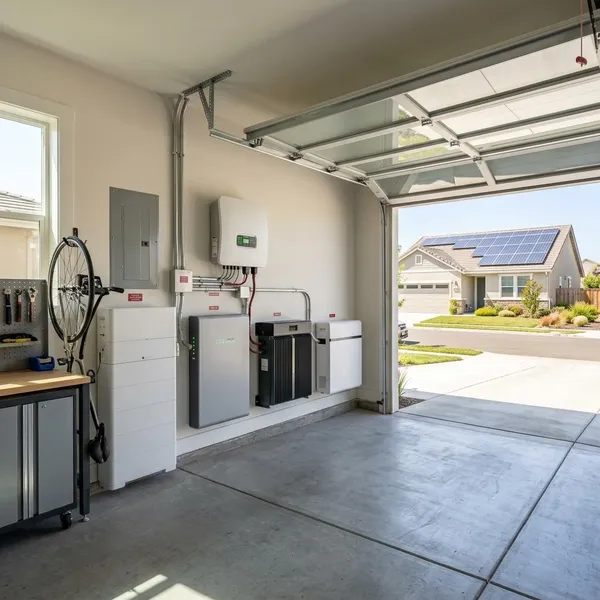
Best Solar Batteries Compared
Solar batteries look similar on paper, but they solve different problems. A homeowner who only wants the fridge, Wi-Fi, lights, and a few outlets during a storm does not need the same system as someone trying to run most of the house through a long outage. Existing solar equipment also matters, because the easiest battery to own is often the one your installer can integrate and service without extra complexity.
| Battery | Best fit | Main thing to check before buying |
|---|---|---|
| Tesla Powerwall 3 | Balanced backup and daily solar storage | Whether the integrated design fits your current or planned solar setup |
| FranklinWH aPower 2 | Whole-home backup with smarter load control | Whether the quote includes the controls needed for large appliances |
| Enphase IQ Battery 10C | Homes already using Enphase solar equipment | Compatibility with your existing Enphase system generation |
| Generac PWRcell 2 | Modular storage that can expand later | Whether the installer plans the system for future additions |
| Anker SOLIX X1 | Growing electricity needs and future upgrades | Local installer and service availability |
| EG4 18kPV and WallMount All Weather ESS | Off-grid or high-independence systems | Professional design for seasonal solar, loads, and backup charging |
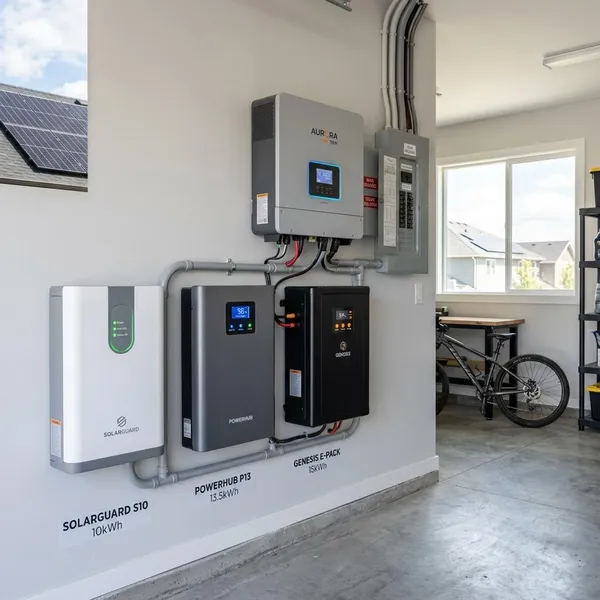
Tesla Powerwall 3 Best Overall
Tesla Powerwall 3 is the easiest broad recommendation for many homes because it combines strong output, a clean all-in-one design, and wide homeowner familiarity. It makes the most sense when you want one polished system for solar storage, outage backup, and evening energy use without managing too many separate components.
The practical appeal is its integrated inverter, which can simplify new solar-plus-battery installations. For a homeowner starting fresh, that may mean less wall clutter and a more straightforward design. For a retrofit with non-Tesla equipment, the decision is less automatic; ask the installer exactly what extra hardware or rewiring would be needed before assuming it is the simplest option.
FranklinWH aPower 2 Best for Whole Home Backup
FranklinWH aPower 2 is a stronger fit when the goal is not just “keep the fridge on,” but keep daily life closer to normal during an outage. It is especially appealing for larger homes, families with heavier appliance use, or areas where blackouts are frequent enough that essential-load backup feels too limited.
- Good fit: you want smart control over major loads instead of manually rationing every circuit.
- Less ideal: you only need a low-cost battery for short outages and a few essentials.
- Key quote detail: confirm which circuits and appliances are actually backed up, not just the battery size.
The tradeoff is planning. Whole-home backup usually costs more and depends heavily on load management, panel design, and installer experience.
Enphase IQ Battery 10C Best for Existing Enphase Systems
If your roof already has Enphase microinverters, the Enphase IQ Battery 10C is often the least painful path to storage. The main advantage is not that it wins every specification comparison; it is that the battery, monitoring, and solar equipment are designed to work together.
That matters in real homes. A retrofit that looks cheaper at first can become frustrating if it needs extra gateways, limited backup modes, or awkward monitoring. For an Enphase household that mainly wants evening solar use plus essential backup, staying inside the same ecosystem can be the cleaner choice. If you are building a new system from scratch, compare it against other options on installed price and output instead of assuming ecosystem convenience is worth paying extra for.
Generac PWRcell 2 Best Modular System
Generac PWRcell 2 is worth a close look if you do not want to guess your final battery size on day one. A modular system can be sensible for a household that expects changes, such as adding an EV later, converting appliances to electric, or expanding from essential loads to broader backup.
The mistake to avoid is treating “expandable” as automatic. Expansion only works well if the first installation leaves room for it in the electrical design, inverter plan, and physical location. Ask the installer what adding capacity later would actually involve, including labor and permitting, so the future upgrade does not become a second full project.
Anker SOLIX X1 Best for Growing Energy Needs
Anker SOLIX X1 is aimed at homes where electricity use may rise over time. That could mean a home office that needs reliable backup, a planned heat pump, an EV charger, or a family that has learned after a few storms that a tiny backup setup is not enough.
Its value depends on support as much as design. In areas with strong installer coverage, it can be an appealing long-term platform. In markets where service is still limited, I would be more cautious and ask who handles warranty work, replacement parts, and troubleshooting before choosing it over a more established local option.
EG4 18kPV and WallMount All Weather ESS Best for Off Grid Systems
EG4 18kPV paired with WallMount All Weather ESS belongs in a different category from a simple suburban backup battery. It is better suited to off-grid homes, rural properties, workshops, cabins, or homeowners who want a more hands-on system with serious solar and storage capability.
This is also where design mistakes are more expensive. Off-grid storage has to account for winter production, cloudy stretches, generator backup, well pumps, and daily cycling. If the property depends on the system rather than using it as a comfort upgrade, professional design is not optional.
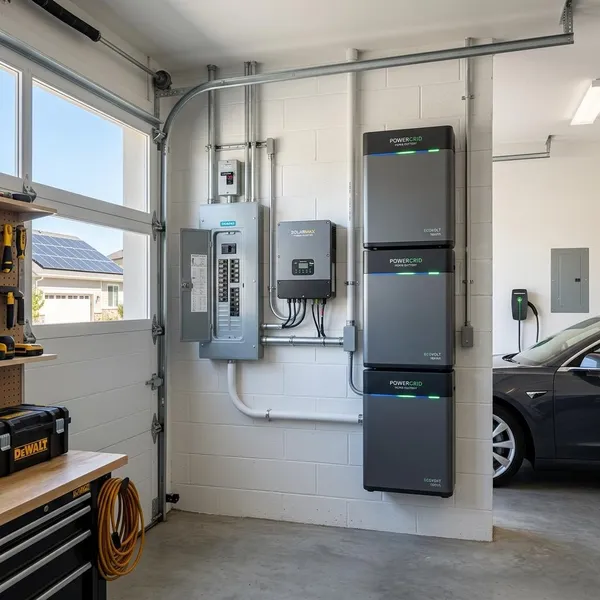
How We Picked the Best Solar Batteries
The ranking is based on how useful each battery is after installation, not just how impressive it looks in a brochure. Capacity matters, but it is only one part of the decision. A battery also needs enough power output, sensible compatibility, local support, and a design that fits the way the household will actually use it.
Real-world backup performance
A battery’s stored energy tells you how long it might run loads. Its power output tells you what it can run at the same time. That second number is easy to overlook, but it is the reason one system may handle lights and refrigeration comfortably while another can also support a well pump or selected HVAC equipment.
For practical backup, I would rather see a realistic load plan than a dramatic runtime claim. A good proposal should show what happens during a normal outage: what stays on, what turns off, and what needs load management.
Solar and inverter compatibility
Compatibility can make or break the project budget. If you already have solar, the first question is not “Which battery is best?” but “Which battery works cleanly with the inverter and controls already on my wall?”
- New solar installation: compare complete system designs, not battery units alone.
- Existing solar retrofit: ask whether the battery will be AC-coupled, DC-coupled, or tied into an existing ecosystem.
- Older equipment: confirm whether parts, monitoring, and installer support are still available.
Capacity and expansion options
Usable capacity should match the job. A moderate battery can be enough for overnight essentials, while whole-home backup or long outages may require multiple batteries. Expansion matters if your home is likely to change, but only when the system is designed for that path from the beginning.
Warranty and installer support
A long warranty is reassuring, but it does not replace good local support. Batteries are installed systems, not plug-in gadgets. If something fails, the quality of the installer network and service process matters more than a small difference in advertised efficiency.
When comparing quotes, ask who you call if the battery stops charging, loses backup function, or shows an error after a storm. A clear answer is a good sign; vague handoffs between manufacturer and installer are not.
Overall value for different households
Value changes by use case. For occasional outages, the best value may be a smaller battery with a clean essential-load panel. For a home with frequent blackouts or high evening rates, a larger system with stronger controls can make more sense. For a rural property, serviceability and generator integration may matter more than app design.
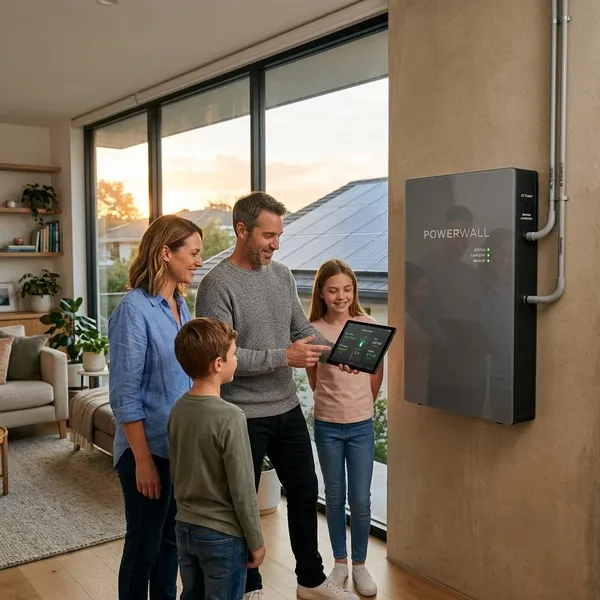
How to Choose the Right Solar Battery
The safest way to choose is to work backward from your house, not forward from a brand list. Decide what you need during an outage, estimate how much energy those loads use, then check whether the battery can deliver enough power at the same time. Only after that should price, incentives, and brand preference decide the winner.
Decide which appliances need backup power
Make two lists before asking for quotes: must-run loads and nice-to-have loads. Must-run loads might include the refrigerator, freezer, Wi-Fi, lights, phone charging, a medical device, a sump pump, or a garage door opener. Nice-to-have loads might include laundry, an oven, a larger air conditioner, or extra rooms.
This simple split prevents overspending. A low-risk household with short outages may be happy protecting essentials. A home with a sump pump, medical equipment, or frequent multi-day outages should be more conservative and design around the loads that cannot fail.
Calculate the usable capacity you need
Usable capacity is the energy you can actually draw from the battery, measured in kilowatt-hours. As a rough planning range, many homes can cover essential overnight loads with about 10 to 15 kWh, but that is not a promise for every house. Electric heat, large cooling loads, well pumps, and long outages can push the need much higher.
A practical check is to look at your electric bills and then estimate only the circuits you plan to back up. Do not size the battery from your whole-home daily usage unless you truly expect the battery to run the whole home.
Match output power to household loads
Output power decides whether the battery feels capable or constantly limited. A system may have enough stored energy for the night but still struggle if several large appliances start together. This is especially important for air conditioning, pumps, electric cooking, dryers, and heating equipment.
- Ask for continuous output: this shows what the system can run steadily.
- Ask about surge handling: motors and compressors may need extra power when starting.
- Ask for a load schedule: some appliances may need to be staggered during an outage.
Check compatibility with your solar system
For existing solar, compatibility should be checked early. Some batteries pair naturally with certain inverter ecosystems, while others may need additional equipment. The cheapest battery unit can become expensive if the retrofit requires major electrical changes.
Send installers photos of your inverter, main panel, subpanels, and monitoring equipment before the site visit if they ask for them. It helps them spot obvious fit issues sooner and keeps quotes from being based on guesses.
Compare installed prices and available incentives
Compare total installed cost, not just the battery price. A quote may include the battery, inverter work, gateway or controller, backup panel, permits, labor, electrical upgrades, and monitoring setup. Incentives can help, but eligibility and value depend on your location and final system design, so treat them as part of the quote review rather than a guaranteed discount.
- Use the same backup goal for every quote. Otherwise, one installer may price essentials while another prices whole-home backup.
- Compare usable capacity and output together. A bigger battery is not automatically better if it cannot run your key loads.
- Separate equipment from electrical upgrades. This shows whether a higher quote is caused by the battery or by panel work.
- Check the service path. Know who handles warranty claims and how quickly local support is available.
- Ask about future expansion. If you may add an EV or heat pump, the first design should leave room for it.

Conclusion
For most homeowners, the smartest choice is not the battery with the biggest headline number; it is the system that backs up the right loads, works with the solar equipment, and has local support if something goes wrong. Tesla Powerwall 3 is the strongest all-around pick, FranklinWH is better for serious whole-home backup, Enphase is the cleaner route for many existing Enphase homes, Generac and Anker suit growth-minded buyers, and EG4 is the option to study for off-grid independence.