
Best Solar Battery Storage Systems for Home Backup and Energy Savings
Compare the best solar battery storage options for backup, bill savings, sizing, and cost. Find the right fit for your home.
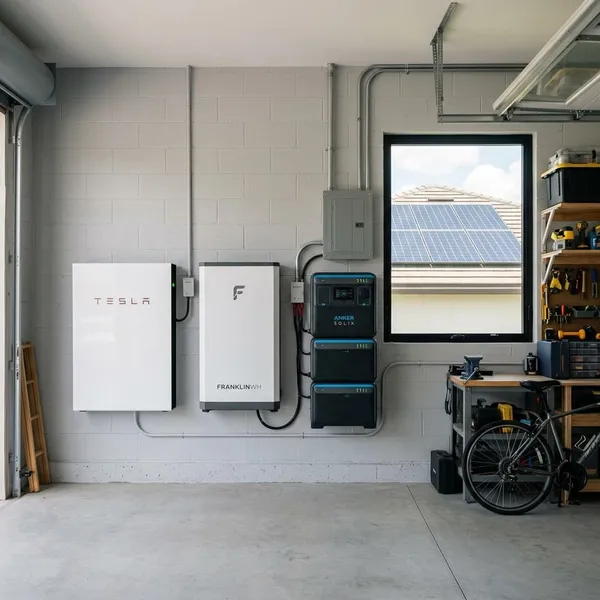
The best solar battery storage system depends on what you need it to do first: keep essential circuits running during outages, support whole-home backup, lower peak-time electricity costs, or expand with your solar system over time. For most households, Tesla Powerwall 3 is the strongest all-around choice, FranklinWH aPower 2 is better suited to larger whole-home backup needs, and Anker SOLIX X1 is a smart option if long-term expandability matters.
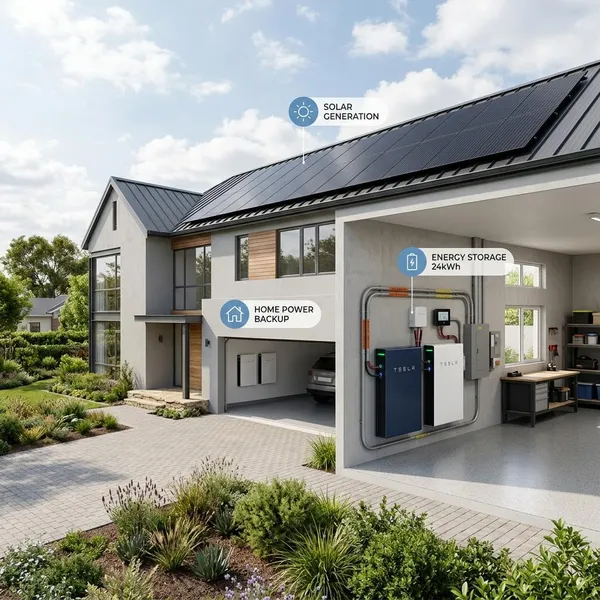
Best Solar Battery Storage Options
Start with the job you want the battery to do. A small household that mainly wants the fridge, Wi-Fi, lights, and a few outlets during short outages does not need the same system as a home trying to run central air, a well pump, and kitchen appliances during storm season.
These three options stand out because they suit different buying situations rather than chasing the same type of homeowner.
Best Overall Tesla Powerwall 3
Tesla Powerwall 3 is the strongest general pick for many homes because it combines battery storage, power electronics, backup capability, and a familiar app experience in a relatively streamlined package. If your installer confirms that it fits your solar design and electrical panel, it can be a clean way to add both outage protection and better solar self-use.
It is especially appealing for a homeowner who wants the system to work quietly in the background: charge from solar, discharge during expensive evening hours, and keep selected loads running when the grid fails. The main caution is retrofit compatibility. If you already have older solar equipment, ask whether anything needs to be replaced or rewired before assuming Powerwall 3 is the lowest-friction choice.
Best for Whole Home Backup FranklinWH aPower 2
FranklinWH aPower 2 is a better fit when backup planning is the main reason you are buying a battery. Its strength is not just stored energy; it is the way the system can be designed around larger household loads and smarter energy control.
This matters in homes where several demanding loads may compete at once. A house with central air, a well pump, electric water heating, or multiple electrical panels needs more than a battery bolted to the wall. It needs a plan for what can run together, what should be delayed, and what must stay powered during a long outage.
FranklinWH may involve a more detailed design process, so it is not always the simplest option. But if “backup” means keeping the home close to normal instead of only powering a few emergency circuits, it belongs near the top of the list.
Best Expandable System Anker SOLIX X1
Anker SOLIX X1 is the most interesting option for buyers who are not sure how much storage they will need in a few years. A modular system can make sense if you want to start with essential backup now and add capacity later as your energy use changes.
- Good fit: homes planning an EV, heat pump, larger solar array, or broader backup later.
- Less ideal: buyers who want one fixed whole-home design and never expect to expand.
- Key check: confirm exactly how expansion works in your market before buying the first unit.
The practical value is flexibility. If your first goal is bill savings but your future goal is outage resilience, the X1 gives you more room to grow without guessing perfectly on day one.
How Tesla, FranklinWH, and Anker SOLIX Compare
Brand reputation helps only so much. The better comparison is whether each system can support your real loads, connect cleanly to your solar equipment, expand if your needs change, and be installed without surprise electrical work.
Usable capacity and backup power
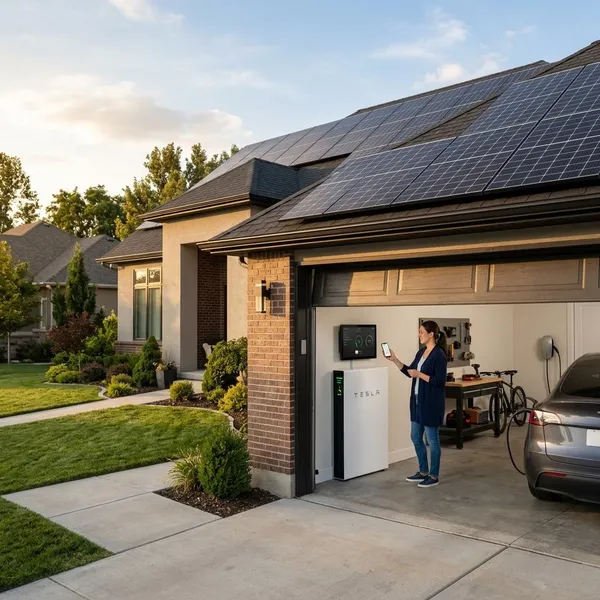
Usable capacity tells you how long the battery may last. Backup power tells you what it can run at the same time. Confusing those two is one of the easiest ways to buy the wrong system.
| Buying situation | What matters most | Likely direction |
|---|---|---|
| Short outages and essential loads | Enough usable capacity and a clean backup panel design | Tesla or Anker may be enough if the load list stays modest |
| Whole-home comfort during outages | Higher output, load control, and careful circuit planning | FranklinWH deserves strong consideration |
| Energy needs may grow later | Expansion path and future equipment compatibility | Anker SOLIX X1 is worth comparing closely |
A battery may have plenty of energy left but still struggle if several large appliances start together. Ask your installer to separate “how many hours will it last?” from “what can it run at once?” because both answers matter.
Solar and electrical compatibility
Compatibility should be checked before price. The battery has to work with your solar inverter, main electrical panel, utility rules, backup configuration, and available wall space. A system that looks affordable online can become expensive if it requires inverter replacement, panel upgrades, or extra control equipment.
For an existing solar home, ask one direct question: “What equipment stays, what gets added, and what must be replaced?” A vague answer here is a warning sign, especially on older solar arrays.
Expansion and energy management
Expansion matters if your home is likely to change. Adding an EV charger, switching to electric heating, or increasing air-conditioning use can make a once-perfect battery feel undersized.
Energy management is the other half of the decision. Tesla is strong for homeowners who want polished automation, FranklinWH is appealing where load coordination is central to the design, and Anker SOLIX X1 is attractive when staged growth is part of the plan. During a summer outage, good controls may matter as much as extra capacity because they help keep cooling, refrigeration, and communication equipment ahead of less important loads.
Warranty and installation requirements
Do not compare warranties only by the number of years advertised. Look for retained capacity terms, throughput limits, labor coverage, installation requirements, and whether expansion affects coverage.
- Ask what is included: battery, gateway, controls, monitoring, disconnects, permits, and labor.
- Ask what is excluded: panel upgrades, trenching, rewiring, drywall repair, or utility fees.
- Ask who services it: the installer, the manufacturer, or a third party.
A cheaper quote can be fine, but only if the installed scope is the same. If one proposal includes backup-panel work and another does not, the prices are not really comparable.
How to Choose Solar Battery Storage
The easiest way to choose solar battery storage is to work backward from your loads, not forward from the brand name. Decide what must stay on, how long it needs to run, and whether the system is mainly for outages, utility savings, or both.
Define your backup priorities
Write two lists before you talk to installers: must-have loads and nice-to-have loads. Must-have loads might include refrigeration, internet, a few lights, garage access, a sump pump, or medical equipment. Nice-to-have loads might include laundry, electric cooking, extra outlets, or whole-home air conditioning.
This keeps the project honest. A low-risk home with rare two-hour outages may be perfectly happy with essential-load backup. A storm-prone home with remote work, refrigerated medication, or a well pump should be sized more cautiously because the cost of being underprepared is higher.
Match power output to household loads
Power output is where many battery plans fail. Large appliances often need more power to start than to keep running, so running watts alone are not enough.
Ask your installer to review startup loads for HVAC equipment, well pumps, refrigerators, freezers, and any workshop tools you expect to use. If you want the battery to feel normal during an outage, you may need load management or more than one battery rather than simply a larger energy capacity number.
Compare battery chemistry and lifespan
Many modern home batteries use lithium iron phosphate, often valued for thermal stability and long cycle life. That does not make installation details optional. Location, temperature exposure, certified wiring, software settings, and code-compliant protection still affect safety and long-term performance.
For lifespan, look beyond the sales claim. Check the retained-capacity warranty, whether daily cycling is allowed under the terms, and what happens if the battery is used heavily for time-of-use savings. A battery used every day to avoid peak rates ages differently from one that mostly sits ready for outages.
Check solar and inverter compatibility
Before choosing a model, confirm whether the battery will be added AC-coupled, DC-coupled, or through a manufacturer-specific setup. You do not need to master the engineering, but you do need to know whether your existing inverter stays in place and whether the utility must approve a changed interconnection.
- Review your bills: note seasonal peaks and when your home uses the most power.
- List backup loads: separate essentials from comfort loads.
- Check the panel: ask whether your main service or backup panel needs work.
- Compare complete proposals: include equipment, labor, permits, monitoring, and expansion options.
If an installer cannot explain the backup scope in plain English, pause before signing. A battery quote should tell you what will stay on, what will not, and what would require a larger design.
What Solar Battery Storage Costs
Solar battery storage cost is not just the battery price. The final number depends on control hardware, inverter design, labor, permitting, electrical upgrades, backup-panel work, and whether the system is a simple add-on or a more involved whole-home project.
Battery and control equipment
The battery is usually the biggest visible cost, but the control equipment decides how useful that battery becomes. Gateways, monitoring hardware, transfer equipment, and energy-management controls may be required for safe backup operation.
When comparing quotes, ask whether the proposal includes every required control component. A low battery-only price is not helpful if the equipment needed to make it work is added later.
Installation and electrical upgrades
Installation cost changes quickly from one home to another. A newer home with a clear wall location and an accessible main panel may be straightforward. An older home with a crowded panel, long cable runs, or detached equipment can require more labor and planning.
Do not treat an electrical upgrade as a small detail. If your panel needs work before the battery can be installed safely, that can affect both budget and timeline.
Backup panel and permitting costs
An essential-load design may use a backup subpanel, while a larger system may use more advanced whole-home controls. The subpanel route can be cost-effective, but it usually means moving selected circuits and deciding what will not be backed up.
Permitting and utility approval are also part of the real cost. Ask how long approval normally takes in your area and whether the quoted price includes permit fees, inspection handling, and utility paperwork.
Available incentives and rebates
Incentives can improve the economics, but eligibility changes by location and program rules. Some battery projects may qualify for federal, state, utility, or grid-support incentives, while others may not.
Get the incentive assumptions in writing. If a rebate requires approved equipment, a certified installer, or enrollment before installation, confirm that before choosing the battery.
Lifespan and long-term ownership value
Long-term value depends on how the battery earns its keep. For one household, the value may come from avoiding food loss and work disruption during outages. For another, it may come from storing solar energy for expensive evening rate periods.
- Worth a closer look: frequent outages, high time-of-use rates, weak solar export credits, or critical loads.
- Be more cautious: cheap grid power, rare outages, strong net metering, or a short time horizon in the home.
- Best comparison: installed cost against expected use, not battery capacity alone.
A battery does not have to pay for itself only through bill savings to be worthwhile, but the reason for buying should be clear. Peace of mind is real value; it is just different from a strict financial return.
Conclusion
The smartest choice is usually not the biggest battery, but the one that fits your outage risk, load list, solar equipment, and future plans without forcing unnecessary electrical work. Choose Tesla Powerwall 3 if you want a strong all-around system, FranklinWH aPower 2 if whole-home backup control matters most, and Anker SOLIX X1 if expansion is a major part of your decision.