
Best Portable Solar Generator Options for Backup, Camping, and RV Use
Find the best portable solar generator for camping, RVs, or home backup by comparing capacity, output, charging.
The best portable solar generator depends on what you need to keep powered, how long you need it to run, and where you plan to use it. A compact model is often enough for camping, phones, lights, and small appliances, while RV travel and home backup usually require a larger battery, stronger inverter, and reliable solar input. Before choosing one, focus on your essential devices, their combined wattage, expected runtime, and whether solar charging will be a regular part of your setup.
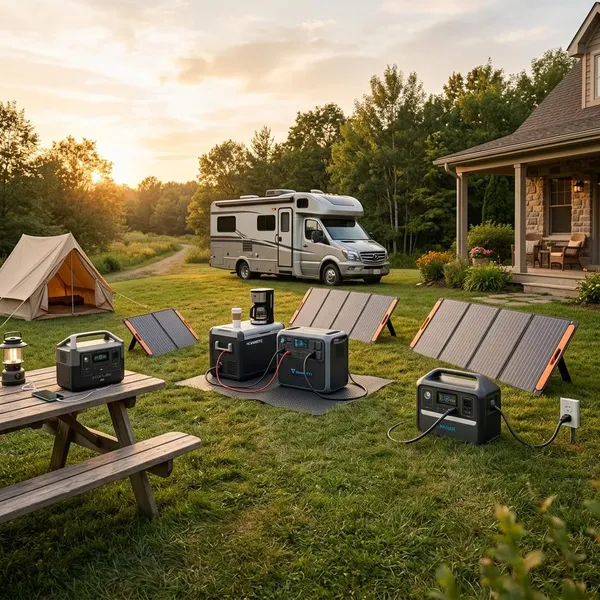
Best portable solar generators by use case
A good pick for camping can be a poor pick for home backup, and a strong home-backup unit can feel annoying if you only need to charge phones at a campsite. Use case should come before brand loyalty or headline capacity.
| Use case | Best fit | Why it makes sense |
|---|---|---|
| Mixed home and travel use | EcoFlow DELTA 3 Plus | Balanced size, output, and charging speed |
| Home essentials during outages | Jackery Explorer 2000 v2 | More practical reserve for appliances and overnight backup |
| Light camping | BLUETTI Elite 30 V2 | Easier to carry and enough for small electronics |
| RV or van routines | BLUETTI Elite 200 V2 | Better suited to daily power use and larger solar setups |
| Short outages and small devices | EcoFlow RIVER 3 Plus | Compact, simple, and easy to store |
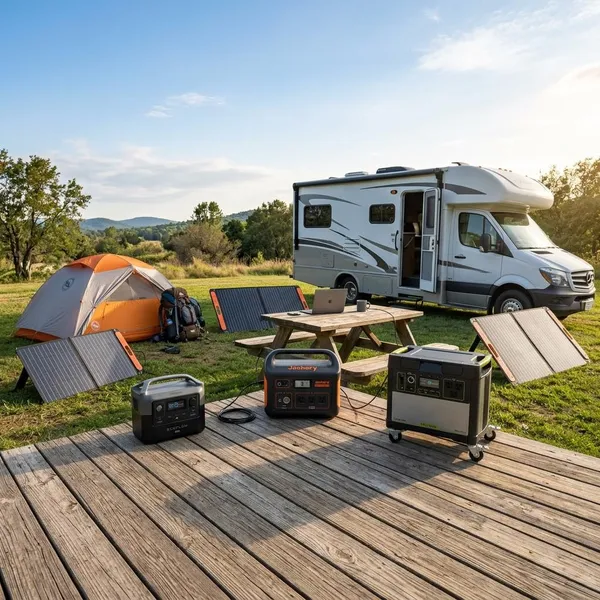
EcoFlow DELTA 3 Plus for balanced everyday use
The EcoFlow DELTA 3 Plus is the safest middle-ground choice if you want one unit for several jobs: storm prep, laptops, lights, a router, outdoor projects, and occasional camping. It is large enough to be useful beyond phone charging, but still more realistic to move around than a heavy home-backup battery.
This type of model suits someone who wants a “ready for most normal problems” power station. If a storm is forecast, fast wall charging is especially useful because you can top it off without planning your whole day around the battery.
Jackery Explorer 2000 v2 for home backup
The Jackery Explorer 2000 v2 makes more sense when home backup is the priority. A 2kWh-class unit gives you a better chance of running essentials such as a fridge, Wi-Fi gear, lights, phones, laptops, and selected small appliances without draining the battery immediately.
- Good fit: overnight outages, storm prep, fridge support, home office backup.
- Less suitable: space heaters, large air conditioners, dryers, or several high-draw appliances at once.
The practical mistake to avoid is treating it like a whole-home generator. It can make an outage much easier, but it still works best when you choose the important loads and run heavy appliances one at a time.
BLUETTI Elite 30 V2 for lightweight camping
The BLUETTI Elite 30 V2 is for campers who care more about easy packing than maximum runtime. It is a better match for phones, cameras, lanterns, drones, small fans, and similar low-demand gear than for full campsite appliance support.
For a weekend tent trip, a smaller unit can be the smarter buy because it actually gets carried and used. If you expect to run a powered cooler all day or a CPAP overnight, check the device’s real watt-hour use first; comfort features such as heated humidification can change the battery size you need.
BLUETTI Elite 200 V2 for RV and van use
RV and van use is different from casual camping because power becomes part of the daily routine. You may be charging laptops, running a fridge, using lights and fans, and trying to recover energy from solar while parked.
The BLUETTI Elite 200 V2 fits that heavier pattern better than a compact camping unit. The extra capacity gives you more room for cloudy weather, longer stops, and imperfect estimates, which matters if you are using the system for more than a single weekend.
EcoFlow RIVER 3 Plus for small devices and short outages
The EcoFlow RIVER 3 Plus is the practical choice for small-device backup: phones, tablets, cameras, laptops, a router, and a few lights. It is also easier to live with in an apartment because it stores neatly and can be moved from room to room without effort.
If your goal is to keep internet, communication, and basic lighting available during a short outage, this size can be more useful than it looks on paper. It is not the right tool for a fridge through a long blackout, but it is a good low-stress backup for simple needs.
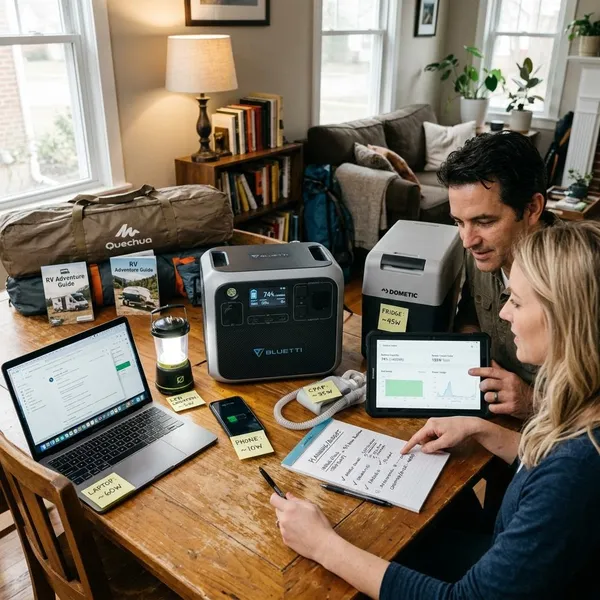
How much capacity and output do you need?
Capacity tells you how long the generator can run devices; output tells you what it can run at the same time. Check output first for appliances with high watt demand, then check capacity for runtime. A battery can have plenty of watt-hours and still fail your needs if the inverter cannot start the device you care about.
- List your must-run devices: fridge, CPAP, router, laptop, lights, fan, cooler, or medical equipment.
- Check running watts: use the device label, power adapter, manual, or a plug-in watt meter.
- Look for startup surge: fridges and pumps may need more power when they start.
- Estimate hours of use: separate all-night devices from occasional appliances.
- Leave a margin: real-world AC use often loses some energy to conversion, heat, and reserve.
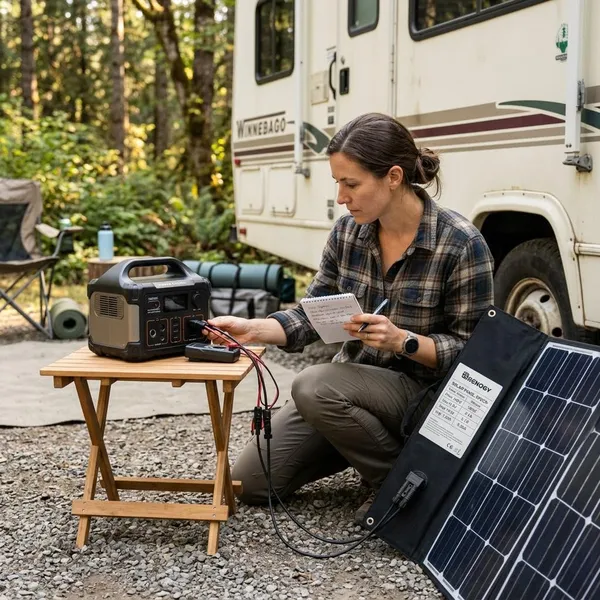
Under 500Wh for small devices and short trips
Under 500Wh is best for low-risk, low-demand situations: charging phones, running LED lights, topping up a laptop, powering a camera battery charger, or keeping a router alive for a short outage. It is also a good size for people who want emergency convenience without storing a large unit.
Do not buy this class expecting serious appliance backup. A compact fan may be fine, but a microwave, coffee maker, or full-size fridge can either exceed the output limit or drain the battery too quickly to be useful.
Around 1kWh for camping and basic backup
Around 1kWh is the more flexible middle range. It suits longer camping weekends, remote work from a campsite, stronger fans, multiple device charges, and basic household backup for lights, phones, a router, and selected small appliances.
This is often the best compromise for someone who wants one unit for both travel and occasional home outages. The main rule is to stay selective: run the important devices, avoid stacking high-watt appliances, and recharge when you get the chance.
2kWh or more for RVs and home essentials
At 2kWh or more, a portable generator starts to feel more dependable for RV routines and meaningful home backup. This range gives you more buffer for fridge runtime, cloudy solar days, longer outages, and heavier daily use.
- Choose this range if a fridge, RV gear, or home essentials are part of the plan.
- Think twice if you only need phones, lights, and a laptop a few times a year.
- Check weight before buying; a bigger battery is only helpful if you can move and store it safely.
How to match solar panels to the generator
Solar panels are not automatically compatible with every portable generator. The four checks that matter are maximum solar input, voltage range, current limit, and connector type. If one of those is wrong, charging may be slow, unreliable, or not work at all.
Check the maximum solar input
Start with the generator’s maximum solar input in watts. If the unit can accept only 220W of solar, connecting 400W of panels will not make it charge at 400W in normal use.
A little extra panel capacity can help in weak sunlight, but going far beyond the input limit often adds cost and bulk without much benefit. For most buyers, the better target is a panel setup that can approach the generator’s limit in good conditions.
Match the voltage and current limits
Wattage is not enough. The panel setup also has to stay inside the generator’s accepted voltage and current range. Too little voltage may not start charging; too much can cause the unit to reject input or shut charging down.
This matters most when combining panels. Series wiring usually raises voltage, while parallel wiring usually raises current, so copy-pasting an RV solar setup into a portable power station is not always safe or effective.
Confirm the connector and adapter type
A panel can be electrically suitable and still not plug in without the right cable. Before buying, check the input port on the generator, the cable included with the panel, and whether an adapter is required.
If you plan to charge away from home, pack the adapter with the generator rather than leaving it in a drawer. A missing cable is one of the easiest ways to turn a good solar setup into dead weight at camp.
Allow for weather and daylight conditions
Solar ratings are based on ideal test conditions, not a cloudy afternoon under trees. A 200W panel may only hit its best numbers briefly, and output can drop with shade, poor angle, winter sun, heat, dirt, or clouds.
- For summer camping: a modest panel may be enough if you can reposition it during the day.
- For year-round backup: build in more margin because daylight is shorter and weather is less predictable.
- For RV roofs: watch for shade from vents, racks, and air-conditioning units.
Portable solar generator vs other backup options
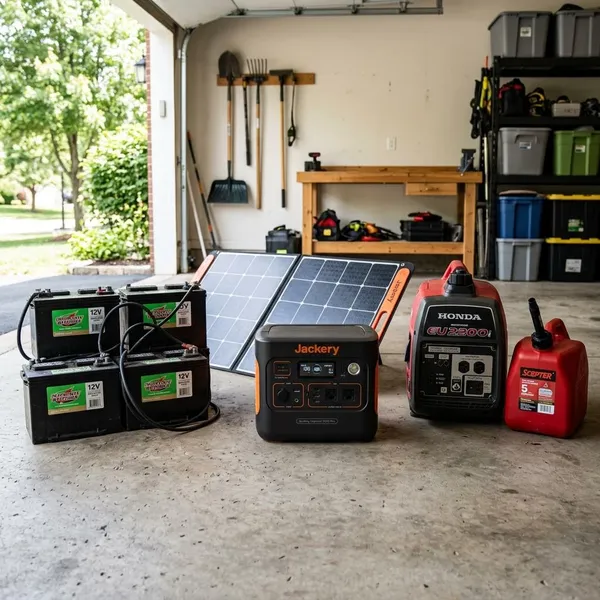
A portable solar generator is best for quiet, indoor-safe battery power and optional solar charging. It is not the strongest answer for every outage. If you need continuous high output for days, a fuel generator may still be more practical, provided it is used safely outdoors.
Solar generator for off-grid charging and quiet backup
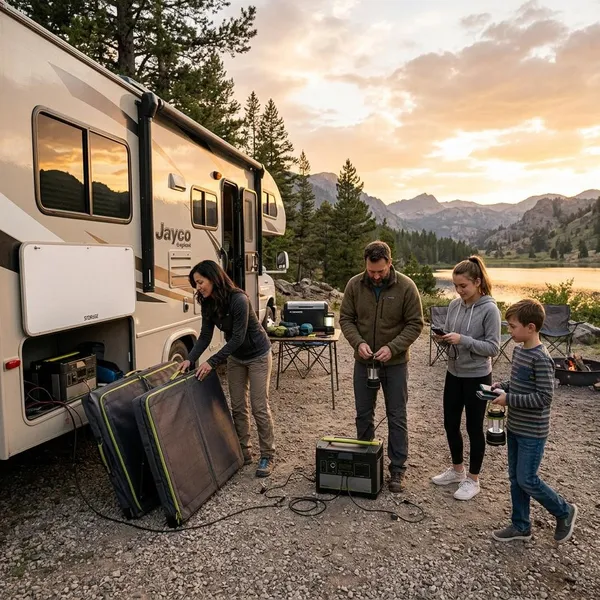
Choose a solar generator when silence, indoor use, and renewable recharging matter. It is a strong fit for apartments, campgrounds, vans, RVs, and households that want phones, internet, lights, and a few essentials covered without fuel storage or engine noise.
The limitation is recovery speed. Solar can stretch your runtime, but it is not instant, so it works best when your daily energy use is modest enough for the panels to replace a useful amount of charge.
Power station when solar panels are optional
A power station is the battery part of the setup. If you mostly want backup for short outages, work gear, lights, and communication, buying the power station first can be more sensible than paying for panels immediately.
This is a good path for someone who rarely camps but wants emergency power at home. You can learn your real usage first, then add compatible panels later if longer outages or off-grid trips become more likely.
Gas generator for continuous high-output loads
A gas generator is still better for long, heavy power demands such as multiple large appliances, power tools, or extended outages where refueling is easier than waiting for batteries to recharge.
The tradeoff is safety and convenience. Gas generators produce carbon monoxide and must be used outdoors, away from windows, doors, and vents. They are also noisy, need maintenance, and require fuel storage, so they are not a substitute for indoor battery backup.
Conclusion
Pick the smallest generator that honestly covers your important devices, then move up only when your situation requires it. A compact unit is enough for phones, lights, and short outages; a mid-size model is better for mixed use; and a 2kWh-class unit is the more realistic choice for RV routines or home essentials. The best purchase usually becomes obvious once you compare what must run overnight, what may run at the same time, and how you will recharge after the first day.