
Which Solar Power Kit Fits Your Off-Grid Needs?
Compare best buy solar generators and off-grid packages by size, battery, inverter, and solar input. Find the right fit.
The best buy solar generators depend on whether you need portable backup power or a complete off-grid solar setup with batteries. A compact power station may be enough for camping, RV travel, or keeping phones, lights, Wi-Fi, and a refrigerator running during an outage, while a cabin, tiny home, workshop, or full-time residence needs a properly sized system based on daily energy use, battery capacity, inverter surge power, and available sunlight.
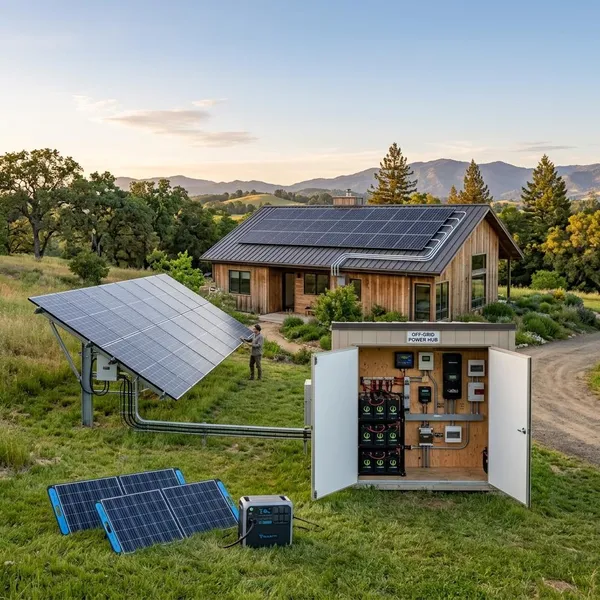
Which off-grid solar package fits your needs?
The right package depends less on the biggest advertised wattage and more on how you actually use power. A weekend cabin, a mobile RV setup, a tiny home, a full-time house, and a workshop all stress a solar system in different ways.
Cabin packages provide power for weekend and seasonal use
A cabin system should be sized around the season you use it most. A summer weekend cabin with lights, phone charging, a fan, and a small fridge can often stay modest. A hunting cabin used during short winter days needs more battery reserve and more solar input because recharge time is limited.
- Good fit: lights, charging, efficient fridge, fan, router, small TV, occasional pump use.
- Be careful with: electric heat, large microwaves, deep well pumps, and long cloudy periods.
- Useful feature: expansion ports if the cabin may later add internet, a pressure pump, or more appliances.
RV packages support mobile off-grid living
RV packages have to deal with limited roof space and changing shade. A portable solar generator with folding panels can be better than a roof-only setup if you often park under trees but can place panels in the sun.
For light RV use, focus on 12V fridge support, device charging, fans, laptops, and recharge speed from solar, shore power, or vehicle charging. If you want frequent microwave, coffee maker, or air conditioner use, do not treat it as a small travel setup; those loads quickly push you into larger batteries and stronger inverters.
Tiny home packages cover daily essential loads
Tiny homes are small, but daily use can still be demanding. A minimalist setup with LED lights, a laptop, a fridge, and a fan is very different from a tiny home with electric cooking, hot water, air conditioning, and two people working remotely.
For permanent tiny homes, a wired off-grid package is usually more practical than a single portable unit because it can support normal circuits and future expansion. A large all-in-one power station may still work for a simple temporary tiny home, especially if the loads are intentionally kept low.
Home packages support full-time energy independence
A full-time off-grid home needs a balanced system, not just a big battery. The panels must recover daily use, the battery bank must carry you overnight and through poor weather, and the inverter must handle pumps, refrigerators, freezers, laundry, and appliance startup surges.
This is where a portable solar generator and a home package split clearly. A powerful solar generator can be excellent for emergency backup or critical circuits, but daily energy independence usually calls for a planned installation with proper wiring, protection equipment, and room to expand.
Workshop packages run tools and equipment
Workshop systems should be judged by peak demand first. A compressor, saw, pump, or dust collector may run for only a short time, but the startup surge can trip an undersized inverter even when the battery still has plenty of stored energy.
- Light shop: lighting, chargers, small bench tools, occasional saw use.
- Heavier shop: compressor, larger saws, dust collection, pumps, or welding equipment.
- Better timing: run high-draw tools during sunny hours when possible to reduce battery strain.
What can different off-grid solar system sizes run?
System size affects two separate things: how much energy you can store and how much power you can deliver at once. Watt-hours tell you runtime. Watts and surge rating tell you whether the system can start and run the devices you connect.
| System size | Best for | Usually not ideal for |
|---|---|---|
| Small | Charging, lights, laptops, fans, emergency basics | Heavy cooking, heating, pumps, whole-home use |
| Medium | Fridge, router, lights, small pump, essential cabin or RV loads | Daily high-draw appliances without careful scheduling |
| Large | Homes, larger cabins, workshops, multiple appliances | Buyers who only need occasional portable backup |
How do you choose the right off-grid solar package size?
Choose size from your loads, not from the product name. The safest buying path is to calculate daily use, decide how long you want backup power, check inverter demand, and then make sure your panels can replace the energy you use.
Calculate daily energy use before choosing a system
Start with a simple load list. Write down every device you plan to run, its wattage, and how many hours per day it operates. Multiply watts by hours to estimate watt-hours, then add the totals.
- List essentials first: fridge, lights, router, pump, chargers, medical devices, or work equipment.
- Add realistic daily habits: cooking appliances, entertainment, fans, tools, or seasonal loads.
- Add a margin: allow extra room for inverter losses, cloudy weather, and changing routines.
For example, a remote worker in a tiny home may use less power than a family cabin with a pump and kitchen appliances, even if the tiny home is occupied every day. Real habits matter more than building size.
Match battery capacity with backup power needs
Battery capacity decides how long the system can carry you after sunset or during poor weather. If your essential loads use about 2,000Wh per day and you want one day of reserve, the battery bank needs at least that much usable capacity, plus some margin.
Do not compare batteries only by their headline rating. Usable capacity, depth of discharge, temperature behavior, and battery chemistry all affect what you actually get. This is especially important for winter cabins, shaded properties, or anyone who cannot easily reduce loads during cloudy stretches.
Choose inverter size based on peak power demand
The inverter must handle the largest combination of devices you might run at the same time. It also needs enough surge capacity for motors and compressors, including refrigerators, freezers, pumps, and shop tools.
A practical check is to ask, "What is the worst normal moment?" If the fridge starts while the pump is running and someone turns on a microwave, the inverter has to handle that moment, not just your average daily consumption.
Size solar panels based on sunlight conditions
Solar panels should be sized to replace your daily use in your real location. A sunny open property can recover faster than a shaded wooded cabin, and winter use usually needs more margin than summer-only use.
- Open summer site: smaller panel arrays may work if loads are modest.
- Shaded cabin: extra panels or portable panels may be needed to chase better sun.
- Year-round home: plan around the weaker season, not the best month of the year.
Which battery is best for an off-grid solar package?
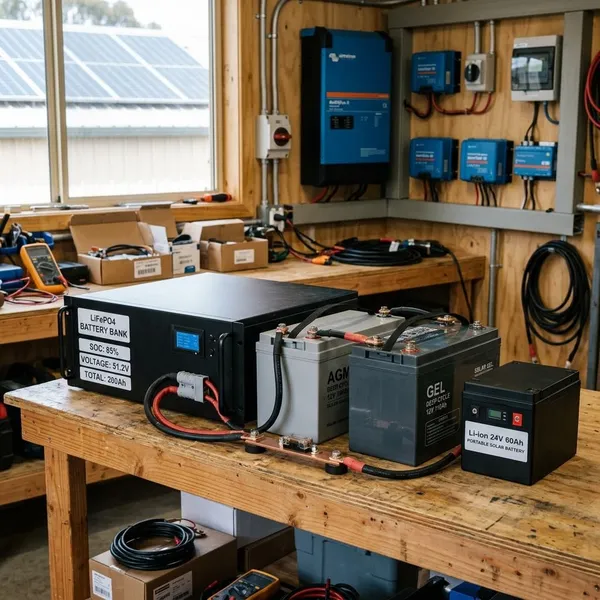
Battery choice affects how much energy you can actually use, how often the system needs attention, how long it lasts, and how easy it is to live with. For most buyers, the practical comparison is lithium, especially LiFePO4, versus AGM.
Lithium batteries provide the best long-term value
Lithium batteries usually cost more upfront, but they tend to be the better choice for frequent off-grid use. They are lighter, often allow deeper usable discharge, recharge efficiently, and are better suited to repeated cycling than most lead-based batteries.
LiFePO4 is commonly preferred for cabins, RVs, home backup, and off-grid packages because it is known for stable performance and long cycle life. If you use the system every week or every day, the higher purchase price can make more sense than replacing cheaper batteries sooner.
AGM batteries offer affordable energy storage
AGM batteries can still be reasonable for budget-sensitive or occasional-use systems. A seasonal cabin visited a few times a year, or a backup setup used only during rare outages, may not need the same long-cycle performance as a daily off-grid home.
The tradeoff is weight, lower usable capacity, and shorter cycle life when deeply discharged. If you choose AGM, size the bank conservatively and avoid draining it hard on a regular basis.
Battery capacity determines available backup time
Capacity is your runtime cushion. A larger battery bank will not make a weak inverter run bigger tools, but it will keep essential loads running longer overnight or through bad weather.
A simple planning check is usable watt-hours divided by load watts. A 2,000Wh usable battery running a steady 500W load gives roughly four hours before losses and real-world variation. For essentials such as refrigeration, internet, and lighting, this kind of math is more useful than relying on vague "whole-home backup" claims.
Conclusion
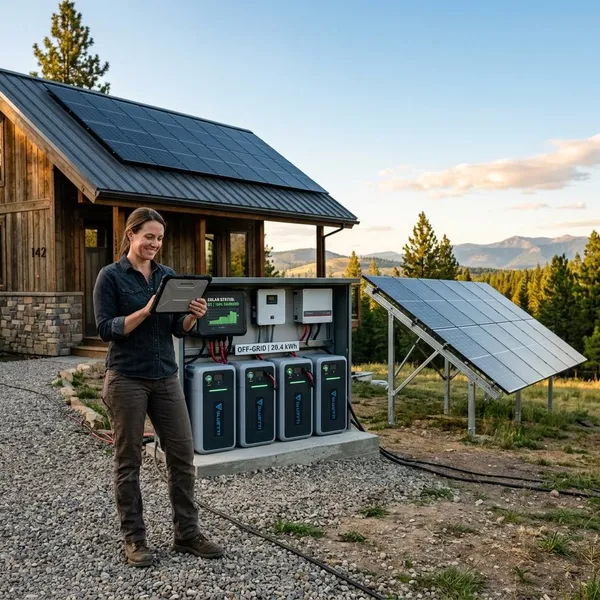
The best choice is the package that matches your real routine: a portable unit for light backup and travel, a medium system for essential cabin, RV, or tiny-home loads, and a larger planned installation for daily off-grid living or serious workshop use. Check daily watt-hours first, then battery reserve, inverter surge, and solar recharge ability; if one of those four is undersized, the system will feel limited no matter how good the marketing looks.