
Which Portable Power Station Is Best for You?
Choose the best buy portable power station by battery size, output, charging, and portability.
The best portable power station is one that can power your essential devices for as long as you need without being too heavy, too expensive, or too limited for real use. For phones, tablets, and laptops, a compact model with moderate capacity may be enough. For camping, RV travel, medical devices, or home backup during outages, you'll want to focus on battery capacity, inverter output, charging speed, and the types of ports your equipment requires.
What Is the Best Portable Power Station to Buy?
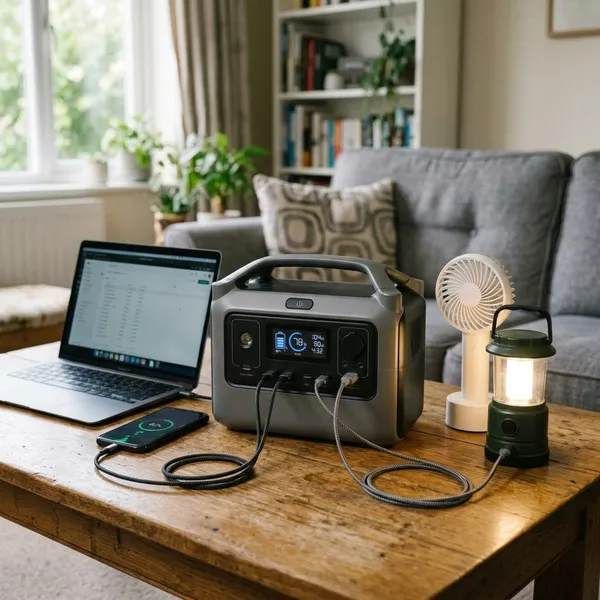
A good choice is less about buying the biggest model and more about matching the station to a realistic job. For most people, that means deciding whether the unit is mainly for short outages, camping, remote work, medical comfort devices, or heavier home backup.
All-around models fit most everyday needs
For everyday use, the sweet spot is often a mid-size station with enough battery for essentials and enough output for mixed devices. This is the range I would look at first if you want one unit for Wi-Fi, phones, laptops, lights, a fan, and occasional small-appliance use.
- Good fit: renters, home offices, weekend camping, short blackouts.
- Watch out for: weak AC output, too few USB-C ports, slow recharging.
- Practical target: enough capacity for several hours of essentials, not every appliance in the house.
This category usually gives the best balance of cost, runtime, and portability. It is also where many buyers avoid the two common mistakes: buying a tiny unit that cannot handle real backup needs, or buying a huge one that rarely leaves the closet.
High-capacity models fit home backup needs
If your priority is keeping a refrigerator, freezer, modem, lights, and a few comfort devices running during outages, a high-capacity model makes more sense. Look for both a larger battery and a stronger inverter, because stored energy alone does not guarantee an appliance will start.
This is the better route for a family home in a storm-prone area or anyone who works from home and cannot lose internet and basic power for half a day. It is not the best choice if you need whole-home HVAC, electric heat, or unlimited runtime; those jobs may call for a generator or installed backup system.
Compact models fit travel and outdoor use
Compact stations are best when portability matters more than appliance support. They work well for phones, cameras, drones, tablets, small lights, laptops, and a fan at a campsite or in a parked car setup.
They are also easy to store for simple emergency charging. Just do not expect a small unit to run high-heat devices such as kettles, hair dryers, toaster ovens, or space heaters. If the trip is mostly about staying connected and keeping small gear charged, a compact station is often the better buy than a heavier home-backup model.
How to Choose the Right Portable Power Station Size
Size is the decision that affects almost everything else: price, weight, runtime, and what the station can actually power. Check three things in this order: the devices you must run, their wattage, and how many hours you need them.
| Use case | Typical station range | Best for | Not ideal for |
|---|---|---|---|
| Light travel | About 200Wh–500Wh | Phones, laptops, lights, cameras | Kitchen appliances or long outages |
| Mixed essentials | About 700Wh–1500Wh | Router, laptop, fan, lights, some fridge support | Running several heavy loads at once |
| Home backup | 1500Wh and above | Refrigeration, longer outages, multiple essentials | Easy carrying or whole-home power |
Battery capacity determines how long power lasts
Battery capacity is measured in watt-hours, or Wh. A 1000Wh station stores roughly twice as much energy as a 500Wh station, although real usable power is lower because the inverter and electronics consume some energy.
- List the devices you actually need during your most likely situation.
- Find each device's running wattage from the label, manual, or a plug-in watt meter.
- Multiply watts by hours, then add a buffer instead of buying exactly the number you calculate.
For example, a router that needs to stay on overnight is a different problem from a laptop you only charge once. A few small devices can be handled by a modest station, while refrigeration or medical comfort equipment deserves more battery margin.
Output wattage determines what devices can run
Output wattage decides whether the station can power a device at all. A large battery with a weak inverter may last a long time on small electronics but still fail with a microwave, coffee maker, pump, or refrigerator compressor.
Check both continuous output and surge output. Continuous output is the steady load the station can handle; surge output is the short burst some motors and compressors need when they start. If the device has a motor, heating element, or compressor, treat the output rating as a must-check item rather than a minor detail.
Power usage determines the right station size
A station that is perfect for one household can be the wrong fit for another. A renter who wants phone charging, Wi-Fi, and a lamp during a short outage can stay in a lighter size range. A family trying to protect food in a refrigerator and freezer during summer outages should think bigger and pay closer attention to surge power.
- Occasional backup: choose enough capacity for communication, lighting, and charging.
- Work-from-home backup: prioritize router runtime, laptop charging, and pass-through reliability.
- Food preservation: size for refrigerator startup surge and several hours of cycling load.
- Frequent outdoor use: do not ignore weight, handle design, and car charging.
Key Features to Check Before Buying
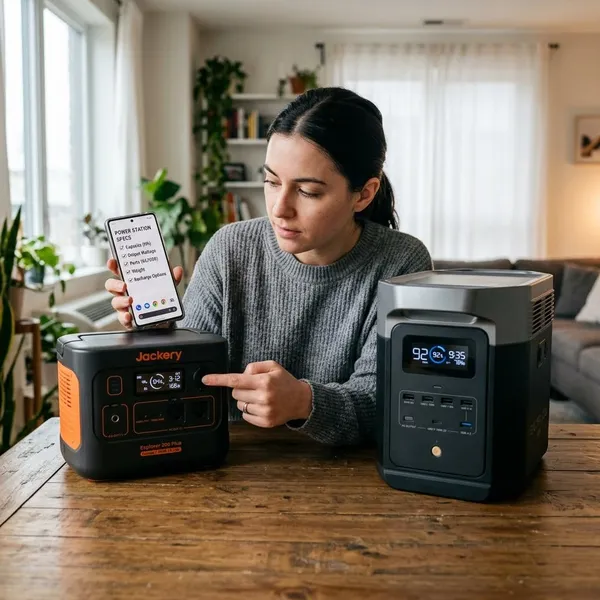
Once the size is right, compare the features that change daily ownership. Two stations with similar capacity can feel very different if one charges faster, has better ports, uses a longer-life battery chemistry, or is awkward to carry.
Battery chemistry affects lifespan and safety
LiFePO4 batteries are often the stronger choice for long-term ownership because they are commonly rated for more charge cycles and are valued for stable performance. That matters if the station will be used often for outages, camping, or daily work setups.
Older lithium-ion designs can still make sense when low weight is the top priority. If the unit will mostly sit in a closet for rare emergencies, the lighter option may be acceptable. If you expect regular use for years, LiFePO4 is usually worth prioritizing.
Ports and outputs affect device compatibility
Count the devices you may plug in at the same time, not just the total number of ports on the product page. A useful station should have enough AC outlets for household gear and enough USB-C output for modern laptops, tablets, and phones.
- USB-C wattage: important for larger laptops.
- AC outlet spacing: matters when plugs or adapters are bulky.
- 12V output: useful for car-style accessories and some camping gear.
- Readable display: helps during outages when you need quick battery and load information.
Charging options affect daily convenience
Fast wall charging is one of the most practical features if you use the station often. A model that takes most of a day to refill can be frustrating after a blackout, while a faster-charging unit is easier to keep ready.
Car charging is useful for road trips, and pass-through charging can help when you want the station connected to a router, desk setup, or overnight charging area. If the station will live at home as emergency gear, make sure the charging method fits your routine rather than assuming you will remember to top it up later.
Solar input and UPS features improve flexibility
Solar input is useful when grid power is unavailable, but it should be treated as an extension tool rather than unlimited free power. The station's maximum solar input, panel compatibility, weather, shade, and season all affect how useful solar charging will be.
UPS support is worth considering if you want a modem, router, desktop computer, or small workstation to stay on during brief power interruptions. Check the model's switchover behavior and supported use cases, because not every "UPS" feature is meant for every sensitive device.
What Can a Portable Power Station Run?
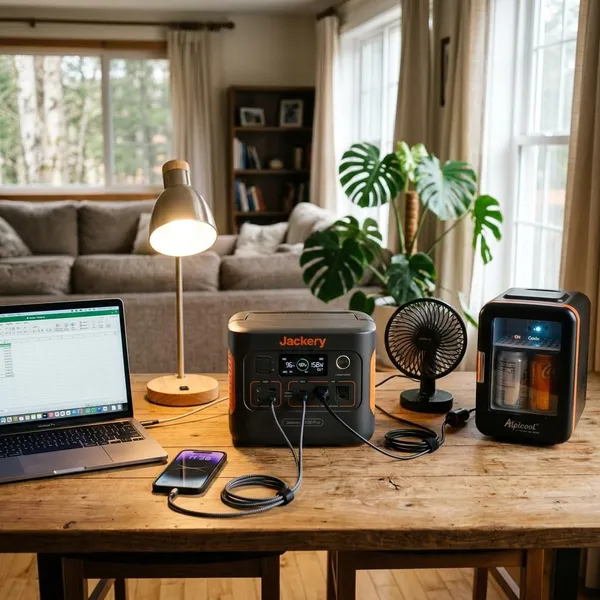
A portable power station can run devices that stay within its output limit and available battery capacity. The practical question is not just "will it turn on?" but "will it run long enough to be useful?"
Small stations power phones and personal devices
Small stations are ideal for low-draw gear: phones, tablets, cameras, drones, LED lights, small fans, speakers, and many laptops. They are much more flexible than a standard power bank because many include AC outlets as well as USB ports.
For a CPAP machine or similar overnight device, do not guess. Look at the device's power draw, especially if a humidifier or heated tube is used, and choose enough battery margin for the full night.
Medium stations power home essentials
Medium stations are often the most useful single-unit choice for home essentials. They can usually handle a mix of Wi-Fi, lights, laptops, fans, televisions, and some appliance use in rotation.
This is where a realistic blackout plan helps. Instead of trying to run everything, pick the loads that matter most: communication, light, refrigeration, and one or two comfort items. Rotating devices can stretch the battery much further than leaving everything plugged in.
Is a Portable Power Station Worth Buying?
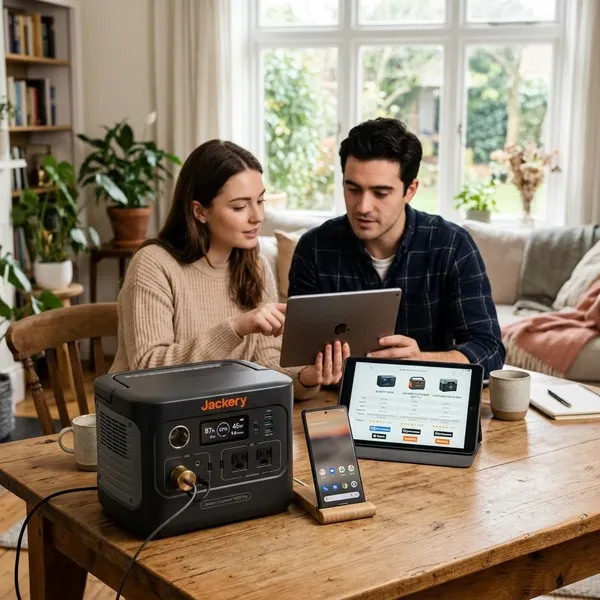
A portable power station is worth buying if it solves a specific power problem you actually have: short outages, apartment-safe backup, camping power, home office continuity, or quiet overnight electricity. It is less convincing if you expect it to replace a whole-home generator without changing how you use power.
Portable power stations fit backup and outdoor needs
One well-sized station can cover several realistic situations. It can sit charged at home for storm season, then go in the car for a weekend trip, outdoor workday, tailgate, or campsite setup.
The value is strongest when the same unit serves both planned and unplanned use. If it only sits unused for years, a smaller emergency model may be enough. If you expect frequent camping plus backup at home, spending more for better capacity and charging speed is easier to justify.
Conclusion
The smartest purchase is the station that covers your essential devices with enough runtime, enough inverter strength, and a weight you will actually tolerate. Go compact for travel and charging, mid-size for mixed household essentials, and larger only when refrigeration, longer outages, or multiple devices truly matter. If you check your must-run devices first, the right choice becomes much clearer than chasing the largest battery on the shelf.