
Best Battery for Solar Panel Systems and How to Choose
Compare the best battery for solar panel needs with sizing tips, battery types, and top options for backup or off-grid use.
The best battery for solar panel use is not simply the one with the biggest capacity number. For most homes, start by matching the battery to your setup: Tesla Powerwall 3 for a new grid-tied system, Enphase IQ Battery 10C for many existing Enphase solar systems, and EG4 WallMount 314Ah for off-grid or expandable storage projects.
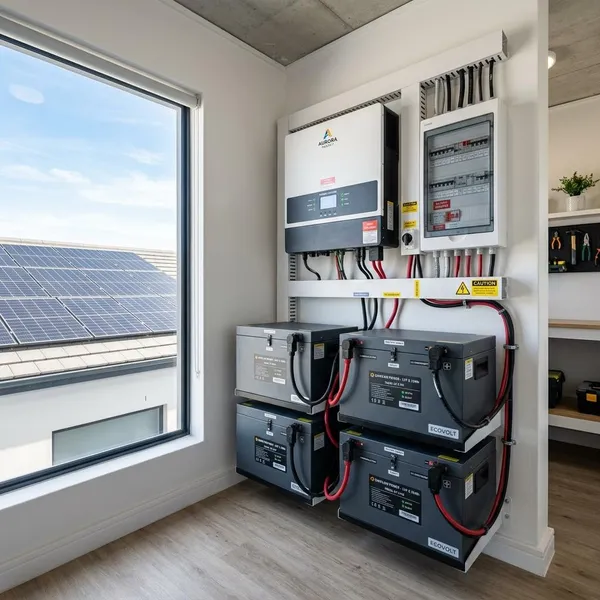
Best Batteries for Solar Panel Systems
A good solar battery has to do three jobs well: store enough usable energy, deliver enough power for the loads you care about, and fit the equipment already in your home. Capacity matters, but compatibility and output often decide whether the system feels useful during a real outage.
These three options make sense for different buyers:
| Battery | Best fit | Watch before buying |
|---|---|---|
| Tesla Powerwall 3 | New grid-tied solar-plus-storage systems | Best when the whole project is designed around it |
| Enphase IQ Battery 10C | Adding storage to an existing Enphase solar system | May need careful load planning for whole-home backup |
| EG4 WallMount 314Ah | Off-grid systems and expandable battery banks | Requires more attention to inverter pairing and installation design |
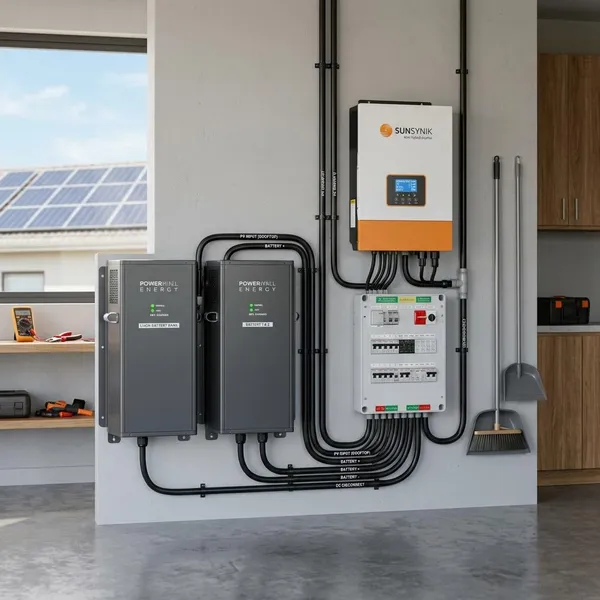
Best Overall Tesla Powerwall 3
Tesla Powerwall 3 is the strongest all-around pick for many new grid-tied solar installations because it combines storage, strong output, and a polished monitoring experience. It is especially attractive if you want backup that feels close to normal home use rather than only keeping a few outlets alive.
The main reason to choose it is power delivery. If your outage plan includes central air, a well pump, kitchen appliances, or several loads running at once, output matters as much as stored energy. A large battery with weak power limits can still disappoint you when a motor or compressor starts.
The caution is retrofit fit. Powerwall 3 is usually easier to justify when the installer is planning the solar array, inverter strategy, gateway, and backup circuits together from day one. If you already have solar equipment on the roof, ask for a compatibility review before assuming it is the simplest upgrade.
Best for Existing Solar Enphase IQ Battery 10C
Enphase IQ Battery 10C is a practical choice when you already have an Enphase-based solar system and want to add storage without turning the project into a full redesign. Its biggest advantage is ecosystem fit: monitoring, controls, and installer familiarity can all be cleaner when the original solar system already uses Enphase microinverters.
- Good use case: backing up refrigerators, lights, internet, device charging, and selected outlets.
- Less ideal use case: expecting one battery to run every heavy load in a larger all-electric home.
- Key check: confirm which circuits will be backed up before comparing prices.
For a homeowner who mainly wants resilience during short outages and better use of evening solar energy, this can be a smoother path than replacing major hardware.
Best for Off Grid Storage EG4 WallMount 314Ah
EG4 WallMount 314Ah is a strong fit for off-grid cabins, remote buildings, workshops, and custom storage systems where expansion and cost per usable kilowatt-hour matter. It is not as plug-and-play as a premium closed ecosystem, but that flexibility is exactly why many off-grid buyers consider it.
The best scenario is a system built by someone who is comfortable checking inverter compatibility, battery communication, protection equipment, local code requirements, and future expansion. For example, a cabin that starts with lighting, refrigeration, and internet may later add a freezer, pressure pump, or mini-split. A modular battery bank makes that growth easier than buying a fixed-size system that cannot expand cleanly.
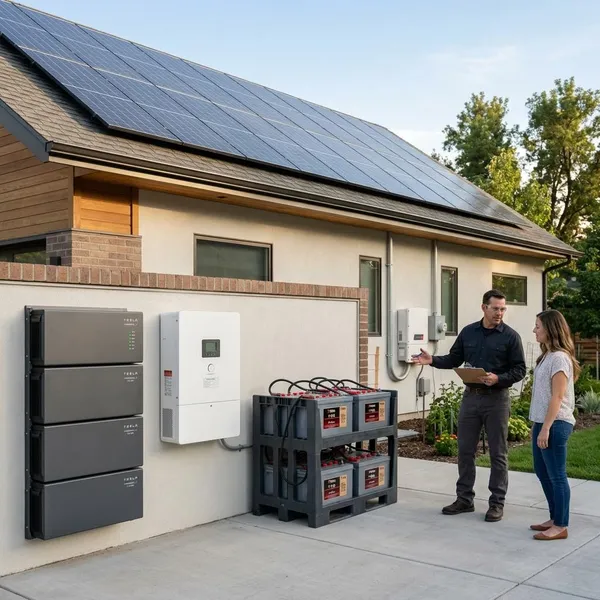
Which Battery Fits Your Solar Setup
The fastest way to narrow the choice is to name your project type first. A new grid-tied installation, a solar retrofit, and an off-grid system have different priorities, even if the battery capacities look similar on a sales sheet.
Use this order before comparing quotes: check your existing inverter setup, decide whether you want essential-load or whole-home backup, then look at battery capacity and price. Many expensive mistakes happen when buyers start with the battery brand instead of the electrical design.
Tesla Powerwall 3 for new grid-tied systems
Powerwall 3 makes the most sense when solar, storage, backup hardware, and monitoring are being designed as one package. A new project gives the installer room to size the inverter, plan backup circuits, and avoid awkward workarounds around older equipment.
It is also a better match for households that want higher backup performance. If your goal is to keep a refrigerator, Wi-Fi, and a few lights running, you may not need this level of system. If you want air conditioning, cooking, or larger pumps to remain realistic during outages, Powerwall 3 becomes more compelling.
Enphase IQ Battery 10C for solar retrofits
For an existing Enphase solar owner, the IQ Battery 10C is often the least disruptive upgrade path. The practical benefit is not only the battery itself; it is the chance to keep monitoring and control inside a familiar platform.
Before choosing it, ask the installer for a backed-up-loads list rather than a vague “home backup” promise. A retrofit that protects the fridge, modem, lights, and several outlets can be excellent value. A retrofit that quietly excludes the loads you assumed were covered will feel frustrating when the grid actually goes down.
EG4 WallMount 314Ah for off-grid expansion
EG4 WallMount 314Ah fits buyers who see the battery bank as part of daily power, not just emergency backup. That changes the buying logic: cycle life, serviceability, expansion, and inverter support become more important than app polish.
- Choose it when: you are building an off-grid or hybrid system with room to expand.
- Be careful when: you want a hands-off, single-brand installation with minimal design decisions.
- Check first: inverter compatibility, communication settings, battery protection, and local installation rules.
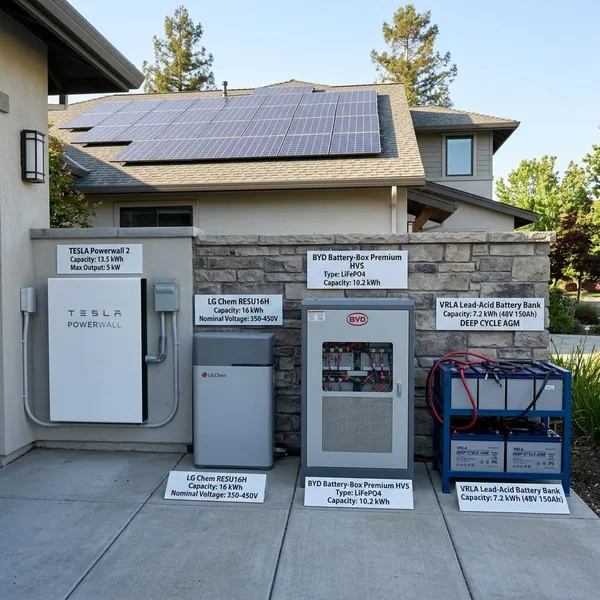
What Makes One Solar Battery Better Than Another
The best solar battery is the one that matches your loads and still performs well years later. Do not judge by advertised capacity alone. Usable capacity, output, chemistry, efficiency, warranty limits, and expansion options all affect the real value.
A simple priority order helps: safety and compatibility first, usable storage second, power output third, then long-term warranty and expansion. Price only makes sense after those basics are clear.
Battery chemistry and thermal stability
Lithium iron phosphate, often shortened to LFP, is commonly preferred for home solar storage because it is known for stable operation and long cycle life when used in a properly designed system. Lead-acid batteries still appear in some budget or light-duty setups, but they are heavier, less efficient, and usually less appealing for daily cycling.
Thermal stability is not a detail to ignore if the battery will sit in a garage, utility room, exterior cabinet, or hot climate. Ask where the battery will be installed, what temperature range it is designed for, and whether the installer has followed the manufacturer’s spacing and ventilation requirements.
Usable capacity and depth of discharge
Usable capacity is the number to care about, not just nameplate capacity. If two batteries both look like similar sizes but one allows more regular discharge, the practical backup time can be different.
Depth of discharge tells you how much of the battery can be used without pushing it outside normal operating limits. For a homeowner, the practical question is simple: how many kilowatt-hours are actually available for the loads you plan to back up?
Continuous and surge power
Energy is how long the battery can run something. Power is what it can run at the same time. This difference matters when motors, compressors, pumps, or HVAC equipment start up.
A small essential-load backup panel may work fine with modest output. Whole-home backup is different. If someone is cooking while the fridge cycles on and the air conditioner starts, the battery and inverter need enough continuous and surge capability to handle that moment.
Efficiency and expected cycle life
Round-trip efficiency tells you how much stored energy you get back after charging and discharging. Higher efficiency means more of your solar production remains useful instead of being lost during conversion.
Cycle life matters most when the battery will be used every day for evening energy shifting. A battery used only during rare outages may age more by time and temperature than by cycling, while a battery used daily needs stronger long-term cycling performance.
Warranty and expansion options
A solar battery warranty should be read for conditions, not just years. Look for retained capacity, throughput limits, labor coverage, installer requirements, and what happens if the system is expanded later.
- Best sign: clear warranty terms that explain both time and energy-throughput limits.
- Red flag: a long warranty with unclear exclusions or support conditions.
- Future-proofing check: ask whether another battery can be added later without replacing major hardware.
Expansion is worth thinking about even if today’s loads seem modest. An EV, heat pump, freezer, home office, or workshop can change the storage calculation quickly.

How Much Solar Battery Storage You Need
Battery sizing should start with your real household use, not an online average. The right size depends on what you want to keep running, how long you want backup, and whether your solar array can recharge the battery during the day.
For many homes, the choice is not “small battery or huge battery.” It is essential-load backup versus whole-home backup. That one decision usually changes the budget more than any brand comparison.
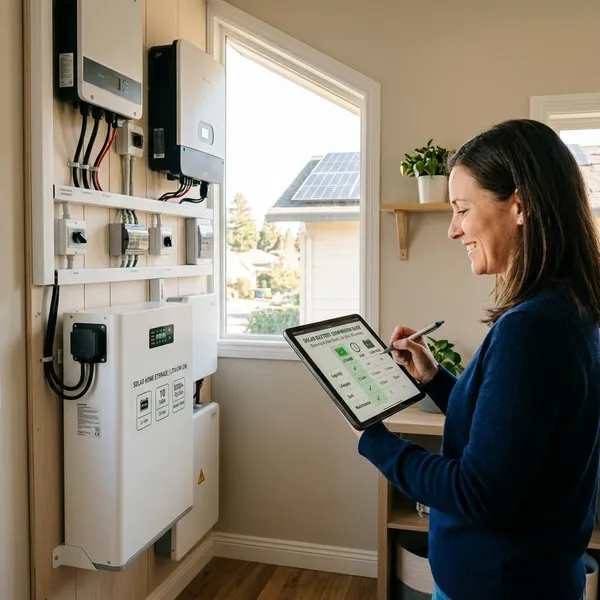
Calculate daily energy consumption
Start with your utility bills or energy monitoring app and find your average daily kilowatt-hour use. Then separate daytime use from evening and overnight use, because stored solar is usually most valuable after the panels stop producing.
Season matters. A battery that feels generous in spring may feel small during a summer heat wave or a winter period with heavy heating loads. Check at least a few high-use months before sizing too tightly.
Separate essential loads from whole home backup
Essential-load backup usually covers refrigeration, lights, internet, charging, a few outlets, and sometimes a garage door opener or medical device circuit. This is often the sensible choice when outages are short and you mainly want comfort and safety.
Whole-home backup is a different budget category. HVAC, electric cooking, water heating, laundry, and well pumps can raise both storage and power requirements. If you want those loads included, ask the installer to show the load calculation rather than relying on a broad promise.
Choose the required backup duration
Decide whether you need a few evening hours, overnight coverage, or a longer outage plan with daytime solar recharge. A suburban home with rare short outages may be fine with a smaller system. A remote property, storm-prone home, or household with work-from-home needs may justify more storage.
- Short outage goal: keep essentials running for several hours.
- Overnight goal: cover evening and night use until solar production returns.
- Resilience goal: plan for multiple cloudy or low-production periods with careful load control.
Match storage to solar production
A battery should be sized so your solar array can realistically recharge it. If the battery is too large for the array, it may sit partly empty after cloudy days. If it is too small, it may fill early and leave useful solar production unused.
Look at seasonal production, not just annual totals. Winter sun, roof orientation, shading, and local weather can all change how quickly the battery recovers after overnight use.
Allow for efficiency losses and future demand
No storage system returns every kilowatt-hour that goes into it. Leave some margin for conversion losses, battery aging, cold or hot weather performance, and the occasional day when energy use is higher than normal.
A practical sizing check is to list the loads you want, estimate how many hours each one must run, then add a buffer before choosing a battery size. If you are likely to add an EV, freezer, mini-split, heat pump, or workshop equipment, choose a system that can expand rather than one that only fits today’s habits.
Conclusion
Choose the battery that fits the job, not the one that sounds biggest in a comparison chart. Powerwall 3 is strongest when a new grid-tied system can be designed around it, Enphase IQ Battery 10C is often the cleaner retrofit for existing Enphase solar, and EG4 WallMount 314Ah makes more sense when off-grid expansion and storage value matter most. The smartest next step is to define your backed-up loads first, then ask installers to quote around that real use case.