
Best Solar Batteries for Home and Off-Grid
See how the best batteries for solar power storage compare on cost, sizing, and backup performance for home use.
The best batteries for solar power storage come down to how you plan to use them: daily off-grid cycling, short-term backup during outages, or adding storage to an existing solar panel system. For a new grid-tied home installation, the Tesla Powerwall 3 is one of the strongest mainstream choices; for a retrofit, the Enphase IQ Battery 10C is often the better fit; and for a custom off-grid setup, the EG4 WallMount 314Ah offers practical capacity and flexibility.
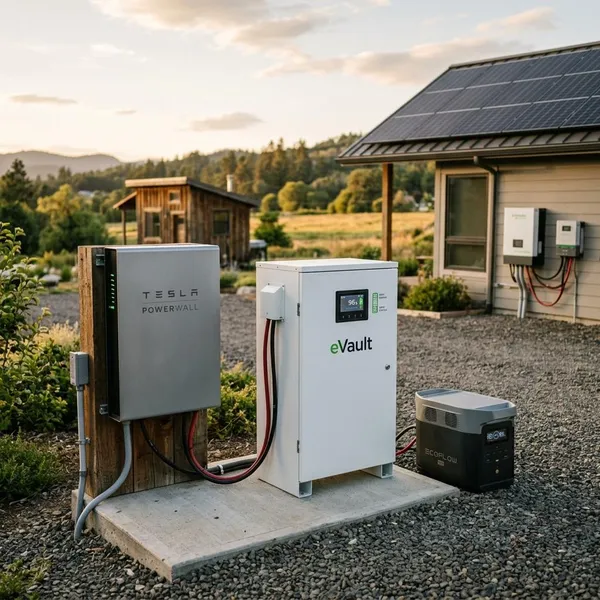
Three Solar Batteries Worth Considering
Before comparing battery chemistry or prices, decide what problem the battery needs to solve. A family that wants the fridge, lights, Wi-Fi, and a few outlets during outages has a very different need from someone powering a cabin every night from stored solar energy.
Best Overall Tesla Powerwall 3
Tesla Powerwall 3 is the strongest all-around option for many new residential solar-plus-storage projects. It suits homeowners who want a clean, integrated system with app-based monitoring, backup capability, and fewer separate equipment decisions.
It is most appealing when you want a managed home backup experience rather than a custom battery bank. The tradeoff is that installation and expansion usually depend heavily on certified installer availability and the way your home’s loads are configured.
Best for Solar Retrofits Enphase IQ Battery 10C
Enphase IQ Battery 10C is a better fit when the solar panels are already installed and working well. Its AC-coupled design can make storage easier to add without tearing out a functioning inverter setup.
- Best case: an existing Enphase microinverter system.
- Main advantage: retrofit flexibility with unified monitoring.
- Check first: whether your current electrical panel and backup loads need changes.
Best for Off Grid Systems EG4 WallMount 314Ah
EG4 WallMount 314Ah makes the most sense when the battery is part of a larger custom power system. It is not the most polished consumer-style product, but it gives off-grid users the kind of LFP storage that can be built into a scalable battery bank.
Think of a rural workshop, cabin, farm building, or full-time off-grid home where the battery cycles regularly. In that situation, compatibility with the inverter, charge controller strategy, generator backup, and installation environment matters more than brand familiarity.
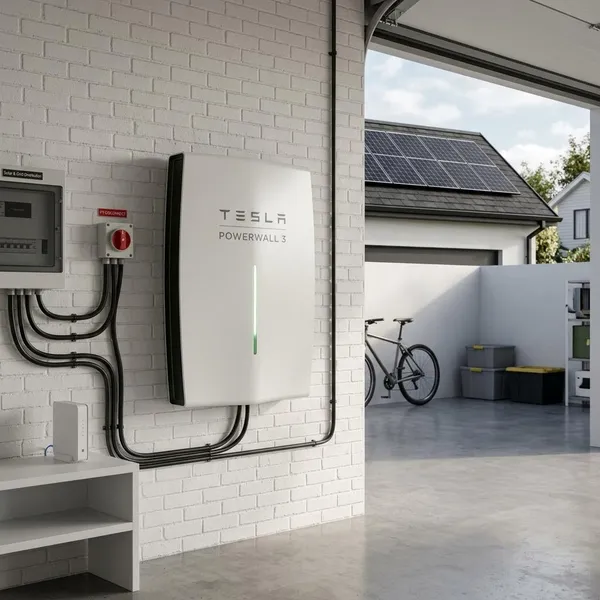
Best Overall Tesla Powerwall 3
Tesla Powerwall 3 is the easiest first shortlist choice for many grid-tied homes because it combines battery storage, solar integration, backup control, and monitoring in one familiar package. It is especially strong when the homeowner wants a straightforward installation path and does not want to compare separate batteries, inverters, and control systems piece by piece.
The main mistake is assuming one battery automatically means whole-home backup. Your actual backup experience depends on which circuits are backed up, how much power large appliances draw, and how carefully the installer designs the system around real household use.
Integrated solar and battery design
Powerwall 3 works best when solar and storage are being planned together. Its integrated design can reduce the number of separate components and make the system easier for a typical homeowner to understand after installation.
This matters in a new build or major solar upgrade where you want a cleaner quote, fewer compatibility questions, and one monitoring experience. If you prefer mixing brands or designing a highly customized system, that same integration may feel more limiting.
Strong home backup performance
For outage backup, Powerwall 3 is useful because it can support more than just tiny emergency loads when the system is designed properly. A practical backup plan usually starts with refrigeration, lights, internet equipment, garage access, and essential outlets before adding heavier loads.
- Good fit: short outages where comfort and basic household function matter.
- Needs caution: central air, electric ovens, water heating, pumps, and EV charging.
- Ask your installer: which loads are backed up and what happens when several start at once.
Expansion and installation considerations
One unit may be enough for essential-load backup in an efficient home, while larger homes or broad backup goals may require multiple batteries. Do not size the system from a rough average alone; use your electric bills, overnight usage, and the specific appliances you expect to run during an outage.
Also compare the installed price, not only the battery price. Backup panel work, permitting, gateway equipment, labor, and local installer support can change the real value of the quote.
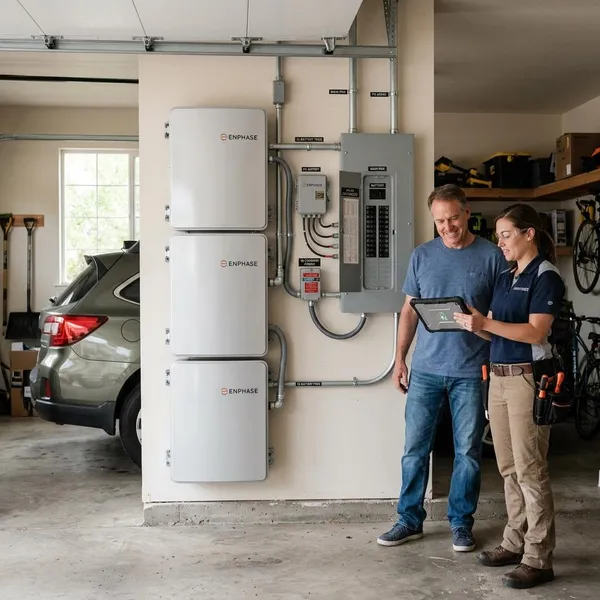
Best for Solar Retrofits Enphase IQ Battery 10C
Enphase IQ Battery 10C stands out when the goal is to add storage to an existing solar array without rebuilding the entire system. Retrofit projects are often less about finding the newest battery and more about avoiding unnecessary replacement of equipment that still works.
If your solar panels were installed a few years ago and your main frustration is sending excess power back to the grid or losing power during outages, Enphase is worth a close look. It is especially natural for homes already using Enphase microinverters.
AC-coupled retrofit flexibility
AC coupling is the reason Enphase is so retrofit-friendly. In many homes, it allows a battery to be added on the AC side of the system rather than forcing a full inverter replacement.
That does not mean every existing solar system is automatically ready. The installer still needs to check your current inverter setup, electrical panel, backup configuration, utility rules, and whether the system will operate the way you expect during an outage.
Modular backup capacity
The modular approach is useful if you want to start with essential backup and expand later. That can be smarter than buying the largest possible setup on day one, especially if you are still learning how your household uses stored energy.
- Start small when: you only need lights, refrigeration, Wi-Fi, and a few outlets.
- Expand later when: outages are longer or your household energy use increases.
- Avoid: backing up every load without checking runtime and surge demand.
Enphase ecosystem compatibility
For an existing Enphase home, staying in the same ecosystem can make monitoring, troubleshooting, and installer support simpler. Solar production, battery behavior, and backup settings are easier to follow when they are not split across unrelated platforms.
This is less important for a homeowner who wants a fully custom system, but it is valuable for someone who wants storage to feel like a clean upgrade rather than a second project bolted onto the first one.
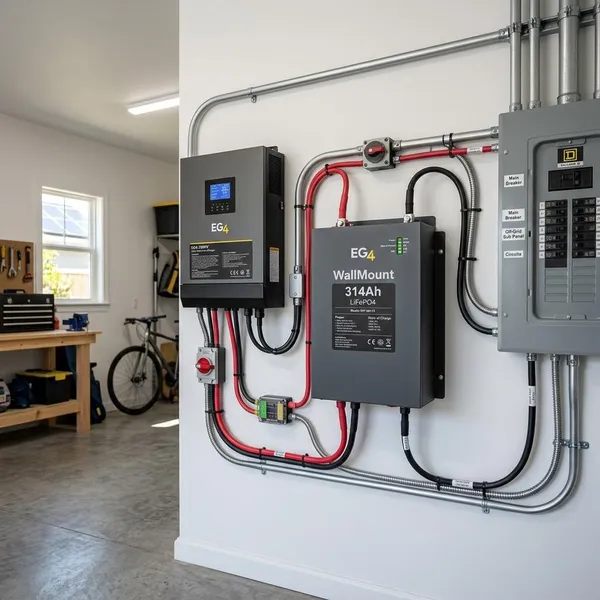
Best for Off Grid Systems EG4 WallMount 314Ah
EG4 WallMount 314Ah is aimed at a different buyer than Tesla or Enphase. It belongs in conversations about off-grid homes, remote buildings, workshops, and custom battery banks where the system designer is matching batteries with inverters, solar charge control, generator support, and load panels.
That makes it a strong choice for daily-use storage, but not a casual plug-and-play decision. If the battery will carry your home through nights, cloudy days, and seasonal changes, the design around the battery is just as important as the battery itself.
LFP storage for off-grid use
LFP, also called LiFePO4, is a practical chemistry for off-grid use because it generally handles frequent cycling better than older lead-acid banks and requires less routine attention. That matters when stored solar power is part of everyday life, not just emergency backup.
For a weekend cabin used a few times a year, the lowest upfront cost may still be tempting. For a year-round off-grid home, daily cycling usually pushes the decision toward LFP because replacement timing, usable capacity, and maintenance become much bigger cost factors.
Outdoor installation flexibility
A wall-mounted battery can help when indoor utility space is limited, but “outdoor capable” should not be treated as permission to install it anywhere. Shade, clearance, temperature range, moisture exposure, and service access all matter.
- Better location: protected, shaded, accessible, and within rated conditions.
- Riskier location: direct sun, poor drainage, freezing exposure, or cramped clearance.
- Check before buying: manufacturer installation limits and local electrical requirements.
Inverter pairing and system design
With EG4 and similar batteries, the inverter pairing can make or break the system. A battery may store enough energy on paper but still disappoint if the inverter cannot handle pump startup, compressor loads, workshop tools, or several appliances running at the same time.
- List daily kWh use from real appliances, not guesses.
- Separate essential loads from comfort or workshop loads.
- Choose autonomy days based on weather, generator access, and risk tolerance.
- Match surge demand before finalizing the inverter and battery bank.
Which Solar Battery Chemistry Makes Sense
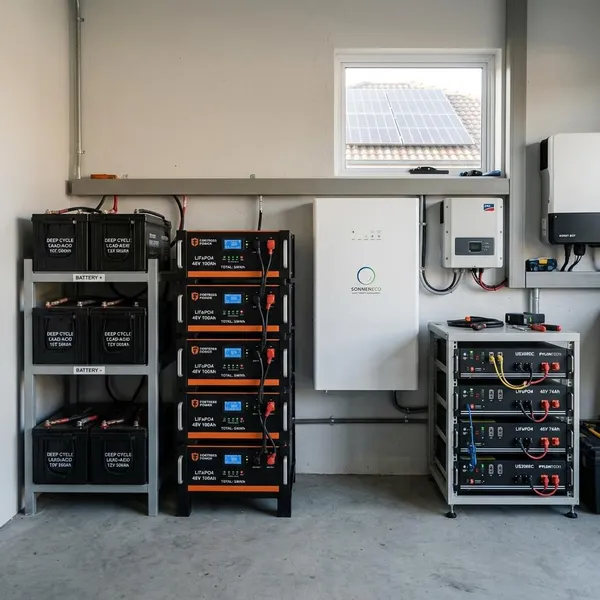
Battery chemistry affects lifespan, maintenance, usable capacity, safety characteristics, weight, and long-term cost. For most home solar buyers, the realistic comparison is between LFP, NMC, and lead-acid.
A simple decision rule works well: choose LFP for frequent cycling and long-term value, consider NMC when it comes inside a well-supported integrated system, and reserve lead-acid for low-cost, light-duty use where maintenance and earlier replacement are acceptable.
LFP batteries for long life and stability
LFP is the chemistry I would look at first for off-grid systems, frequent cycling, and homeowners who care more about long-term value than the lowest upfront price. It is known for stable performance, long cycle life, and lower maintenance compared with lead-acid.
The key practical advantage is usable energy. If you regularly drain and recharge the battery, LFP usually tolerates that pattern much better than a lead-acid bank.
NMC batteries for compact integrated systems
NMC can still make sense in polished home energy products where compact design, integrated controls, and installer support are strong. Chemistry alone should not rule a battery in or out.
For a grid-tied homeowner who mainly wants outage backup a few times a year, a well-designed NMC-based system may be perfectly reasonable if the warranty, software, support, and installation plan are strong. It is less likely to be my first choice for a custom off-grid bank that cycles hard every day.
Lead-acid batteries for low-cost occasional use
Lead-acid batteries are still useful for budget-sensitive, occasional-use setups such as a seasonal cabin, small shed system, or temporary backup project. They are familiar and often cheaper to buy upfront.
The tradeoff is clear: more maintenance, less usable capacity, and shorter life under deep cycling. If you expect daily use, lead-acid can become the expensive option once replacement and upkeep are included.
Conclusion
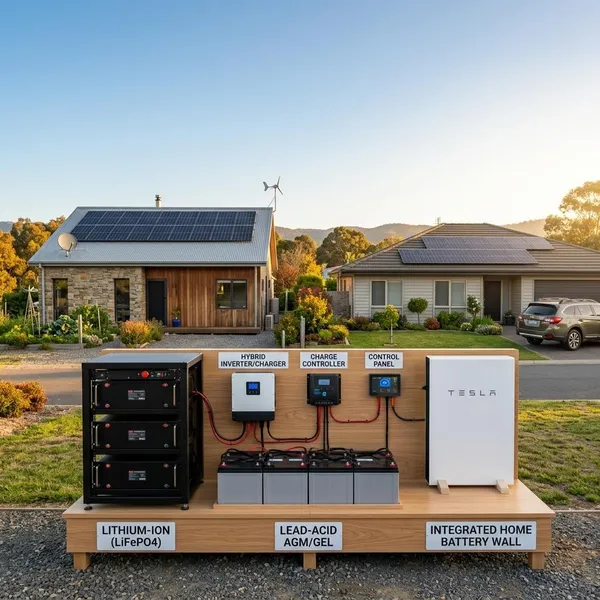
Choose the battery around the job it must do, not around the longest feature list. Powerwall 3 is the cleanest starting point for many new grid-tied backup systems, Enphase IQ Battery 10C is the safer shortlist for many retrofits, and EG4 WallMount 314Ah is better suited to custom off-grid designs where daily cycling and inverter pairing matter. The smartest first step is to list your essential loads and usage pattern before asking for quotes, because that will quickly show whether you need simple backup, flexible retrofit storage, or a true daily-use battery bank.