
Which 1000 Watt Portable Solar Generator Gives You the Best Value
Compare the best 1000 watt portable solar generators for the money by runtime, output, charging speed, and value.
The best 1000 watt portable solar generators for the money deliver more than a low upfront price. A good model should provide enough usable battery capacity for your devices, a reliable inverter for everyday AC loads, practical solar input for off-grid recharging, and long-lasting battery chemistry such as LFP. Comparing these key specs helps you avoid underpowered units and choose a solar generator that offers real value for camping, backup power, RV use, or emergency preparedness.
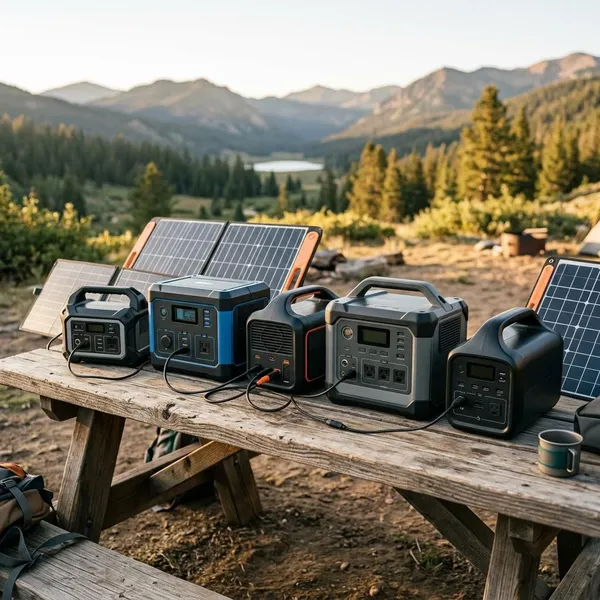
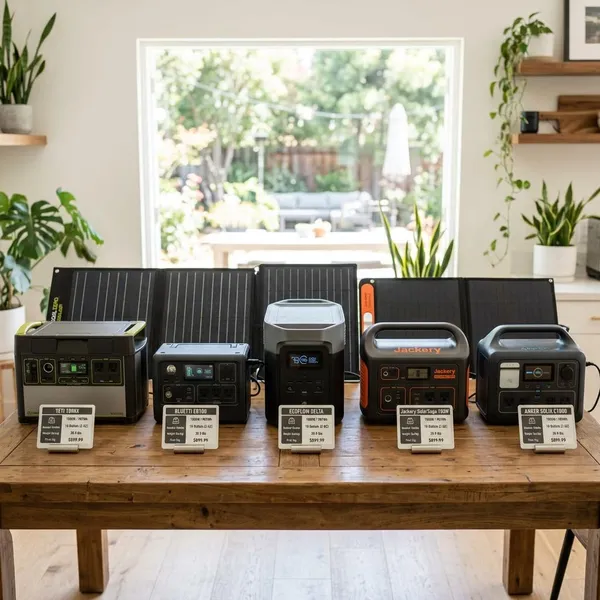
Best 1000 Watt Portable Solar Generators Compared
A 1000 watt solar generator can mean different things depending on the brand. Some models are close to 1000Wh of battery capacity, some advertise around 1000W of AC output, and several go higher on output while staying in the same practical size class. That is why value depends on what you need to run, not just the biggest number on the product page.
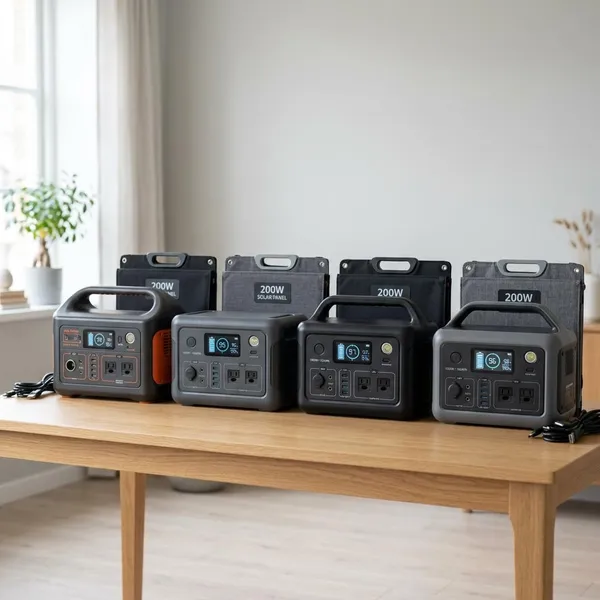
| Model | Best fit | Why it stands out |
|---|---|---|
| EcoFlow DELTA 3 Plus | Most buyers who want one balanced unit | Strong everyday mix of output, charging speed, app control, and LFP battery life |
| BLUETTI AC180 | Value-focused home backup and camping | Good capacity and inverter strength for the price, with durable LiFePO4 chemistry |
| Jackery Explorer 1000 v2 | Camping and lighter travel use | Simple controls and easier carrying for weekend trips and mobile setups |
| Anker SOLIX C1000 Gen 2 | Fast recharge needs | Useful when short charging windows matter more than expansion |
| DJI Power 1000 V2 | Higher-output compact power | Better fit for devices that need stronger inverter headroom |
| Jackery Explorer 1000 Plus | Future expansion | Good choice if your backup needs may grow beyond the base battery |
Best Overall EcoFlow DELTA 3 Plus
The EcoFlow DELTA 3 Plus is the safest all-around pick if you want one station for both short outages and travel. It offers the kind of balanced setup that matters in real use: enough AC output for common essentials, quick charging when you only have a short window, and LFP battery chemistry for frequent cycling.
It makes the most sense for a household that wants to keep a router, phones, laptops, lights, a fan, or a small appliance going without buying a much larger backup system. If you only camp once or twice a year, it may be more station than you need; if you want one dependable middle-size unit, it is hard to beat.
Best Value BLUETTI AC180
Pick the BLUETTI AC180 if your main question is, “How much usable backup can I get without overpaying?” It usually competes well on price while still offering practical inverter output, a useful battery size, and LiFePO4 battery life.
- Good for: outage essentials, cabin use, car camping, routers, lights, laptops, fans, and many CPAP setups.
- Check first: current bundle pricing, solar panel cost, and whether your highest-draw appliance has a startup surge the inverter can handle.
- Skip it if: you need the lightest camping station or a system that can expand much further later.
Best for Camping Jackery Explorer 1000 v2
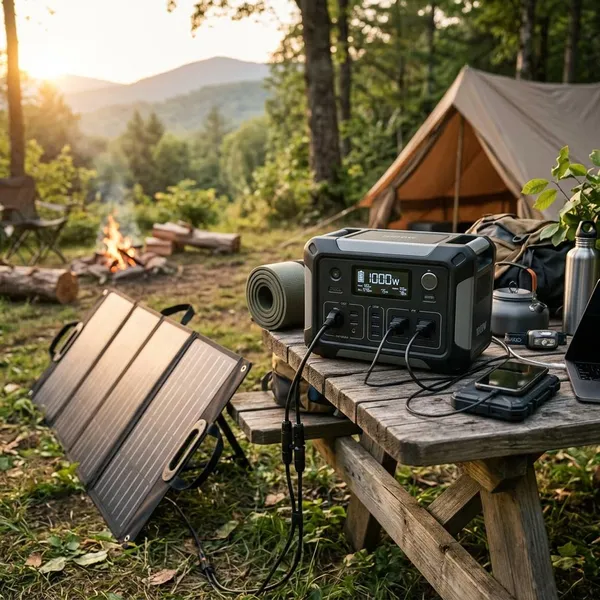
For a weekend campsite, the Jackery Explorer 1000 v2 has the right kind of appeal: it is simple, portable, and not overloaded with features that only matter in a home backup setup. That is useful when you are carrying gear from the car to a tent site and mainly need phones, lights, camera batteries, a laptop, or a fan.
The tradeoff is growth. If you expect multi-day outages at home or want to add more battery capacity later, another model may be a better long-term buy. For occasional camping and road trips, though, easy handling can be worth more than maximum expansion.
Best for Fast Charging Anker SOLIX C1000 Gen 2
Charging speed is the Anker SOLIX C1000 Gen 2’s main advantage. That matters if you recharge at a powered campsite, top up before a storm, or only get power back briefly during an outage.
Fast charging is less important if the station will mostly sit in a closet for emergency use. It becomes much more valuable for frequent users who drain and refill the battery often, because the station spends less time waiting and more time ready.
Best High Output DJI Power 1000 V2
Inverter headroom is the reason to look at the DJI Power 1000 V2. Some devices do not draw huge power once running, but they can demand a short startup surge. A stronger inverter gives you more room for mini fridges, compact appliances, small tools, or electronics that briefly spike above their normal running wattage.
Do not confuse that with unlimited runtime. A high-output station in this size class may start more devices, but a 1000Wh-class battery can still drain quickly under heavy loads. It is best for short bursts and mixed essential loads, not long sessions with heat-producing appliances.
Best Expandable Jackery Explorer 1000 Plus
Choose the Jackery Explorer 1000 Plus if your needs may grow. A fixed-capacity station can be fine for phones, lights, and a router, but expansion support is useful if you later add a mini fridge, longer CPAP runtime, RV weekends, or multi-day outage planning.
The downside is that expandable systems are not always the easiest to carry. If the station will live mostly at home, that is a reasonable tradeoff. If you move it every weekend, weight and simplicity may matter more than future battery modules.
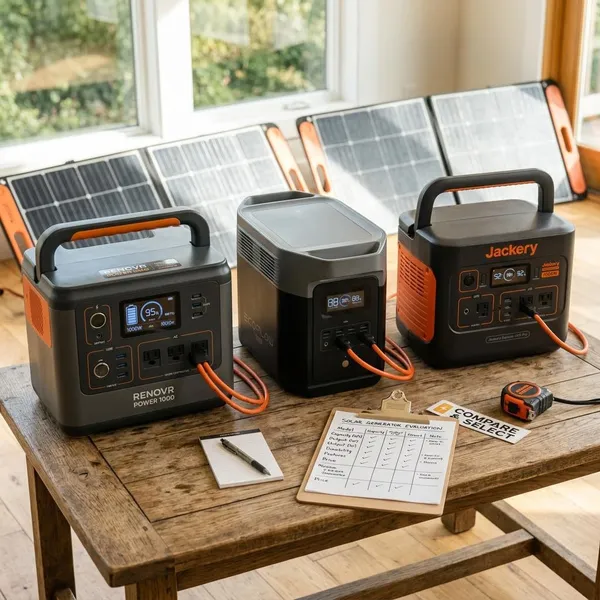
How We Picked the Best 1000 Watt Solar Generators
The most important buying mistake is treating “1000W” and “1000Wh” as the same thing. Watts tell you how much power the station can deliver at once. Watt-hours tell you how much energy the battery stores. A good pick needs both enough output to run your devices and enough usable capacity to keep them running for the time you expect.
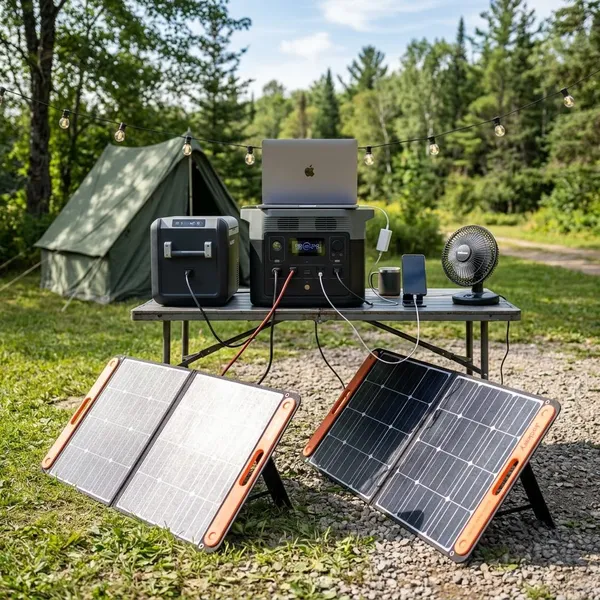
Usable battery capacity
Do not plan around the full battery number printed on the listing. When you use AC outlets, some energy is lost through conversion, so a station rated around 1000Wh may deliver less usable AC energy to your devices.
For rough planning, many buyers use a cautious estimate of about 85% to 90% usable AC capacity, then adjust based on the device and power station. That means a 1000Wh-class unit might behave more like roughly 850Wh to 900Wh for AC loads. It is not exact, but it keeps your runtime expectations from being too optimistic.
Continuous and surge output
Continuous output tells you what the station can supply steadily. Surge output tells you whether it can handle the short spike when a compressor, motor, or appliance starts.
This matters most for mini fridges, coolers, pumps, and some tools. A fridge that looks easy to run based on normal wattage can still fail to start if the surge is too high. Before buying, check both the running wattage and the startup requirement of your most demanding device.
LFP battery life and warranty
LFP, also called LiFePO4, is usually the better choice for regular use because it is commonly rated for many more charge cycles than older lithium-ion designs. That does not make every LFP station equal, but it is a strong sign of better long-term value.
- Occasional emergency use: LFP is still nice to have, but price and storage size may matter more.
- Weekly camping or van use: LFP becomes much more important because the battery will be cycled often.
- Long-term ownership: warranty length, service reputation, and replacement support matter almost as much as chemistry.
AC and solar charging speed
Fast AC charging is useful before bad weather, between campsite stops, or during short windows when grid power is available. Solar charging matters more if you plan to camp off-grid or keep a station useful through a longer outage.
The practical check is not just panel wattage. Look at the station’s maximum solar input, supported voltage range, connector type, and whether third-party panels are easy to use. A cheap station can become less attractive if the solar setup is expensive or slow.
Portability, connections, and overall value
Portability is more than the listed weight. Handle shape, storage footprint, port placement, and display readability all matter when you are using the station in a dark hallway, packed car, tent, or RV storage bay.
For overall value, I would check in this order:
- Your actual loads: start with the devices you truly need, not every appliance you own.
- Usable runtime: estimate watt-hours after conversion losses.
- Inverter headroom: confirm the station can start your highest-surge device.
- Charging plan: compare wall charging, solar input, and panel cost.
- Portability or expansion: choose the one that fits where the station will mostly live.
What a 1000 Watt Portable Solar Generator Can Run
A 1000Wh-class portable power station is excellent for essentials and poor for heavy heating or cooling. Think of it as a focused backup tool for communication, lighting, sleep equipment, fans, and small electronics, not a replacement for a whole-home generator.
Phones, laptops, routers, and lights
Phones, tablets, laptops, routers, modems, and LED lights are the easy wins. Their draw is usually low enough that a 1000Wh-class station can support them for many hours, especially if you avoid wasting power on unused AC outlets or chargers.
This is where the category shines during a short blackout. A remote worker who only needs Wi-Fi, a laptop, and a couple of lights may get far more practical value from this size station than someone trying to run kitchen appliances.
CPAP machines, TVs, fans, and mini fridges
Many CPAP machines, efficient TVs, fans, and mini fridges can work with a station in this class, but they should not be treated the same. A fan or TV is usually straightforward. A CPAP may run longer through a DC adapter if the model supports it. A mini fridge depends heavily on compressor startup surge and how often it cycles.
For overnight use, test the setup before relying on it during an outage. That is especially important for medical or sleep-related equipment, where “probably enough” is not a good backup plan.
Expected runtime at different power loads
A simple estimate is: usable watt-hours divided by average watts. If you assume about 850Wh of usable AC energy, the rough runtime looks like this:
| Average load | Rough runtime from 850Wh usable energy | Real-world note |
|---|---|---|
| 25W | About 34 hours | Router, modem, or small electronics may be in this range |
| 50W | About 17 hours | Useful for fans, lights, or light device charging |
| 100W | About 8.5 hours | Common planning number for a TV, laptop setup, or mixed light load |
| 300W | Under 3 hours if constant | Cycling appliances may last longer than a constant 300W load |
The key is average draw, not the highest label number. A fridge that cycles on and off may average far less than its running wattage, while a heater drawing steady high power will drain the battery quickly.
High-draw appliances that need a larger generator
Space heaters, electric kettles, hair dryers, toaster ovens, larger microwaves, and RV air conditioners are usually the wrong match for this class. Some high-output models may run certain appliances briefly, but the battery drain is so fast that it is rarely the best use of a 1000Wh-class station.
If your priority is cooling an RV, cooking electrically, or running heat for long periods, look at a larger power system instead. A smaller solar generator is better used for essentials that stretch the battery longer.
How to Choose the Right 1000 Watt Solar Generator
The right model depends on where it will spend most of its life. A camping-first buyer should care about weight, simple setup, and solar recovery. A home-backup buyer should care more about runtime, inverter surge, warranty, and whether the system can expand later.
List the devices you need to power
Start with a short essential list. For a home outage, that might be a phone, router, modem, laptop, LED lamp, fan, and CPAP machine. For camping, it may be a cooler, camera batteries, lanterns, a drone charger, and a small fan.
Keep “nice to have” devices separate. This prevents one rare appliance from pushing you into a heavier, more expensive station that does not match your normal use.
Calculate the required battery runtime
Write down how many hours each essential device needs to run, then multiply average watts by hours. Add the totals, then leave a margin for conversion loss and unexpected use.
- Light evening backup: router, laptop, phone, and LED lights may fit comfortably in this class.
- Overnight CPAP plus fridge: still possible in some setups, but testing and a larger margin are smarter.
- Multi-day outage plan: you will need solar recovery, extra battery capacity, or a larger system.
Check solar input and panel compatibility
If solar charging matters, check the station before choosing panels. The useful details are maximum solar input, supported voltage range, connector type, and whether the brand allows easy third-party panel use.
A practical rule: panels should match the station’s charging limits closely enough to recover meaningful energy during a sunny day. If the station accepts limited solar input, buying oversized panels may not help much.
Compare power station and solar bundle prices
Compare the total setup price, not just the power station price. Many listings show the station alone, while panels are sold separately or bundled at a discount.
A bundle is only good value if the included panel wattage fits the station and your use case. For occasional emergency backup, a smaller panel may be acceptable. For repeated off-grid camping, weak solar recovery can become frustrating quickly.
Choose between portability and expandability
Portability and expandability pull in different directions. A lighter fixed-capacity station is easier for car camping, tailgating, and weekend travel. An expandable model is better if the station will sit at home and grow into a longer outage setup.
If you are unsure, decide by movement. If you will carry it often, choose the model you will actually want to lift. If it will stay in one corner until the power goes out, extra battery support is usually more useful than saving a few pounds.
Conclusion
The best choice is the station that matches your real loads before it impresses you with headline specs. EcoFlow DELTA 3 Plus is the strongest all-around pick, BLUETTI AC180 is the value play, Jackery Explorer 1000 v2 is the easier camping choice, and the right alternative depends on whether you need faster charging, higher output, or future expansion. Check your devices, estimate runtime honestly, and avoid using a 1000Wh-class station for jobs that really need a larger system.