
AGM vs Gel Battery for Solar Which Fits Better?
Compare agm vs gel battery for solar by charge settings, cycle life, cost, and RV or backup use. Make the right choice. Read more.
If you are choosing between an AGM vs gel battery for solar, start with the charger, not the label on the battery. AGM is usually the easier and safer pick for backup, RV, and mixed-use solar systems, while gel only makes sense when your controller can hold the correct lower charging voltages and your use is truly deep-cycle.
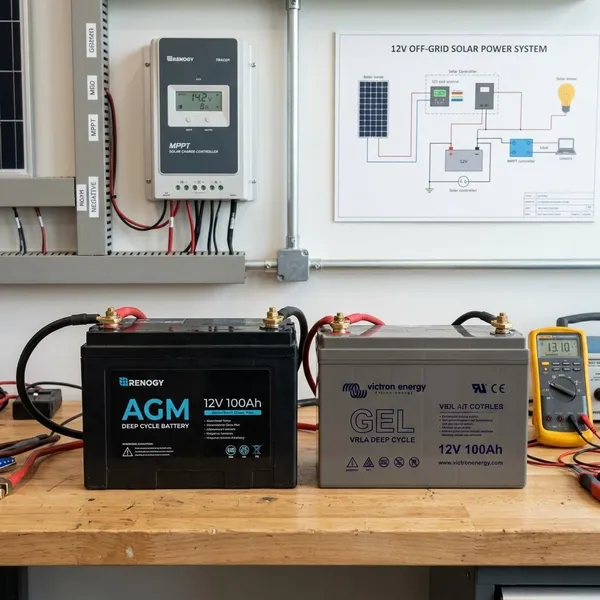
How do AGM and gel batteries compare?
Both AGM and gel are sealed lead-acid batteries, so neither needs water topping like a flooded battery. The difference is how the electrolyte is held: AGM uses glass mats, while gel uses a thickened silica-based electrolyte. That one design difference changes how they charge, how forgiving they are, and where they make the most sense.
Usable capacity and cycle life
For everyday planning, treat both battery types as batteries you do not want to drain deeply every night. Many lead-acid solar systems are designed around moderate discharge rather than using the full rated capacity, because repeated deep discharge shortens life quickly.
Gel batteries can look attractive for deep-cycle use because some models are built to handle repeated cycling well. The catch is that their cycle life depends heavily on correct charging. A good gel battery paired with the wrong controller setting can age faster than a basic AGM battery charged properly.
- AGM: usually more forgiving in mixed solar systems.
- Gel: can suit steady deep-cycle use with accurate charging.
- Both: suffer if left partly charged for long periods.
- Best habit: size the bank so deep discharge is not routine.
Solar charging requirements
This is the main deciding point. AGM and gel batteries should not be treated as interchangeable just because both are sealed lead-acid. AGM batteries commonly use charging profiles that many solar controllers already support, while gel batteries often need lower and tighter voltage control.
With gel, overvoltage is the mistake to avoid. If charging voltage is too high, gas pockets can form inside the gelled electrolyte and the lost capacity is not something you can fix by adding water. That makes gel a poor choice if your controller only has vague presets or if several chargers in the system cannot be programmed.
If you cannot confirm the absorption and float settings before buying, choose AGM or upgrade the controller first.
Performance in different temperatures
Cold weather reduces usable capacity in both AGM and gel batteries. If your solar battery sits in an unheated shed or RV compartment, the system may feel fine in September and weak in January, even with the same loads.
AGM often performs better where short bursts of current matter, such as inverter startup loads, pumps, or RV appliances. Gel can work well in warm climates, but heat still shortens lead-acid battery life, and charging voltage becomes more critical as temperature rises.
Upfront cost and replacement costs
AGM is usually cheaper and easier to replace in common 12V solar, backup, and RV sizes. That matters more than people expect: if a battery fails during a trip or during storm season, being able to buy a matching replacement locally is a real advantage.
Gel batteries often cost more per amp-hour and may have fewer choices. They can still be worth considering for a carefully managed deep-cycle setup, but the extra cost only pays off if the whole charging system is matched to the battery.
| If your priority is... | Usually better fit |
| Lower upfront cost and easy replacement | AGM |
| Simple controller compatibility | AGM |
| Carefully managed repeated deep cycling | Gel may be suitable |
| Multiple charging sources with mixed equipment | AGM |
Which battery fits your solar setup?
The better choice depends less on the brochure and more on how the battery is used. A battery that waits for outages has a very different life from one that powers a cabin every night.
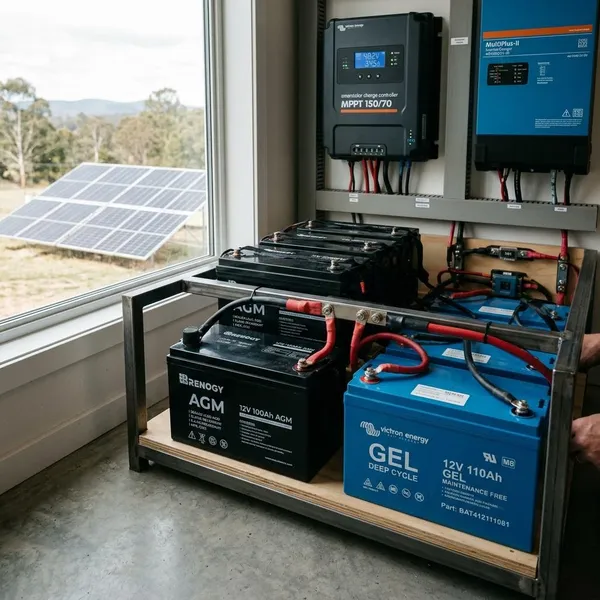
Occasional backup power
For occasional backup power, AGM is normally the cleaner choice. It is widely supported, usually less expensive, and works well when the battery spends most of its time on float charge waiting for an outage.
Think of a home backup system for a router, lights, small medical device, alarm system, or garage door. The battery may only cycle a few times a year, so paying more for gel rarely brings enough benefit unless the equipment already has a verified gel profile.
Daily off-grid use
Daily off-grid use is where the decision gets more serious. A weekend cabin that runs a few LED lights is not the same as a small off-grid home running an inverter, refrigerator, water pump, and laptop charging every day.
- Light daily use: AGM is usually easier to manage.
- Steady deep-cycle use: gel can work if charging is exact.
- Frequent low state of charge: neither AGM nor gel is ideal.
- Cloudy seasonal use: add battery capacity or solar input before blaming the battery type.
If the bank regularly drops very low before morning and does not fully recharge the next day, the real problem may be sizing. In that situation, comparing AGM and gel will not fix an undersized system.
RV and mobile solar
For RVs, vans, and boats, AGM is usually the safer default. Mobile systems often charge from solar, shore power, alternator charging, and sometimes a generator. Every one of those charging sources has to match the battery.
Gel can work in a mobile setup, but only if the solar controller, converter, inverter-charger, and DC-to-DC charger are all set correctly. For most travelers, AGM is easier to replace on the road and less likely to be damaged by one charger using the wrong profile.
What should you check before connecting either battery?
Before connecting either battery, check the charging path from the solar panel to the battery terminals. The most expensive mistake is assuming a sealed battery preset is close enough without comparing the actual numbers.
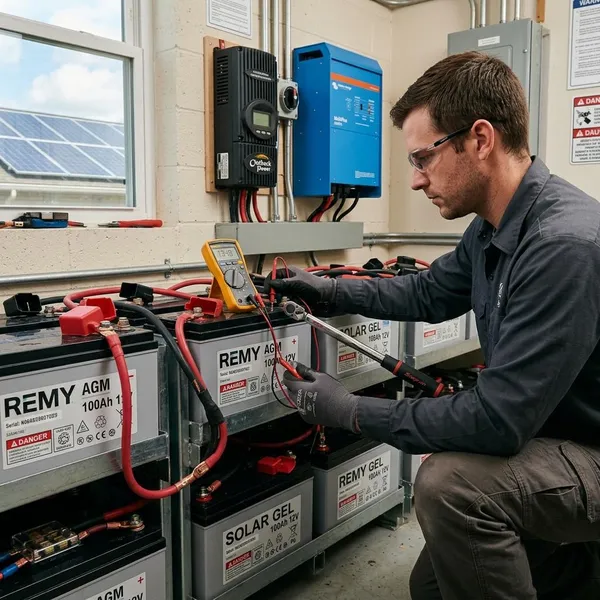
The battery maker's charging voltage
Use the battery maker's data sheet as the starting point. Look for absorption voltage, float voltage, maximum charging current, and any note about equalization. If the sheet says not to equalize the battery, do not use a flooded lead-acid equalization routine.
Do not rely on a generic AGM or gel chart when the battery label gives different numbers. Small voltage differences can matter, especially with gel batteries.
The controller's battery profile
Open the controller settings before installation, not after the battery has been cycling for weeks. Some controllers have AGM and Gel presets, while others allow a custom user profile. A preset is only useful if its voltage settings match the battery maker's recommendations closely.
- Find the battery's absorption and float voltage.
- Check the controller preset or custom settings.
- Repeat the check for every other charger in the system.
- Do not buy gel unless all charging sources can be set correctly.
Temperature compensation
Temperature compensation changes charging voltage as the battery gets hotter or colder. It is not a luxury feature if the battery lives in a garage, shed, RV bay, or outdoor enclosure with big seasonal swings.
A remote battery temperature sensor is often worth using when the controller supports one. Hot batteries generally need less charging voltage, cold batteries need more, and gel batteries give you less room for error if the setting is wrong.
Bank size and expected depth of discharge
Bank size decides how hard the battery has to work. A small battery bank may look cheaper at checkout, but if it is drained deeply every night, replacement comes sooner.
Before choosing AGM or gel, estimate your daily watt-hour use and compare it with the usable capacity you are willing to take from the bank. For a low-risk backup system, occasional deeper use may be acceptable. For a year-round off-grid system, routine deep discharge is a warning sign that the bank or solar array is too small.
- Check daily loads: lights, inverter, fridge, pump, devices.
- Allow for bad weather: not every day gives full solar output.
- Watch overnight voltage: frequent very low mornings mean trouble.
- Size for habits: real use matters more than rated capacity.
Conclusion
AGM is the better practical choice for most solar buyers because it is easier to charge, easier to replace, and more forgiving in backup, RV, and mixed-use systems. Gel is worth considering only when the system is designed around its tighter charging needs and the battery will genuinely benefit from controlled deep-cycle use. If the charge settings, temperature conditions, or bank size are uncertain, solve those issues before spending more on the battery.