
Which Backup Power Option Should You Choose?
Find out how aferiy p280 portable power station vs anker c2000 compares for outages, runtime, noise, and backup planning.
If your search for aferiy p280 portable power station vs anker c2000 led you to the bigger backup-power question, start with this: battery power is easier to live with, while a gas generator is usually better for heavy loads and long outages when fuel is available. The right choice depends less on the brand name and more on what you need to run, how long the outage may last, and whether you can tolerate noise, maintenance, and fuel storage.
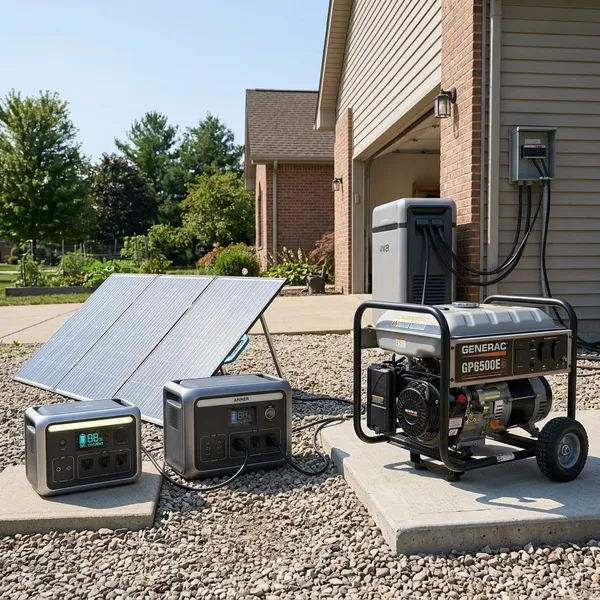
Anker SOLIX F3800 Plus vs Generac GP6500E
| Spec | Anker SOLIX F3800 Plus | Generac GP6500E |
|---|---|---|
| Type | Portable power station | Gasoline generator |
| Power Source | LiFePO4 battery | Gasoline |
| Capacity | 3,840Wh, expandable | 7.2-gallon fuel tank |
| Output | 6,000W rated / 9,000W surge | 6,500W running / 8,125W starting |
| Voltage | 120V / 240V | 120V / 240V |
| Runtime / Charging | AC, solar, or vehicle charging | Up to 10.5 hrs at 50% load |
| Emissions | Zero direct emissions | Exhaust emissions; outdoor use only |
| Noise | Quiet operation | Typical generator noise |
| Weight | About 132 lb | About 172 lb |
| Best For | Indoor backup, RVs, solar use | Outdoor backup, job sites, tools |
| Warranty | Typically 5 years | Typically 3 years |
Power output and starting loads
- Choose battery first for routers, phones, laptops, lights, CPAP machines, TVs, and other steady electronics.
- Be more cautious with microwaves, kettles, heaters, pumps, and air conditioners because they can drain or overload a battery quickly.
- Check startup watts before trusting any backup unit with a compressor or motor.
Battery runtime and fuel runtime
Battery runtime is a capacity problem: every device you plug in spends stored watt-hours. A fridge cycling on and off may be manageable, but a space heater can empty even a large battery surprisingly fast.
Fuel runtime works differently. A generator can keep going if you have gasoline, but that means fuel planning becomes part of the backup system. In a one-evening outage, a charged battery is simple; in a multi-day storm, fuel access or solar recovery becomes the deciding factor.
Solar recharging and refueling
Solar recharging is slower than pouring fuel into a tank, but it can be valuable when roads are blocked or gas stations are closed. The practical question is not “does it support solar?” but whether the solar input, panel setup, weather, and daylight hours can recover enough energy for your essential loads.
Noise, maintenance, and safety
Battery backup wins clearly for indoor comfort. It produces no engine exhaust, runs quietly, and needs far less routine care than a gas engine.
A gas generator must be used outdoors, away from doors, windows, and vents, because carbon monoxide is a serious hazard. It also brings oil checks, stale-fuel concerns, spark plug maintenance, hot surfaces, and engine noise. If you know you will avoid maintenance until the next emergency, a generator is a risky “cheap” solution.
Upfront and long-term costs
| Best fit | Solar battery backup | Gas generator |
|---|---|---|
| Short outage | Very convenient if charged | Works, but may feel excessive |
| Heavy startup loads | Only if inverter surge is sufficient | Usually stronger |
| Night use | Quiet and practical | Noisy and outdoor-only |
| Long outage | Depends on capacity and solar recovery | Strong if fuel is available |
How Solar Backup and Gas Generators Work
The easiest way to compare them is to separate storage from production. A solar-capable battery stores electricity ahead of time and releases it through an inverter. A gas generator creates electricity while the engine is running.
Stored electricity in a solar battery
A solar battery system stores energy in battery cells and sends usable AC power through an inverter. Newer portable and home-backup models often use lithium-based chemistry, but the key ownership point is simple: no combustion, little noise, and no exhaust.
Fuel-powered electricity from a gas engine
A gas generator burns fuel to run an engine, and the engine turns an alternator to produce electricity. This design is proven and widely available, which is why it remains common for emergency home backup, job sites, and heavier temporary power.
- Strength: high output and fast recovery after refueling.
- Tradeoff: exhaust, noise, heat, fuel handling, and maintenance.
- Risk: unsafe placement can create carbon monoxide danger.
Recharging compared with refueling
Battery recharging requires planning. Wall charging before a storm is usually the easiest preparation step, while solar panels can help stretch runtime during daylight. Vehicle charging may help in a pinch, but it is usually not the best plan for fully replenishing a large battery.
Runtime limits for each system
A battery runs out when its stored energy is spent; a generator stops when its tank or fuel supply is empty. Neither is truly unlimited.
How to Choose the Right Backup System
Start with needs, not product labels. The best backup system is the one that can handle your essential loads for your likely outage length without creating a problem you will not manage well, such as fuel storage, engine upkeep, or slow solar recovery.
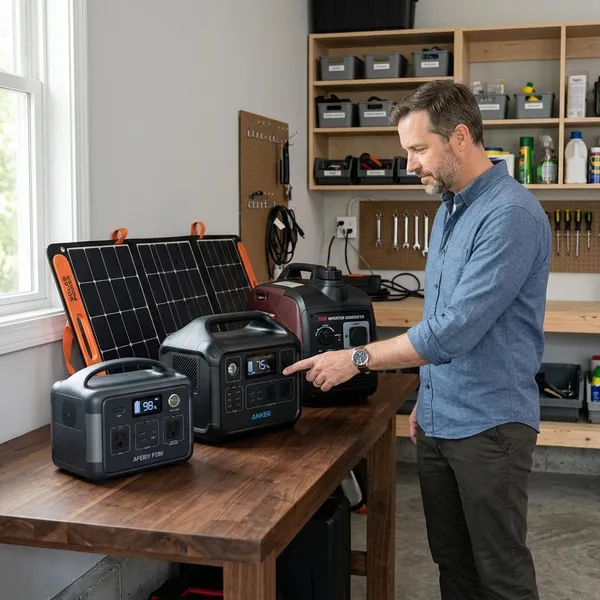
Calculate running and startup watts
- First priority: refrigerator, freezer, medical device, router, phone charging, and basic lighting.
- Second priority: fans, TV, laptop, microwave, or small kitchen appliances.
- Usually avoid on battery: electric heaters, large air conditioners, hot plates, and other high-draw comfort loads.
Estimate the expected outage duration
If your outages usually last a few hours, battery backup is often the most pleasant answer. Charge it before bad weather, keep essentials running, and avoid dragging out a noisy engine for a short interruption.
Compare upfront and ongoing expenses
Do not stop at the checkout price. A generator may cost less for the output, but fuel, oil, filters, maintenance items, extension cords, transfer equipment, and safe storage can add up. A battery may need compatible solar panels or higher capacity to meet the same outage goal.
For occasional camping and short blackouts, a portable power station can earn its keep outside emergencies. For whole-home emergency power, a cheaper small battery may become frustrating if it cannot handle the loads you bought it for.
Consider noise and maintenance tolerance
Be honest about what you will maintain. If rotating fuel, testing an engine, checking oil, and storing gasoline safely sound like chores you will postpone, a generator may not be reliable when it counts.
Noise also changes the decision. A daytime generator may be acceptable for a detached house, but the same sound at night can be miserable for close neighbors, children, pets, or anyone trying to sleep near an outage setup.
Check sunlight and gasoline availability
Sunlight and gasoline are local realities, not abstract features. A sunny region with room for panels favors battery recovery, while a shaded property in storm season may get far less solar input than expected.
For gasoline, check what you can safely store, how long it remains usable with your storage method, and whether refueling during an outage is realistic. The common mistake is buying for the best-case scenario instead of the outage you are most likely to face.
Conclusion
Choose battery backup if your main goal is quiet, simple power for essentials and short-to-moderate outages; choose a gas generator if heavy startup loads and multi-day endurance matter more than comfort. If your situation includes both, a hybrid setup can be the most practical answer: let the battery handle clean overnight power, and keep the generator for big loads or recovery when solar is not enough.