
Which Home Backup Power Option Fits You Best?
Compare 4patriots solar generator vs jackery for runtime, fridge use, solar charging, and value so you can pick the right backup.
Choosing between a 4Patriots solar generator and a Jackery for home backup depends on what you need to keep running during an outage. Jackery is generally the better fit if you want a wider range of power capacities, more model choices, and easier expansion for larger loads. 4Patriots may appeal to shoppers who prefer a straightforward emergency-power package. Before buying, compare usable battery capacity, continuous and peak inverter output, solar charging speed, portability, and included accessories against the demands of your refrigerator, medical equipment, lights, and communication devices.
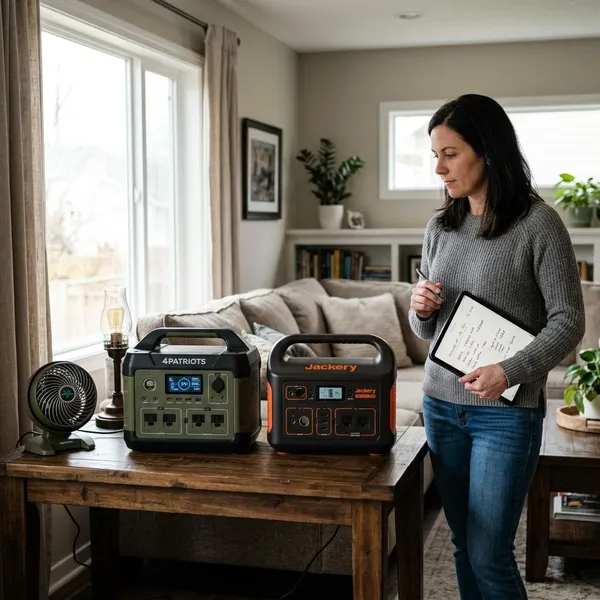
How to compare 4Patriots and Jackery models fairly
A fair comparison means putting similar-size units side by side. A small emergency kit will always look weak against a larger power station, and a big bundle can look overpriced if you only need phone charging and lights. Check the power station first, then judge the bundle around it.
Match battery capacity
Battery capacity, listed in watt-hours, is your first filter because it tells you how much stored energy you have before solar or wall charging enters the picture. As a rough planning shortcut, assume only about 80% to 90% of the listed capacity is usable after inverter losses and real-world conditions.
For a light-load setup, such as phones, LED lights, and a router, a smaller unit may be enough for a short outage. Add a CPAP overnight or a refrigerator, and the same battery can drain much faster. Avoid comparing "emergency power for days" claims unless the brand also shows the Wh rating and the loads used for that estimate.
Match continuous and surge power
Capacity tells you how long a station might run; inverter output tells you what it can run at all. Continuous watts cover steady operation, while surge watts cover the brief startup spike from motor-driven appliances such as refrigerators, freezers, and some pumps.
- Continuous output: must cover the devices running at the same time.
- Surge output: must handle compressor or motor startup.
- Outlet limits: matter if you plan to plug in several essentials at once.
This is the check that prevents the most expensive mistake: buying a unit with enough battery on paper but not enough inverter power to start the appliance you care about most.
Check what comes with each bundle
Bundles can make either brand look better than it really is. Compare the full kit, not just the headline price: solar panel wattage, wall charger, car cable, adapters, and whether extra batteries or higher-watt panels are supported.
A 4Patriots package may feel easier if you want a ready-made emergency setup. A Jackery bundle may give you more flexibility across different battery and panel sizes. The better deal is the one that includes enough charging hardware for your outage plan, not the one with the longest accessory list.
How well do they handle a power outage?
Outage performance comes down to three practical questions: what must stay on, how long it must run, and how you will recharge if the power stays out. A weekend camping-style power station can be useful at home, but refrigerator backup and multi-day outages require stricter sizing.
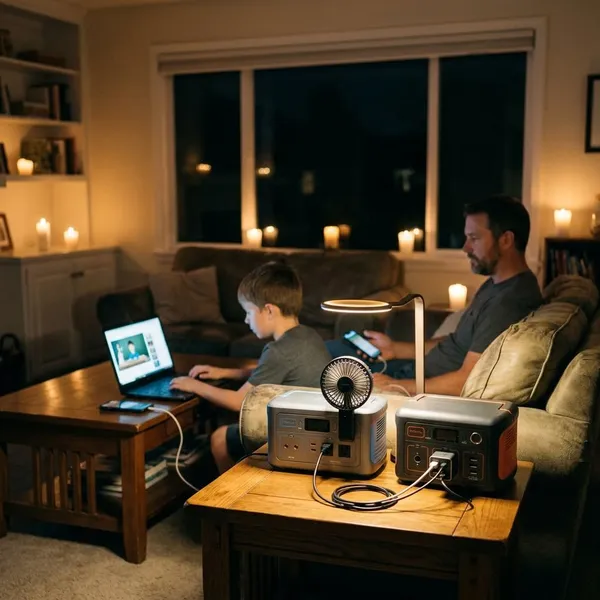
Runtime for essential devices
For phones, tablets, LED lamps, a modem, a router, or a CPAP without a heated humidifier, both brands can work if the unit is sized properly. This is the lower-risk use case: the loads are steady, modest, and easy to prioritize.
A practical test is to write down the watts of every must-run device and add only what will be on at the same time. Someone in an apartment who mainly needs internet, phone charging, and one medical comfort device can choose much smaller than a household trying to keep food cold during a summer storm.
Power for refrigerators and larger appliances
A refrigerator changes the comparison. Some models from both brands can run one, but smaller stations may fail at startup or run out too quickly. Check the refrigerator's running watts, likely compressor surge, and the power station's AC output before assuming compatibility.
Be cautious with convenience appliances. Microwaves, coffee makers, space heaters, hair dryers, and window AC units can use a large amount of power for their size. For home backup, it is smarter to separate "must run" from "nice to have" before you buy.
Recharging when the grid is down
Solar support only helps if the input limit is high enough to refill meaningful capacity during daylight. A large battery paired with a small panel may work for occasional top-ups, but it may not recover enough energy for repeated overnight use.
- Find the maximum solar input for the exact model.
- Check whether the included panels can reach a useful portion of that limit.
- Look at AC recharge speed for storm preparation before the outage.
- Confirm whether adapters or proprietary connectors are needed.
If you live where outages often happen in cloudy winter weather, do not size the system as if every day will deliver perfect summer sun.
Options for extending backup time
For longer outages, the winning setup is usually the one that can repeat a daily cycle: power essentials overnight, recharge during the day, and avoid wasting energy on high-draw extras. Larger Jackery systems often give more paths to scale, depending on the model line. 4Patriots can still make sense if you want a simpler kit and are willing to manage lighter loads carefully.
Expansion batteries, higher solar input, and easy-to-buy replacement accessories matter more once you move from "get through tonight" to "handle several uncertain days."
Which offers better value for home backup?
Value is not just price per box. For home backup, a good value purchase has enough usable battery, enough AC output for your priority appliances, and a realistic recharge plan without forcing you to buy several missing parts later.
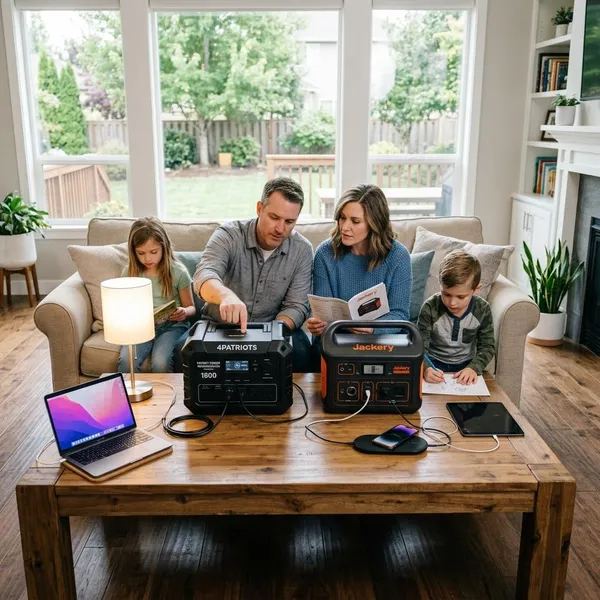
Capacity and output for the price
Jackery often has the advantage for shoppers who want to choose a closer fit, because the lineup usually covers more capacity and output tiers. That can prevent both underbuying and overbuying.
4Patriots may be appealing if you value a straightforward emergency-preparedness package. Just make sure the convenience premium does not hide a weaker battery size, lower inverter output, or slower solar recharge than you need.
- Best first comparison: watt-hours and continuous AC watts.
- Next comparison: surge rating and solar input limit.
- Final comparison: included panels, cables, warranty, and upgrade path.
Solar panels and accessories included
Included panels can change the real cost, but only if they are large enough to matter. A small panel bundle may be fine for keeping phones and lights going, yet too slow for a refrigerator-focused plan.
If you are buying for short outages a few times a year, a simple panel kit may be enough. If you are preparing for multi-day storm outages, treat solar wattage as part of the core system, not as a bonus accessory.
Warranty and support
Support matters because backup equipment often sits unused until the day it becomes important. Compare warranty length, what is excluded, how claims are handled, and whether replacement cables, panels, or adapters are easy to buy.
Clear documentation is also part of value. Published specs, realistic runtime examples, and easy model comparison reduce guesswork. If a product page leans heavily on emergency language but makes key numbers hard to find, slow down before buying.
Which should you choose?
The simple answer: choose 4Patriots if you want a packaged emergency kit for lighter backup needs and the specs match your devices; choose Jackery if you want more model choice, stronger scaling options, or better odds of finding a unit for refrigerator-class backup.
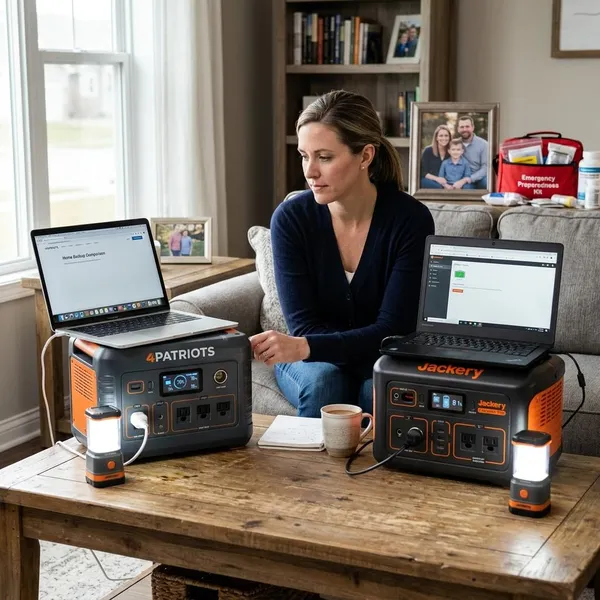
For phones, lights, and a CPAP
Choose a compact unit with enough overnight runtime, enough outlets, and a simple charging setup. You do not need a large premium system just to keep communication, basic lighting, and a CPAP running through a short outage.
For a CPAP, check whether you use a heated humidifier, because that can increase power use noticeably. If the CPAP is medically essential, leave extra battery margin instead of planning around the best-case runtime estimate.
For a refrigerator and other essentials
Buy for inverter capability first. If the power station cannot start the refrigerator, the battery size does not matter. After that, choose enough capacity for the fridge, router, phone charging, and a few low-watt lights without running everything else in the kitchen.
This is where many shoppers will find Jackery easier to fit, especially in mid-size and larger categories. A 4Patriots option can still be reasonable, but only after confirming startup headroom and realistic runtime for your refrigerator.
For longer outages
Pick the system with the better recharge strategy, not just the bigger battery. Multi-day backup depends on solar input, battery expansion, daytime charging habits, and your willingness to rotate loads.
A household in a storm-prone area may be better served by a larger, expandable setup. Someone who wants a closet-ready kit for occasional short blackouts may prefer a simpler package, even if it is less flexible.
Conclusion
For most home-backup buyers, Jackery is the safer shortlist if refrigerator support, model choice, and future scaling matter. 4Patriots is still worth considering for lighter emergency use if the bundle includes the charging gear you would otherwise buy separately. The smartest purchase starts with your must-run devices, then works backward through capacity, inverter output, and recharge time instead of choosing by brand name alone.