
Is a 15kWh Solar Battery Enough for Home Backup?
Choose a 15kWh home solar battery backup with clear guidance on runtime, output, solar pairing, and sizing for reliable outage protection.
A 15kWh battery can cover many home backup and solar storage needs, as long as it is matched to realistic household loads. It is typically enough for overnight backup, essential circuits, and shifting solar power into the evening, but it can drain quickly if used for central air conditioning, electric heating, an oven, or several high-power appliances at the same time.
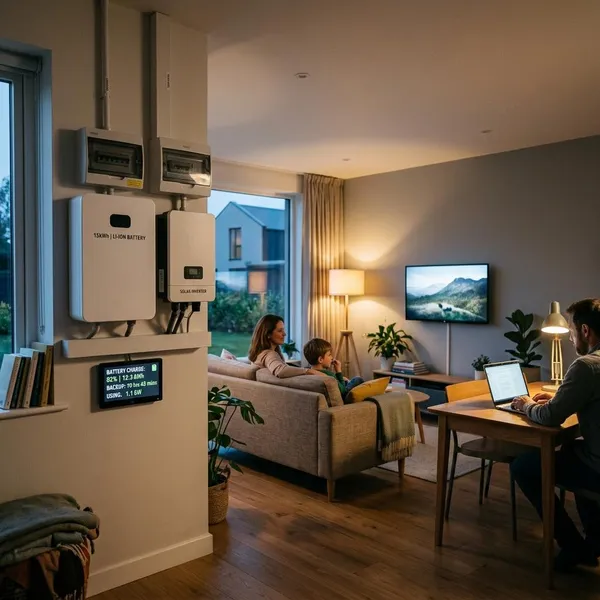
How long can a 15kWh battery power a home?
The fastest way to judge runtime is to divide the battery’s usable energy by the loads you plan to run. A 15kWh battery does not always deliver the full 15kWh in real use because of reserve settings, inverter losses, and system protection, but it still gives a practical amount of backup for essential household needs.
Start with the loads that must stay on: refrigeration, lighting, internet, medical devices if needed, a few outlets, and possibly a furnace fan or small cooling load. Heavy electric appliances should be treated separately because they can change the answer quickly.
It runs essential devices during outages
For a critical-load setup, 15kWh can often cover the important parts of a short outage. A fridge, freezer, LED lights, router, laptops, phone charging, and a few outlets usually draw far less than electric heating, a dryer, or a full-size air conditioner.
A practical example: if the power goes out overnight during mild weather, a household using only essentials may barely notice the limits. If the same household starts using electric cooking, a space heater, and laundry during the outage, the battery can drain much faster than expected.
It supports appliances based on power demand
Capacity tells you how long the battery may last; output tells you what it can run at one time. This distinction matters because a 15kWh battery with weak inverter output may have plenty of stored energy but still fail to start a pump, compressor, or larger appliance.
- Check continuous output for normal running loads.
- Check surge output for motors, compressors, pumps, and some HVAC equipment.
- Check voltage support if you need 240V appliances backed up.
- Check load management if you want to avoid manual switching during an outage.
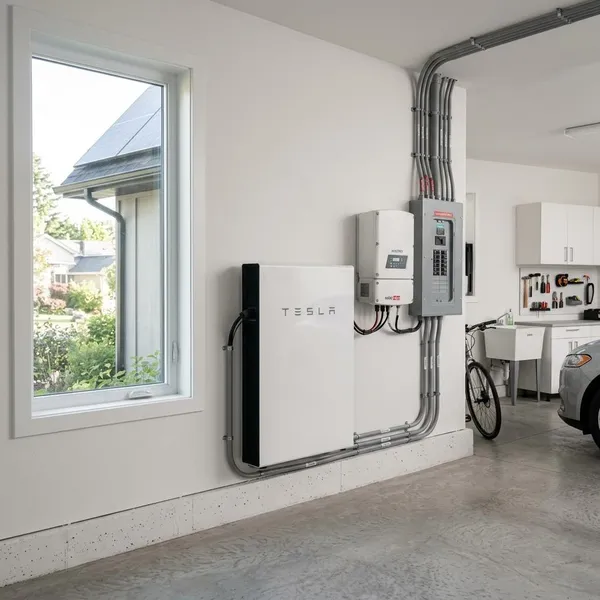
What makes a good 15kWh home battery system?
A good 15kWh system is not just a battery with the right number on the label. The battery, inverter, transfer equipment, monitoring, safety controls, and installation design all affect how useful it feels during a real outage.
If you compare systems, look first at output, chemistry, warranty, expansion options, and solar compatibility. Price matters, but a cheaper system that cannot run your priority loads may not be good value.
Strong output supports more appliances
Strong output makes the battery easier to live with. It reduces the chance that the system shuts down when the refrigerator cycles on while someone uses the microwave or when a pump starts unexpectedly.
This is where two 15kWh systems can feel very different. One may comfortably support a fridge, freezer, lights, internet, and short microwave use. Another may require careful appliance timing even though the storage capacity looks the same.
Safe battery chemistry improves reliability
Battery chemistry affects safety and long-term confidence. Many home systems use lithium iron phosphate, often called LFP or LiFePO4, because it is generally valued for thermal stability and long cycle life. Chemistry alone is not enough, though; the battery management system should monitor temperature, charging limits, cell balance, and fault conditions.
For garages, utility rooms, or hot climates, installation quality also matters. Ask how the system handles ventilation, temperature limits, shutoff equipment, and local code requirements rather than judging safety from chemistry alone.
Longer cycle life improves value
Cycle life matters most if the battery will work every day, not only during rare outages. A battery used for solar self-consumption or time-of-use savings may charge and discharge thousands of times, so warranty terms and retained capacity are worth reading carefully.
- Warranty years: how long the manufacturer supports the system.
- Warranted throughput: how much energy use is covered.
- Retained capacity: how much performance should remain later.
- Service access: who handles problems after installation.
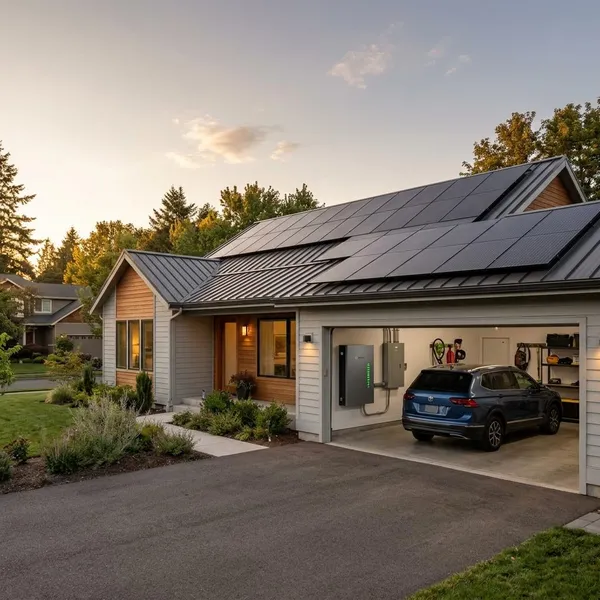
Which 15kWh battery setup fits your home?
The best setup depends on what you expect the battery to do when the grid fails. A 15kWh battery can be excellent for selected circuits, acceptable for careful whole-home use in some houses, and especially valuable when paired with solar that can recharge it.
Before choosing a design, decide whether you want protection, convenience, or near-normal living. Those are different goals, and they usually need different wiring and load-management choices.
Critical-load systems protect essential devices
Critical-load systems are often the safest match for 15kWh. They back up selected circuits such as refrigeration, lights, router, garage door opener, medical equipment, home office outlets, and a few convenience receptacles.
This setup fits homeowners who mainly want the house to stay functional during storms or overnight outages. It avoids wasting stored energy on loads that are nice to have but not urgent.
Whole-home systems support more appliances
Whole-home backup sounds more convenient because more circuits remain available, but it does not remove the battery’s limits. With 15kWh, it works best in efficient homes or for owners who are willing to avoid heavy loads during an outage.
A summer outage is a good example. Running lights, internet, refrigeration, and a small efficient mini-split may be realistic for a period of time. Running central air, an electric oven, a dryer, and a water heater as if the grid were still on is usually not a good expectation for a single 15kWh battery.
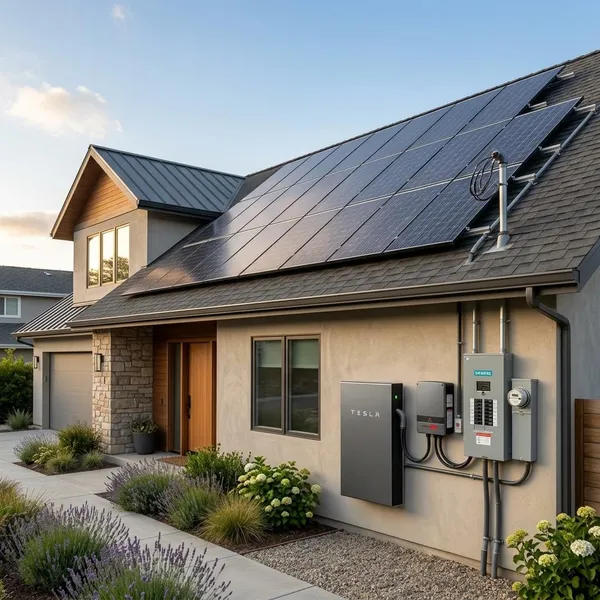
What solar setup works with a 15kWh battery?
A 15kWh battery can work with AC-coupled, DC-coupled, or hybrid solar designs. The right choice usually depends on whether you already have solar and how much you care about installation simplicity versus energy efficiency.
AC-coupled systems work with existing solar
AC-coupled systems are often the practical retrofit choice. The solar array keeps its own inverter, and the battery uses a separate battery inverter, which can make installation less disruptive.
The tradeoff is that electricity may be converted more than once, so efficiency can be a little lower than in some DC designs. For many homeowners, that small loss is acceptable if it avoids replacing a working solar inverter.
DC-coupled systems improve solar efficiency
DC-coupled systems are usually more attractive when solar and storage are installed together. Solar energy can charge the battery before being converted for household AC use, which may reduce conversion losses.
This setup can be a good fit if your goal is daily solar shifting, not just emergency backup. It is less convenient when you already have an older solar system that would need major redesign to support it.
Hybrid systems combine solar and battery control
A hybrid system uses coordinated equipment to manage solar production, battery charging, backup switching, and grid interaction. The biggest advantage is simpler control: one platform can decide when to store energy, when to discharge, and how much reserve to keep.
Do not assume “hybrid” automatically means large enough. The inverter still needs to match your backed-up loads, and the system should leave room for future battery or solar expansion if that is part of your plan.
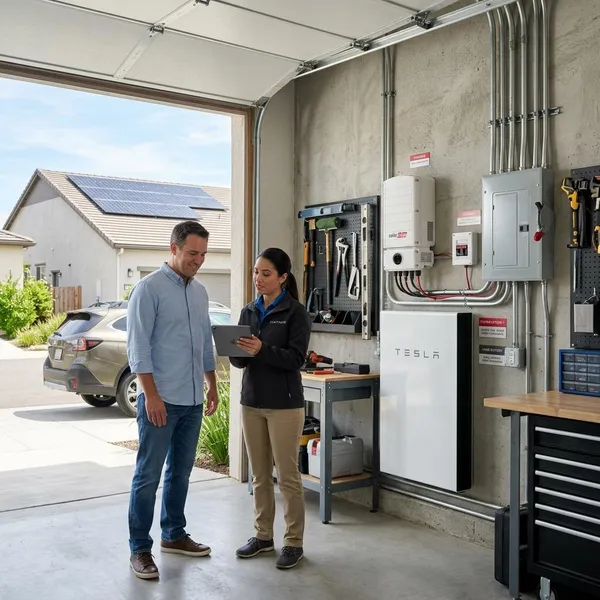
Is a 15kWh battery better than a larger system?
A 15kWh battery is often the better buy when your goal is reliable essential backup and better use of solar energy. A larger system makes sense when you want longer outages covered, higher power loads supported, or less daily compromise during grid failures.
The mistake is choosing by size alone. First decide what must run, how long it must run, and whether solar can recharge the battery while the outage continues.
It fits homes with moderate energy needs
Moderate-use homes are where 15kWh often makes the most sense. If you have gas heating, gas water heating, efficient appliances, or a clear essential-load plan, the battery can cover a useful share of real outage needs without jumping into a much higher budget.
It also works well for homeowners who mainly want evening solar use and occasional backup. In that case, buying much more capacity may add cost without adding much practical value.
Larger systems fit higher power demands
A larger battery system is usually more appropriate for all-electric homes, frequent long outages, large HVAC loads, deep well pumps, or households that need medical equipment running continuously. These situations leave less room for guesswork.
There is also a comfort factor. Some people are fine switching off heavy loads during an outage. Others want the house to feel almost normal. If you are in the second group, more capacity and stronger output may be worth the added cost.
Conclusion
A 15kWh battery is a sensible home backup size when it is matched to essential circuits, moderate loads, and a solar setup that can recharge it when conditions allow. If your home depends heavily on electric heating, central cooling, large appliances, or multi-day backup without much load management, treat 15kWh as either a starting point or a critical-load solution rather than a full replacement for the grid.